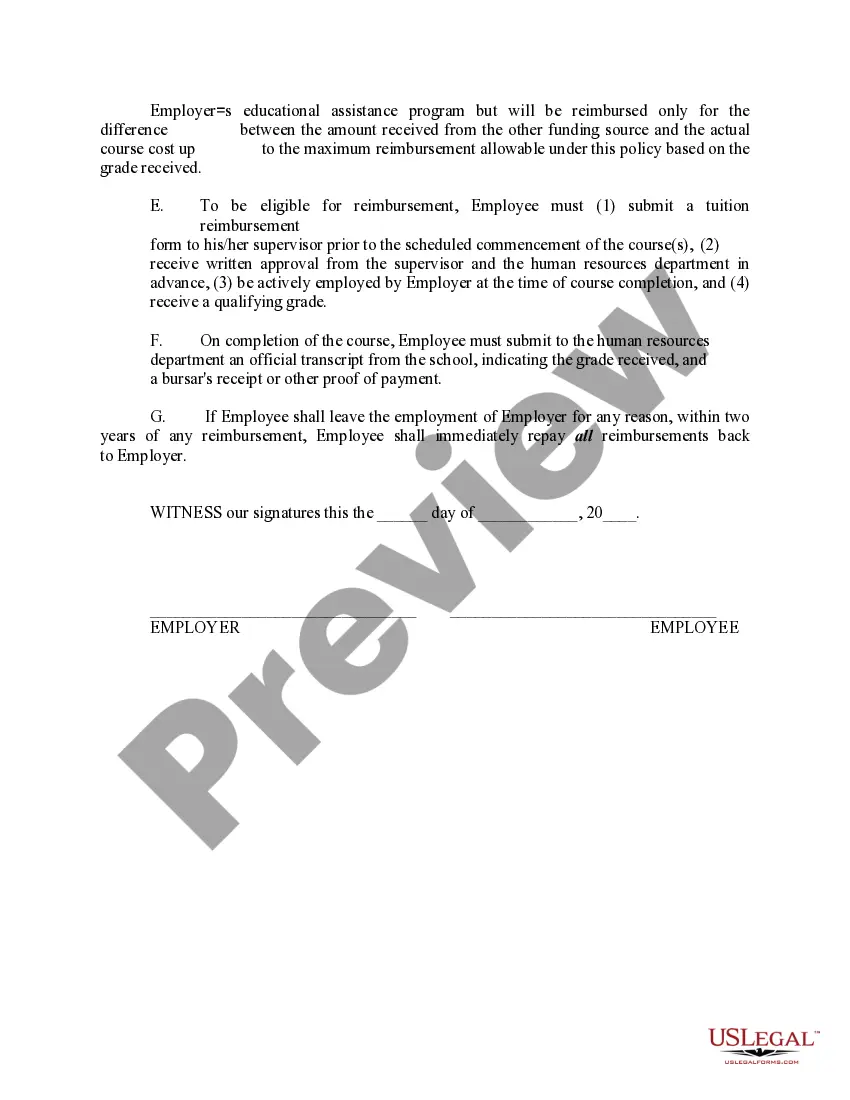
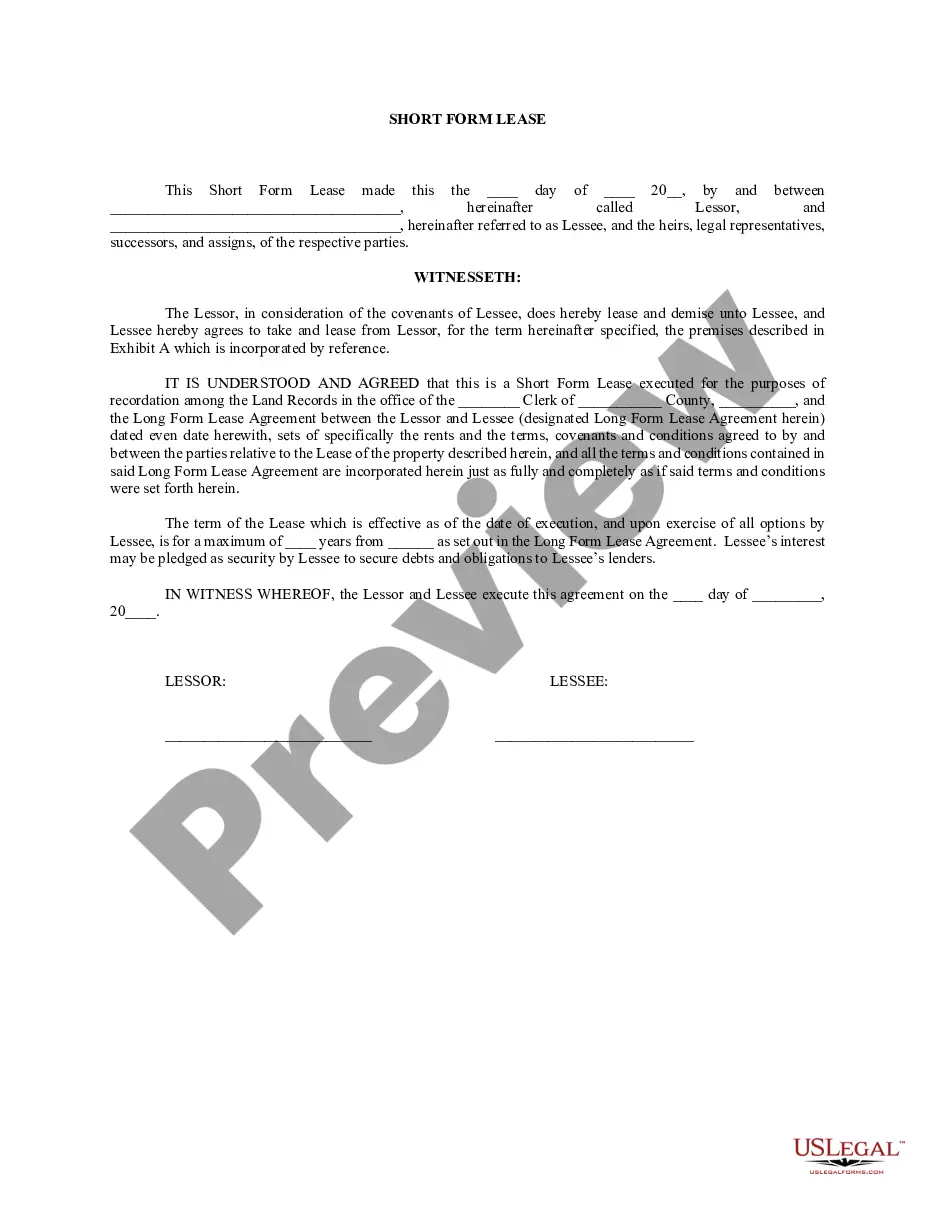
Educational Assistance Employees Form 10 In California
Description

Get your form ready online
Our built-in tools help you complete, sign, share, and store your documents in one place.
Make edits, fill in missing information, and update formatting in US Legal Forms—just like you would in MS Word.
Download a copy, print it, send it by email, or mail it via USPS—whatever works best for your next step.
Sign and collect signatures with our SignNow integration. Send to multiple recipients, set reminders, and more. Go Premium to unlock E-Sign.
If this form requires notarization, complete it online through a secure video call—no need to meet a notary in person or wait for an appointment.
We protect your documents and personal data by following strict security and privacy standards.

Make edits, fill in missing information, and update formatting in US Legal Forms—just like you would in MS Word.

Download a copy, print it, send it by email, or mail it via USPS—whatever works best for your next step.

Sign and collect signatures with our SignNow integration. Send to multiple recipients, set reminders, and more. Go Premium to unlock E-Sign.

If this form requires notarization, complete it online through a secure video call—no need to meet a notary in person or wait for an appointment.

We protect your documents and personal data by following strict security and privacy standards.
Looking for another form?






Form popularity
FAQ
From employee pensions managed by the California Public Employees Retirement System (CalPERS) to health, dental, and vision plans, state employment offers you many benefits. The Savings Plus Program provides additional opportunities to save for retirement with 401(k) and 457 Plans.
The California public school system (prekindergarten through grade 12) operates within districts governed by locally elected school boards and superintendents. In 2022, California had 5,496,271 students enrolled in a total of 9,006 schools in 977 school districts.
California's K-12 schools are run by independent government special districts, called local education agencies in government parlance and school districts by the rest of us. They are separate from cities, but do report on some matters to county Offices of Education.
The “Standard” Base Period uses the wages earned in the first four of the last five completed calendar quarters prior to the beginning date of the UI claim. The “Alternate” Base Period uses the wages earned in the four most recently completed calendar quarters.
Unemployment benefits are temporary income for eligible workers who lost their job (or had hours reduced) through no fault of their own. You get from $40 to $450 each week, depending on how much you earned in the past 18 months. Our Unemployment Benefit Calculator helps estimate your benefit amount.
The Classified School Employee Summer Assistance Program (CSESAP) provides classified employees working 11 months or fewer with a unique opportunity to set aside up to 10 percent of their monthly paychecks and have the state match those funds up to dollar for dollar.
State Employee Benefits Health Insurance. Choose from a variety of health benefit plans for you and your family. Dental Insurance. Employees and their eligible dependents can choose the dental plan right for them. Vision Care Insurance. Employee Assistance Program (EAP). Medical Reimbursement Accounts. Long-Term Care.
EAP is a 24-hour confidential hotline for employees and eligible dependents to help find balance, overcome stress, and help with day-to-day challenges.
As a member of CalPERS, employees also participate in Social Security.
From employee pensions managed by the California Public Employees Retirement System (CalPERS) to health, dental, and vision plans, state employment offers you many benefits. The Savings Plus Program provides additional opportunities to save for retirement with 401(k) and 457 Plans.
