Letter Engagement Statement Withdrawal In Massachusetts
Description
Get your form ready online
Our built-in tools help you complete, sign, share, and store your documents in one place.
Make edits, fill in missing information, and update formatting in US Legal Forms—just like you would in MS Word.
Download a copy, print it, send it by email, or mail it via USPS—whatever works best for your next step.
Sign and collect signatures with our SignNow integration. Send to multiple recipients, set reminders, and more. Go Premium to unlock E-Sign.
If this form requires notarization, complete it online through a secure video call—no need to meet a notary in person or wait for an appointment.
We protect your documents and personal data by following strict security and privacy standards.

Make edits, fill in missing information, and update formatting in US Legal Forms—just like you would in MS Word.

Download a copy, print it, send it by email, or mail it via USPS—whatever works best for your next step.

Sign and collect signatures with our SignNow integration. Send to multiple recipients, set reminders, and more. Go Premium to unlock E-Sign.

If this form requires notarization, complete it online through a secure video call—no need to meet a notary in person or wait for an appointment.

We protect your documents and personal data by following strict security and privacy standards.
Looking for another form?









Form popularity
FAQ
Obviously a lot of times that means settling your case. Quickly. This can lead to a worse outcomeMoreObviously a lot of times that means settling your case. Quickly. This can lead to a worse outcome for you because you are willing to take a bad deal just to be released.
To request a continuance regarding your DALA case, you (the party seeking the continuance or "the moving party") should submit a written request (a "motion") at least seven (7) days before the event. You can send your request by mail, fax, or e-mail.
An attorney may, without leave of court, withdraw from a case by filing written notice of withdrawal, together with proof of service on his client and all other parties, provided that (1) such notice is accompanied by the appearance of successor counsel; (2) no motions are then pending before the court; and (3) no ...
Rule 12 - Defenses and Objections-When and How Presented-By Pleading or Motion-Motion for Judgment on Pleadings (a) When Presented. (1) After service upon him of any pleading requiring a responsive pleading, a party shall serve such responsive pleading within 20 days unless otherwise directed by order of the court.
(a) All documents e-filed must be served Except as otherwise provided in the Massachusetts Court Rules and Orders, or as otherwise ordered by the court, all electronically filed documents must be served on all other parties. Any document filed through the e-filing system must include a certificate of service.
(1973) Rule 11(a) requires that papers be signed by an attorney admitted to practice in Massachusetts; this ensures that all litigation in courts of the Commonwealth will be the nominal responsibility of a member of the Bar here, even if the litigation is in fact being conducted by out-of-state counsel admitted pro hac ...
See Local Rules 7.1, 56.1. 3. Reply: The moving party may file a reply as of right within seven (7) days of the filing of the opposition, except as to motions for summary judgment, where a reply may be filed within fourteen (14) days after the opposition is served. A reply shall not exceed ten (10) pages.
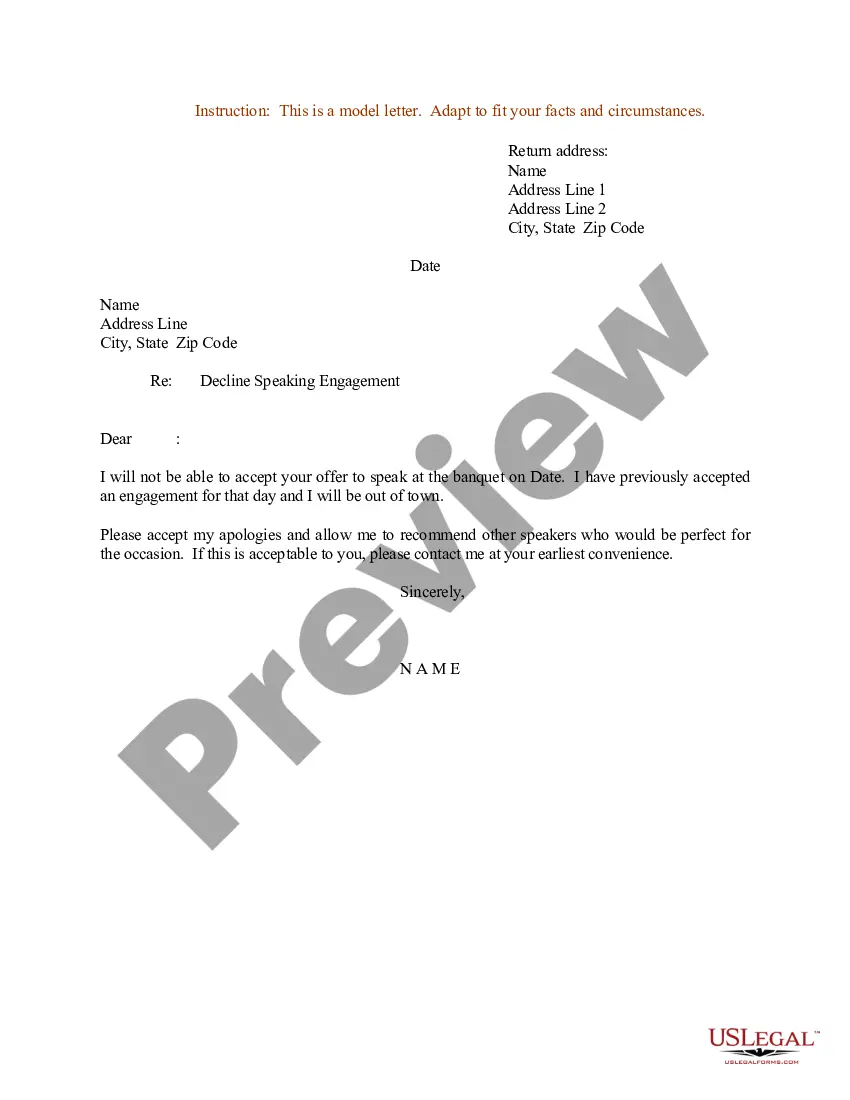
A disengagement letter is especially critical when a lawyer decides not to continue past a specific stage in a case. The lawyer should send a disengagement letter to establish that the relationship is no longer continuing, and to refer the client to another lawyer.
The decision to decline a representation is best to communicate that declination in writing. "Non-engagement letters" should clearly inform the prospective client that the law firm will not represent the prospective client in that matter and that he or she should not rely on the lawyer for any advice or legal action.
Ceasing to act Once you have taken on a client, you should not cease to act without good reason and without providing reasonable notice. If you do need to stop acting for a client, you should explain the client's options.

