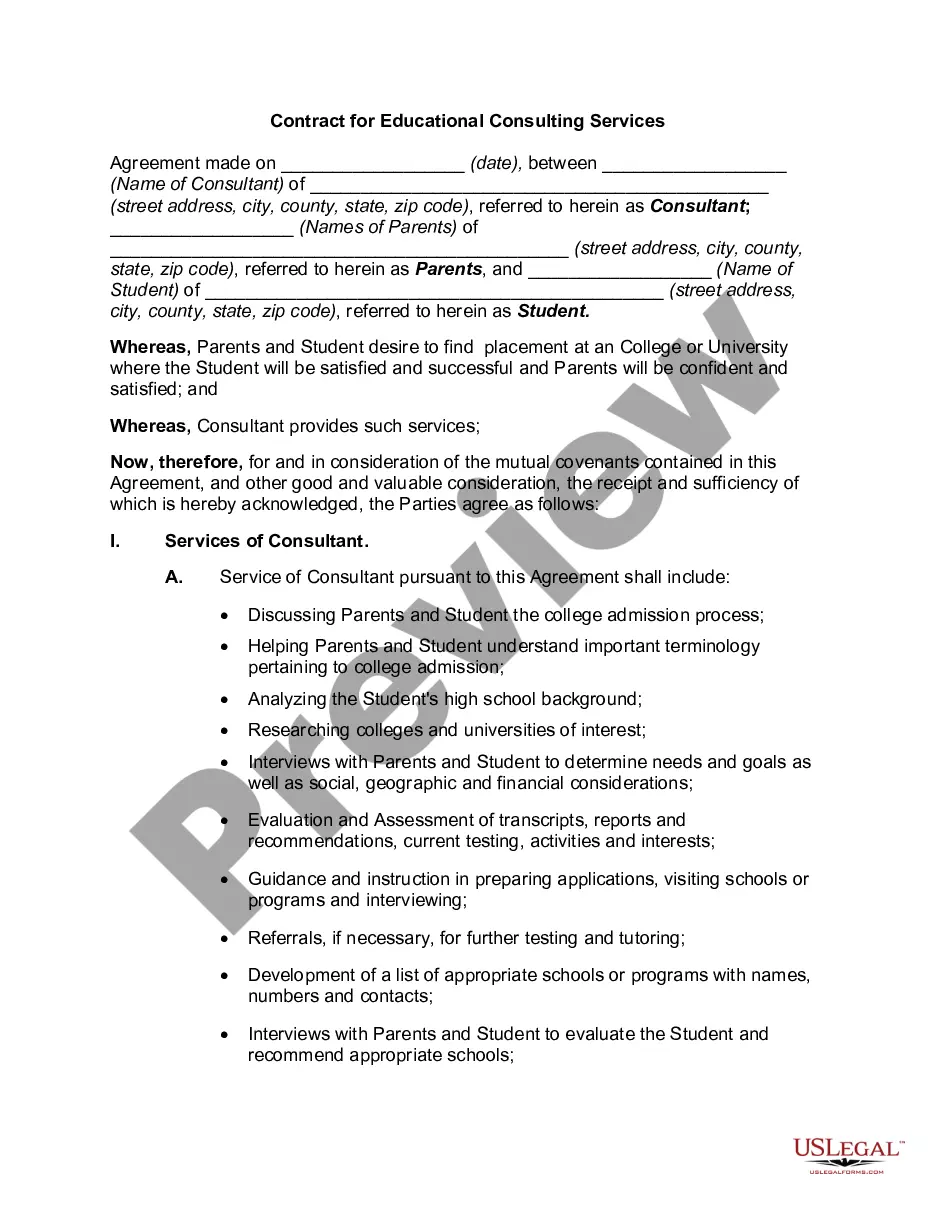
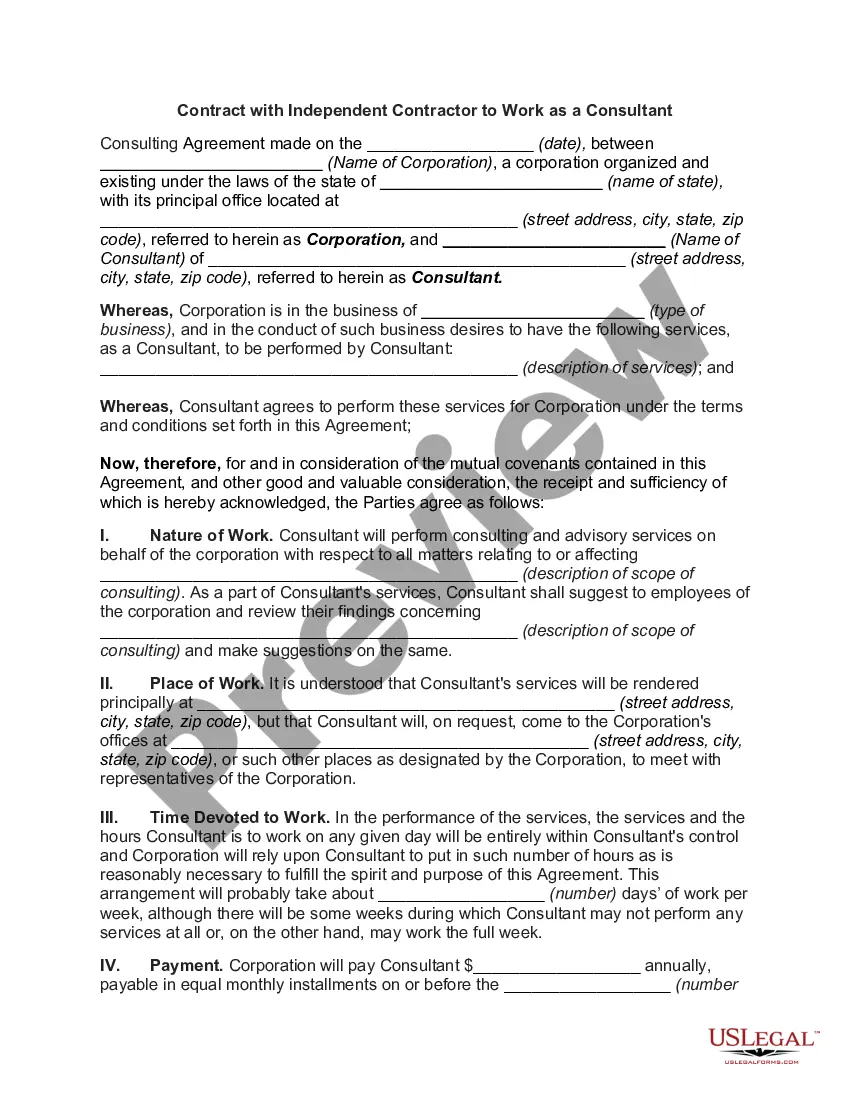
Consultant Work Contract For Accounting In Utah
Description

Get your form ready online
Our built-in tools help you complete, sign, share, and store your documents in one place.
Make edits, fill in missing information, and update formatting in US Legal Forms—just like you would in MS Word.
Download a copy, print it, send it by email, or mail it via USPS—whatever works best for your next step.
Sign and collect signatures with our SignNow integration. Send to multiple recipients, set reminders, and more. Go Premium to unlock E-Sign.
If this form requires notarization, complete it online through a secure video call—no need to meet a notary in person or wait for an appointment.
We protect your documents and personal data by following strict security and privacy standards.

Make edits, fill in missing information, and update formatting in US Legal Forms—just like you would in MS Word.

Download a copy, print it, send it by email, or mail it via USPS—whatever works best for your next step.

Sign and collect signatures with our SignNow integration. Send to multiple recipients, set reminders, and more. Go Premium to unlock E-Sign.

If this form requires notarization, complete it online through a secure video call—no need to meet a notary in person or wait for an appointment.

We protect your documents and personal data by following strict security and privacy standards.
Looking for another form?








Form popularity
FAQ
Consulting Agreements detail the terms of specific engagements, ensuring that both parties are aligned on expectations, deliverables, and compensation. SOWs, on the other hand, provide granular detail on project tasks, timelines, and milestones, making them indispensable for project management and accountability.
The consulting agreement is an agreement between a consultant and a client who wishes to retain certain specified services of the consultant for a specified time at a specified rate of compensation. As indicated previously, the terms of the agreement can be quite simple or very complex.
A consulting agreement is a contractual document that describes a working relationship between a business and a consultant providing that company with their services. Other terms that are used to refer to a consulting agreement include: Business consulting agreement. Independent contractor agreement. Freelance contract.
A consultancy agreement intended for use where a company wishes to engage a consultancy firm to provide services. This type of agreement may also be referred to as a services agreement or an independent contracting agreement.
The main difference is that a Service Agreement is for a specific service to be provided by a service provider. A Consultancy Agreement is for the provision of expert advice and guidance by a consultant.
Basic Elements of Consulting Contracts Identify who is entering into the contract (name of companies/organizations). Identify who you/your company will be working with specifically. Detail clear payment schedules. Include clauses for how each party can end the contract. Provide a clear scope of work.
Basic Requirements For Starting An Accounting Firm Accounting Qualifications. Accounting Experience. An Employer Identification Number and Tax ID Number. Some Funds. Conduct Market Research And Analysis. Choose An Accounting Specialization. Choose Technology And Information Systems. Determine a Legal Structure And Registration.
It's fairly common for CPAs to become part-time or full-time consultants just prior to retirement, while others enjoy the benefits of greater flexibility and control over their schedules earlier in their careers. Another option is to consult on the side, or in between permanent jobs.
It's fairly common for CPAs to become part-time or full-time consultants just prior to retirement, while others enjoy the benefits of greater flexibility and control over their schedules earlier in their careers. Another option is to consult on the side, or in between permanent jobs.
If you're more interested in management consulting, a CPA isn't necessary.
