Consultant Work Contract For Employees In Miami-Dade
Description

Get your form ready online
Our built-in tools help you complete, sign, share, and store your documents in one place.
Make edits, fill in missing information, and update formatting in US Legal Forms—just like you would in MS Word.
Download a copy, print it, send it by email, or mail it via USPS—whatever works best for your next step.
Sign and collect signatures with our SignNow integration. Send to multiple recipients, set reminders, and more. Go Premium to unlock E-Sign.
If this form requires notarization, complete it online through a secure video call—no need to meet a notary in person or wait for an appointment.
We protect your documents and personal data by following strict security and privacy standards.

Make edits, fill in missing information, and update formatting in US Legal Forms—just like you would in MS Word.

Download a copy, print it, send it by email, or mail it via USPS—whatever works best for your next step.

Sign and collect signatures with our SignNow integration. Send to multiple recipients, set reminders, and more. Go Premium to unlock E-Sign.

If this form requires notarization, complete it online through a secure video call—no need to meet a notary in person or wait for an appointment.

We protect your documents and personal data by following strict security and privacy standards.
Looking for another form?








Form popularity
FAQ
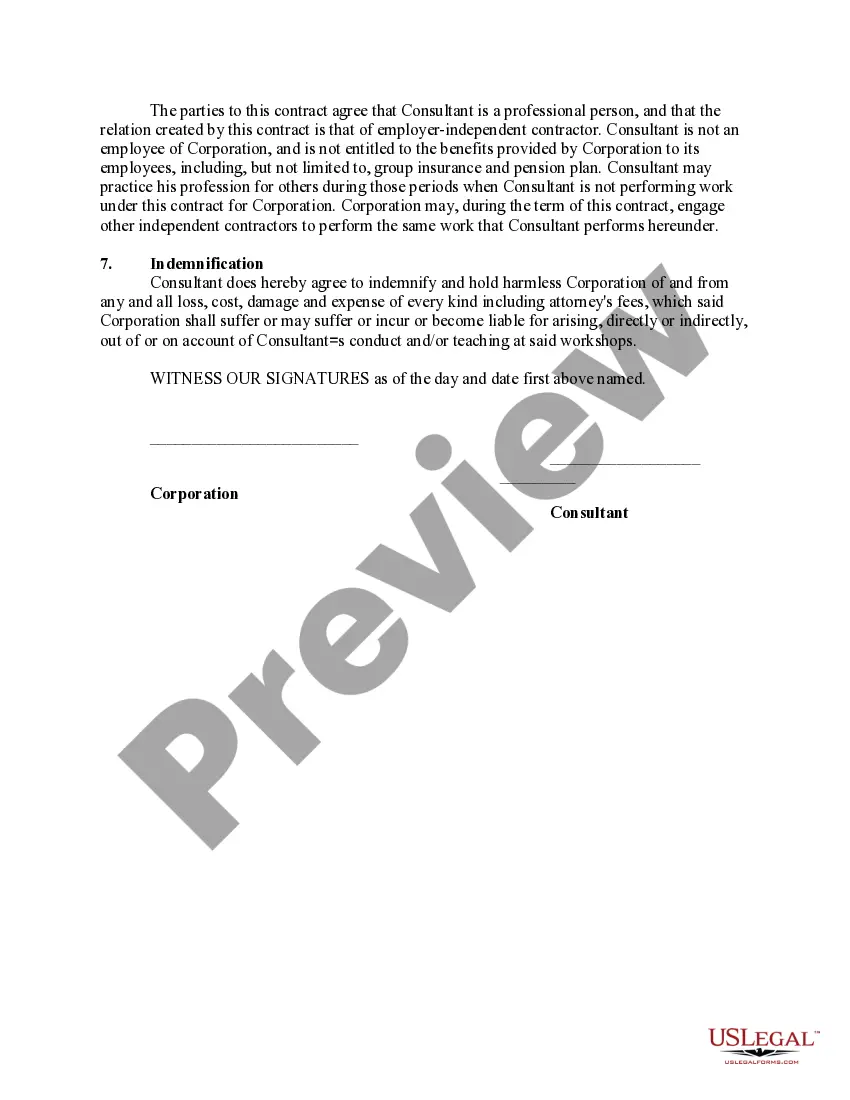
Following is a discussion of the more important issues to be considered in every consulting agreement. Scope of Work, Compensation. Independent Contractor. Term and Termination. Rights and Data. Conflict of Interest, Non-Solicitation. Miscellaneous Provisions.
Definition: A labor contract, also known as a collective-bargaining agreement, is a legal agreement between an employer and a labor union that outlines the terms and conditions of employment, including wages, benefits, and grievance procedures.
Consultants who work for consulting firms provide their services to client companies on behalf of their employer . They are full-time employees of the firm and they have the benefits typical for employees, so they are not independent contractors. They aren't considered employees of any client companies, however.
While Employment Agreements concern hiring persons to suitable long-term positions within the company, Consultancy Agreements particularly deal with services of an independent person to fulfil periodic or temporary requirements of the company. Employment Agreements are used to hire employees.
A contract for services between an independent contractor (a self-employed individual) and a client company for the provision of consultancy services.
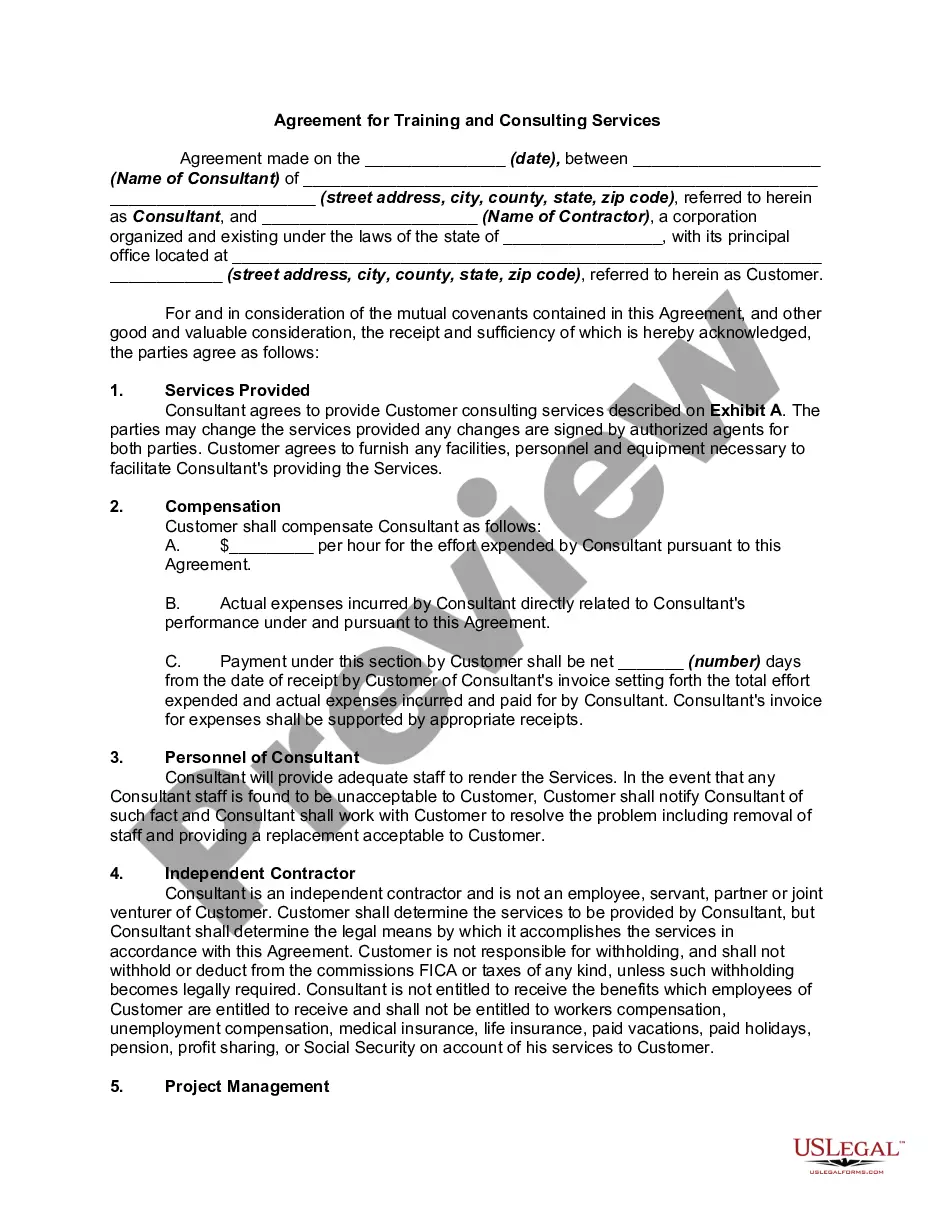
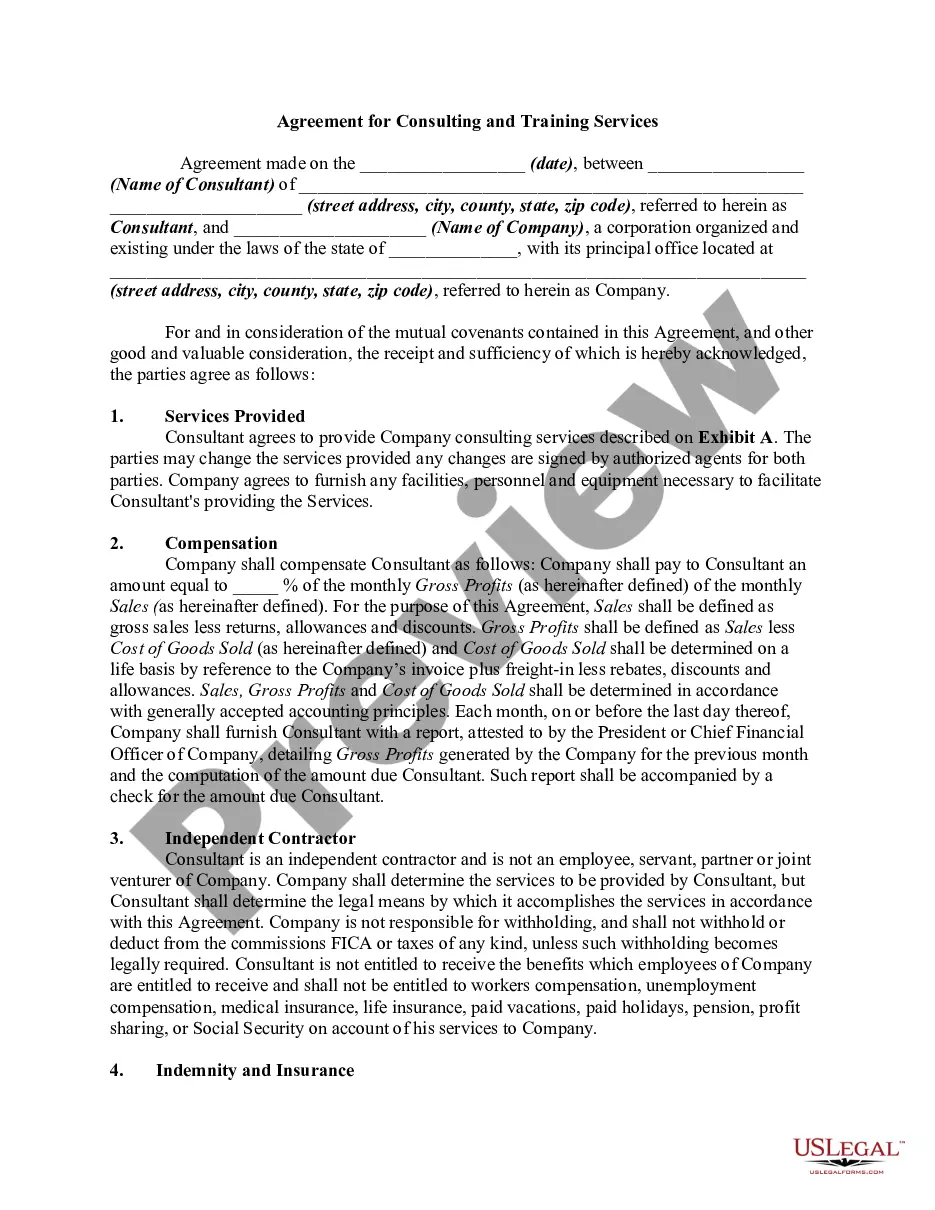
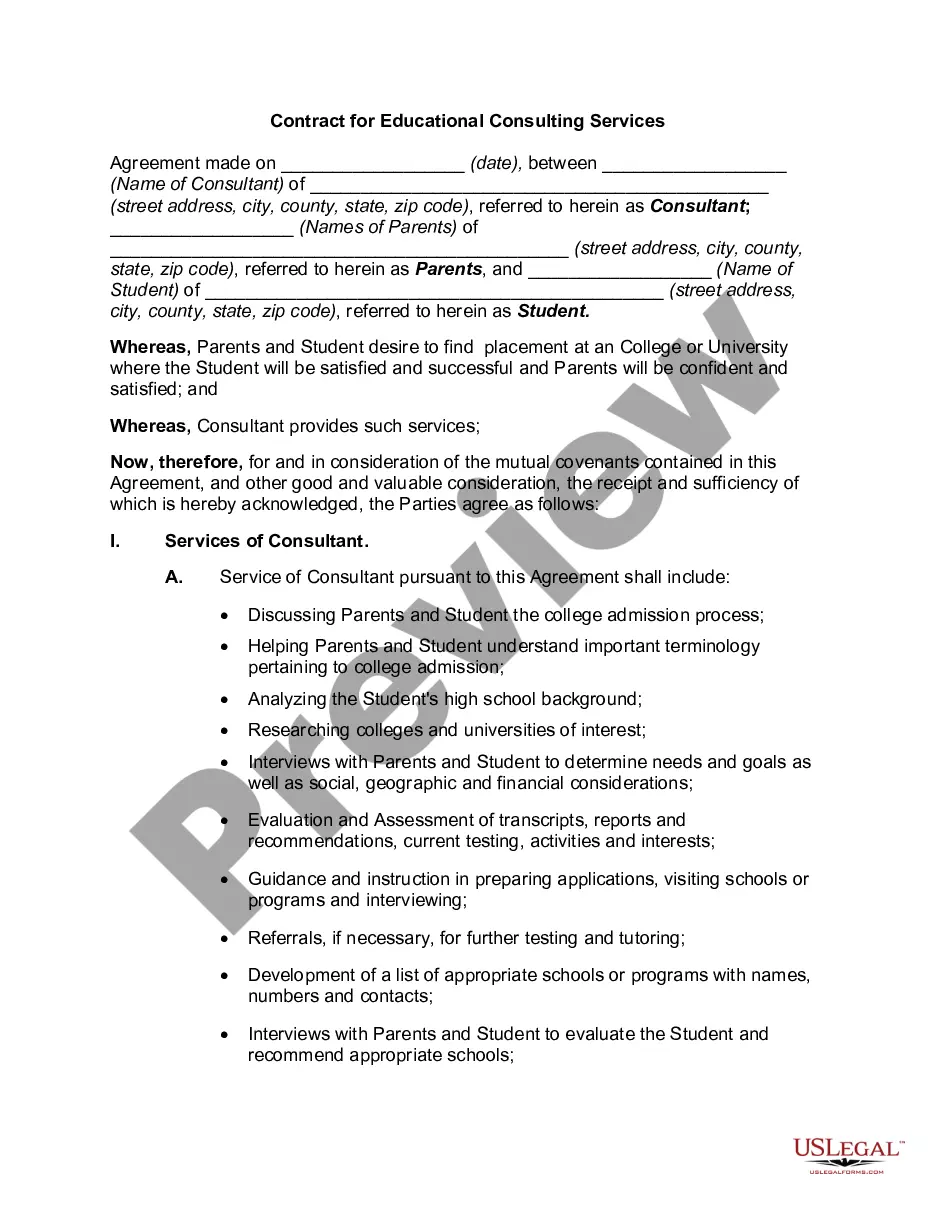
A consulting contract should offer a detailed description of the duties you will perform and the deliverables you promise the client. The agreement may also explain how much work you will perform at the client's office and how often you will work remotely.
On the other hand, a consulting agreement is a contract between a client and an independent contractor or consultant. In this arrangement, the consultant provides services to the client for a specified period or project.
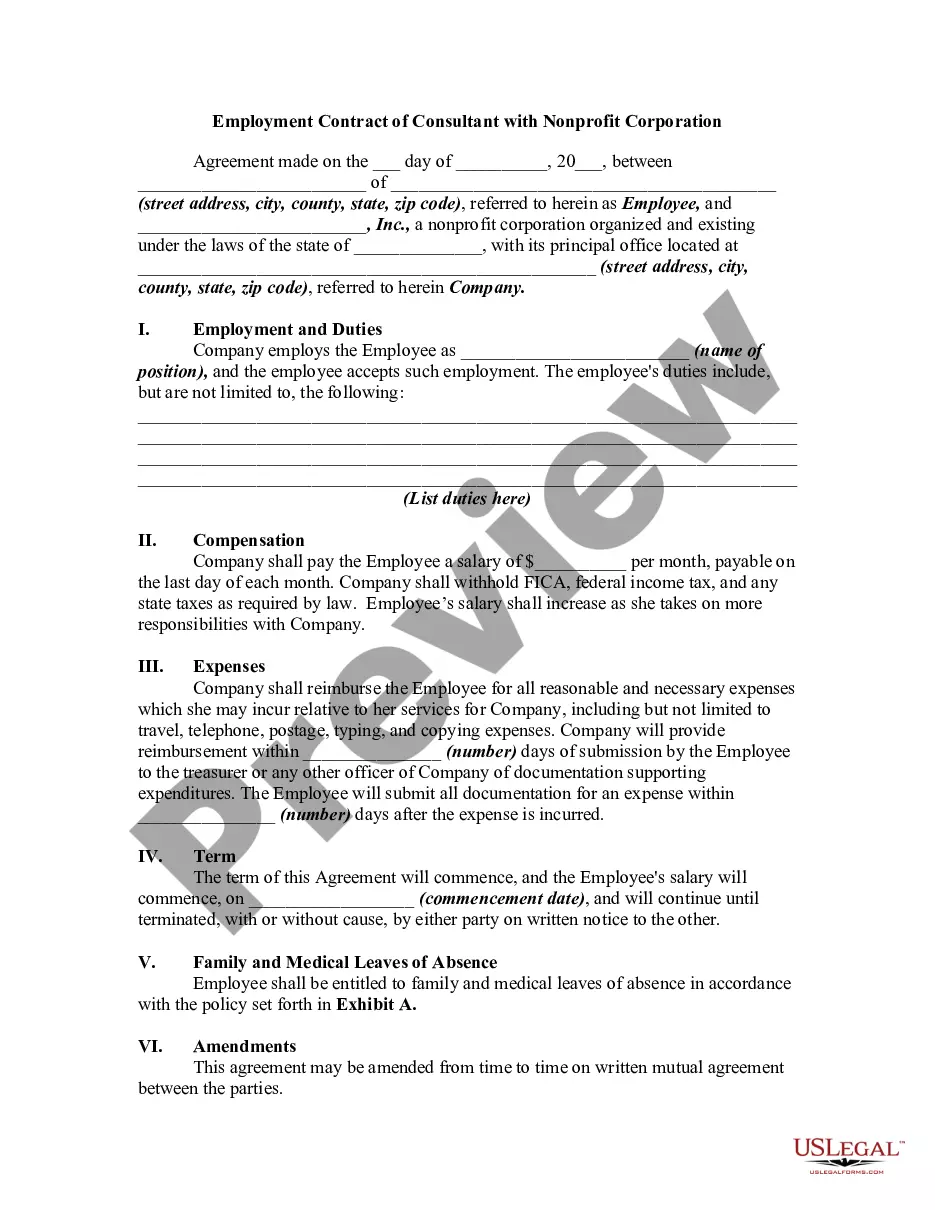
Employees receive salaries or wages, benefits and have legal protections, such as labour laws and worker compensation insurance. In contrast, a consultant is an independent contractor who offers specialist expertise or services to a business on a temporary basis.
Consulting and contracting defined. While the terms aren't mutually exclusive, the role of a consultant is, in general, to evaluate their clients' needs and provide them with expert advice on what work needs to be done. Whereas a contractor's role is often to carry out the work itself.
Delayed Project Completion: One of the most frequent complaints is that contractors fail to complete the project within the agreed timeline. Delays can disrupt homeowners' plans and lead to additional costs.
