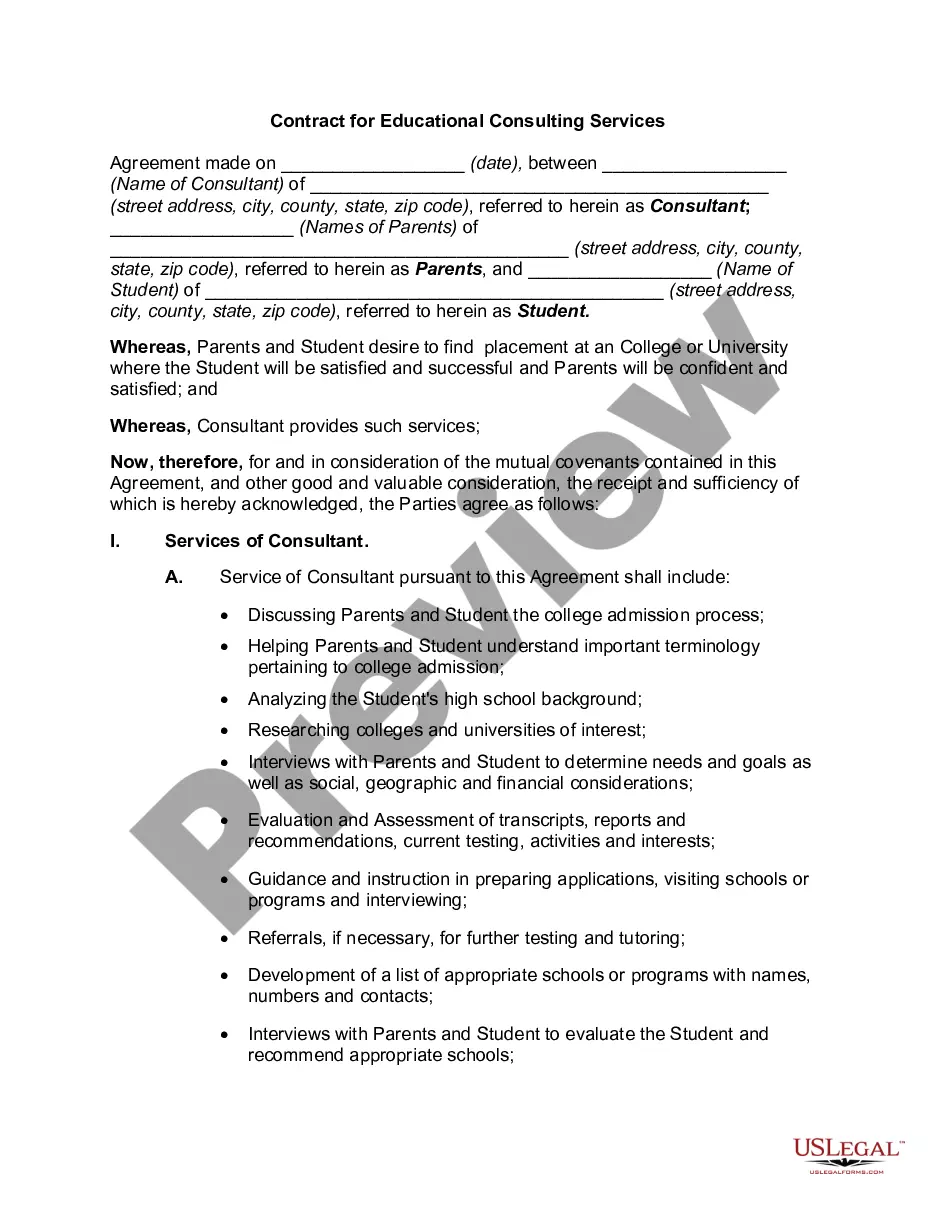
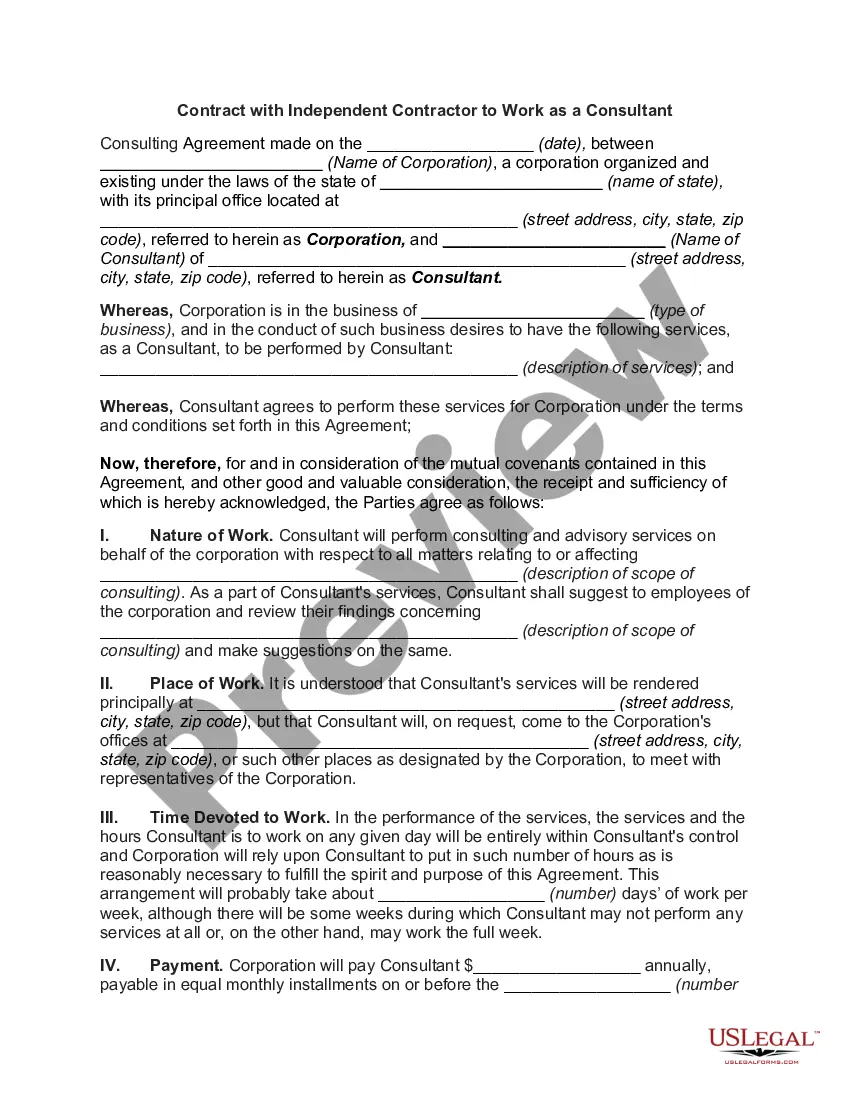
Consultant Contract Under Withholding In Florida
Description

Get your form ready online
Our built-in tools help you complete, sign, share, and store your documents in one place.
Make edits, fill in missing information, and update formatting in US Legal Forms—just like you would in MS Word.
Download a copy, print it, send it by email, or mail it via USPS—whatever works best for your next step.
Sign and collect signatures with our SignNow integration. Send to multiple recipients, set reminders, and more. Go Premium to unlock E-Sign.
If this form requires notarization, complete it online through a secure video call—no need to meet a notary in person or wait for an appointment.
We protect your documents and personal data by following strict security and privacy standards.

Make edits, fill in missing information, and update formatting in US Legal Forms—just like you would in MS Word.

Download a copy, print it, send it by email, or mail it via USPS—whatever works best for your next step.

Sign and collect signatures with our SignNow integration. Send to multiple recipients, set reminders, and more. Go Premium to unlock E-Sign.

If this form requires notarization, complete it online through a secure video call—no need to meet a notary in person or wait for an appointment.

We protect your documents and personal data by following strict security and privacy standards.
Looking for another form?








Form popularity
FAQ
When dealing with construction and renovation, hiring a licensed contractor is critical to ensuring quality work and legal compliance. In Florida, unlicensed contracting is not only a risky affair for homeowners and businesses but also a legal issue that can result in criminal charges and civil actions.
Civil penalties for breaches can involve financial restitution, loss of business relationships, or court-ordered performance. Alternative dispute resolution (ADR) methods like mediation and arbitration can help resolve breaches without litigation.
In such situations, the non-breaching party has several legal remedies available to seek compensation or appropriate resolution. There are six common legal remedies for breach of contract matters: compensatory damages, specific performance, injunction, rescission, liquidated damages and nominal damages.
In fact, there are four or five main legal remedies available in Florida construction law for breach of contract issues: damages, repudiation, specific performance, reformation and rescission.
Does Florida limit the amount of retainage that can be withheld from a contractor? Under Florida's new retainage laws, retainage is capped at 5% of each progress payment. While the requirement to reduce retainage percentage at 50% completion is no longer in effect, the contract can provide for a reduction.
There are three different courses of action available to the court. Firstly, damages may be awarded to put the claimant in the position they should have been in, had the contract terms been carried out correctly. Secondly, where the breach is repudiatory, the contract can be terminated. Damages may also be payable.
Employers and their HR teams need to know which kind of staff they are hiring to offer a legal employment contract to each kind of team member. An independent contractor in the state of Florida is defined as someone who: Reports payment of $600 or more per year on the IRS form 1099.
6 Steps to Become an Independent Contractor Figure Out Your Business Structure. Pick a Business Name and Register It. Get a Tax Registration Certificate. Get Any Vocational Licenses You Need. Start a Dedicated Business Bank Account. Set Up a Way To Receive Payments.
How to become a contractor in Florida Decide on what kind of contractor you want to be. Meet the age requirements and pass a background check. Obtain four years of experience in construction. Study for and pass the Florida State Construction Examination. Acquire general liability insurance. Register as a business entity.
What is the economic nexus threshold in Florida? Out-of-state sellers can achieve sales tax nexus in Florida if they have Florida sales that add up to a gross revenue of more than $100,000 in a calendar year.
