Difference Between A Commercial And Retail Lease In Massachusetts
Description

Get your form ready online
Our built-in tools help you complete, sign, share, and store your documents in one place.
Make edits, fill in missing information, and update formatting in US Legal Forms—just like you would in MS Word.
Download a copy, print it, send it by email, or mail it via USPS—whatever works best for your next step.
Sign and collect signatures with our SignNow integration. Send to multiple recipients, set reminders, and more. Go Premium to unlock E-Sign.
If this form requires notarization, complete it online through a secure video call—no need to meet a notary in person or wait for an appointment.
We protect your documents and personal data by following strict security and privacy standards.

Make edits, fill in missing information, and update formatting in US Legal Forms—just like you would in MS Word.

Download a copy, print it, send it by email, or mail it via USPS—whatever works best for your next step.

Sign and collect signatures with our SignNow integration. Send to multiple recipients, set reminders, and more. Go Premium to unlock E-Sign.

If this form requires notarization, complete it online through a secure video call—no need to meet a notary in person or wait for an appointment.

We protect your documents and personal data by following strict security and privacy standards.
Looking for another form?


Form popularity
FAQ
A retail lease is used where there is a sale of goods or services, often in a shopping centre (cluster of 5 or more stores). A commercial lease is used for warehouse, industrial or office space premises.
Standard Commercial Lease Agreements. A standard commercial lease is about three to five years. As a middle ground between short and long leases, standard commercial leases bring the best of both together. Standard lease agreements give tenants some flexibility in negotiations and the ability to move in the future.
Key Commercial Lease Types Explained Gross Lease. Often found in office buildings and retail spaces, gross leases provide a simple, all-inclusive rental arrangement. Net Lease. In net leases, the tenant assumes a more significant share of responsibility for building expenses. Modified Gross Lease. Percentage Lease.
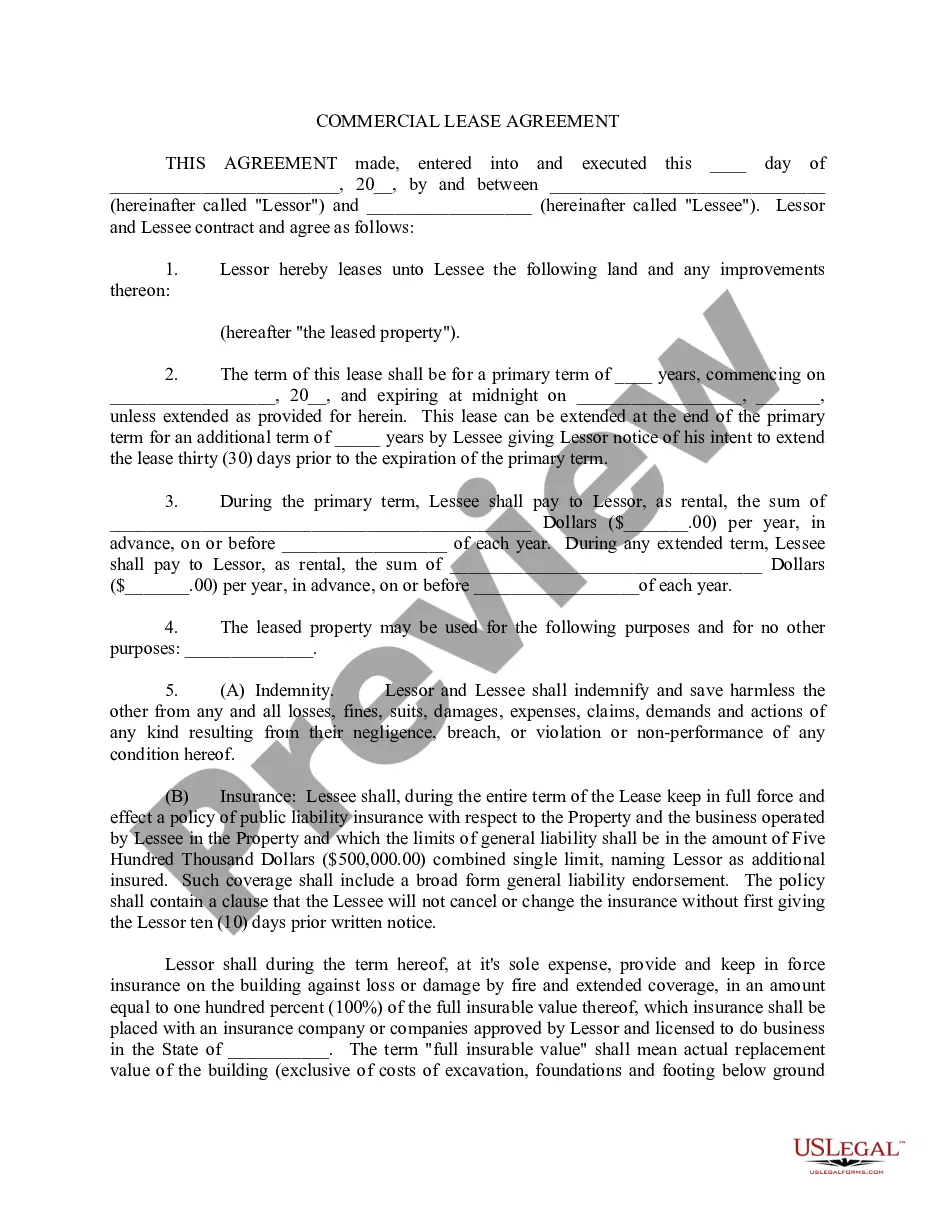
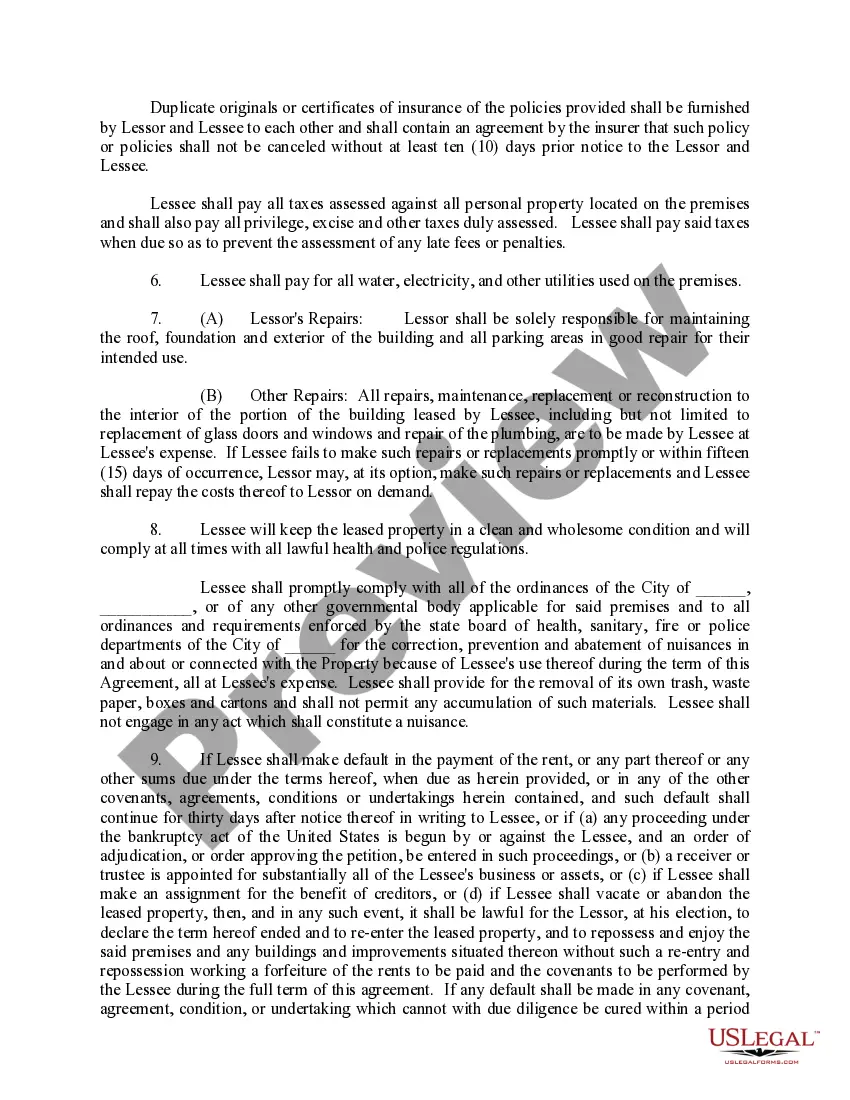
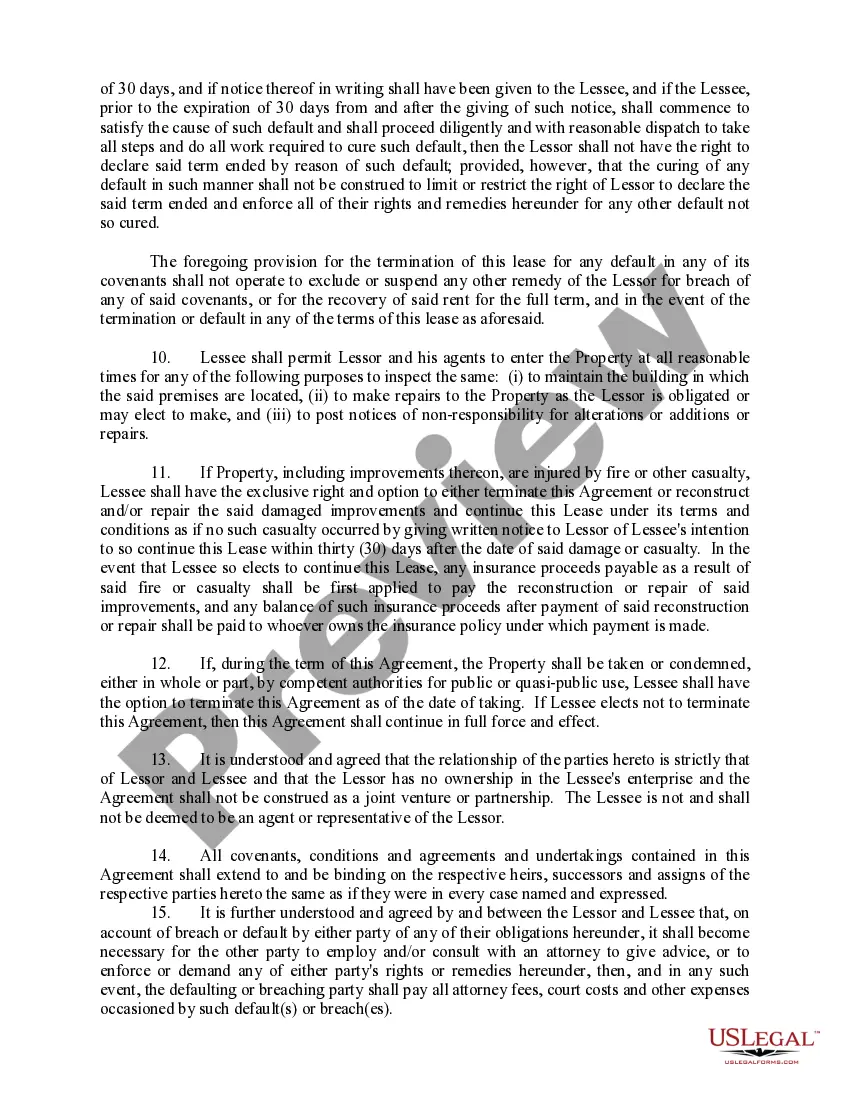
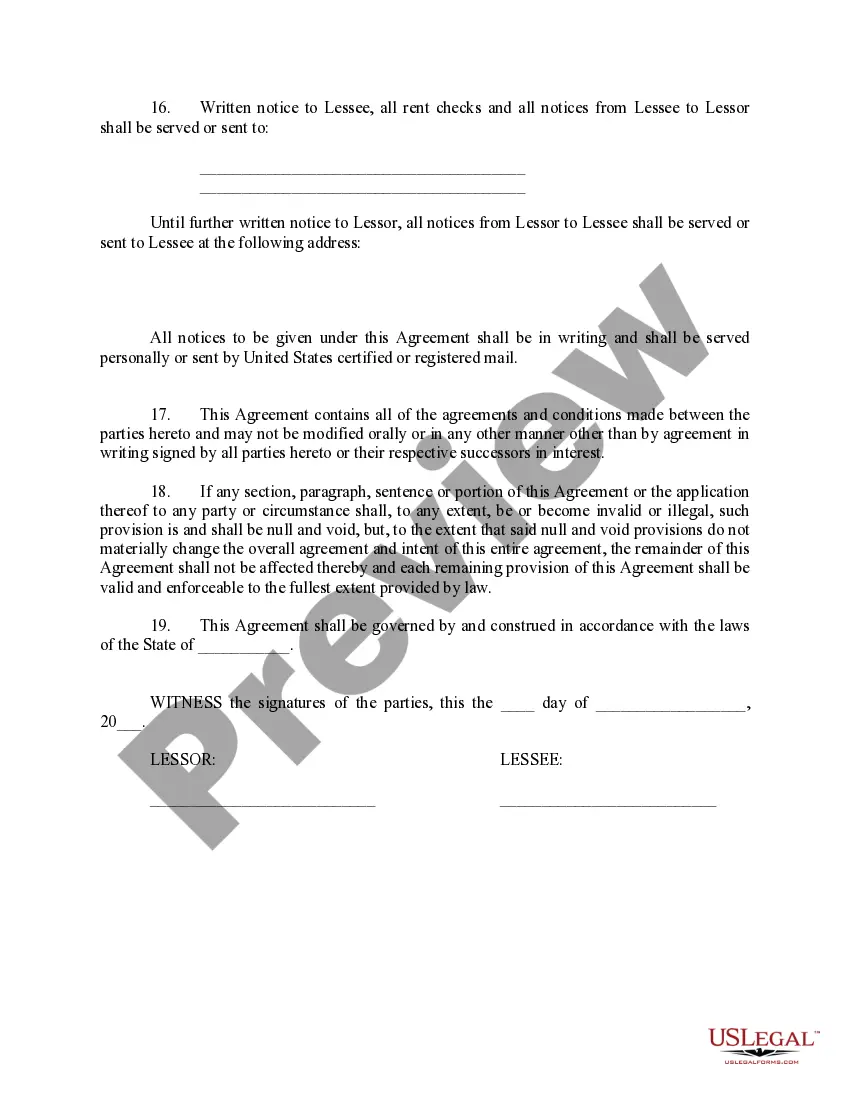
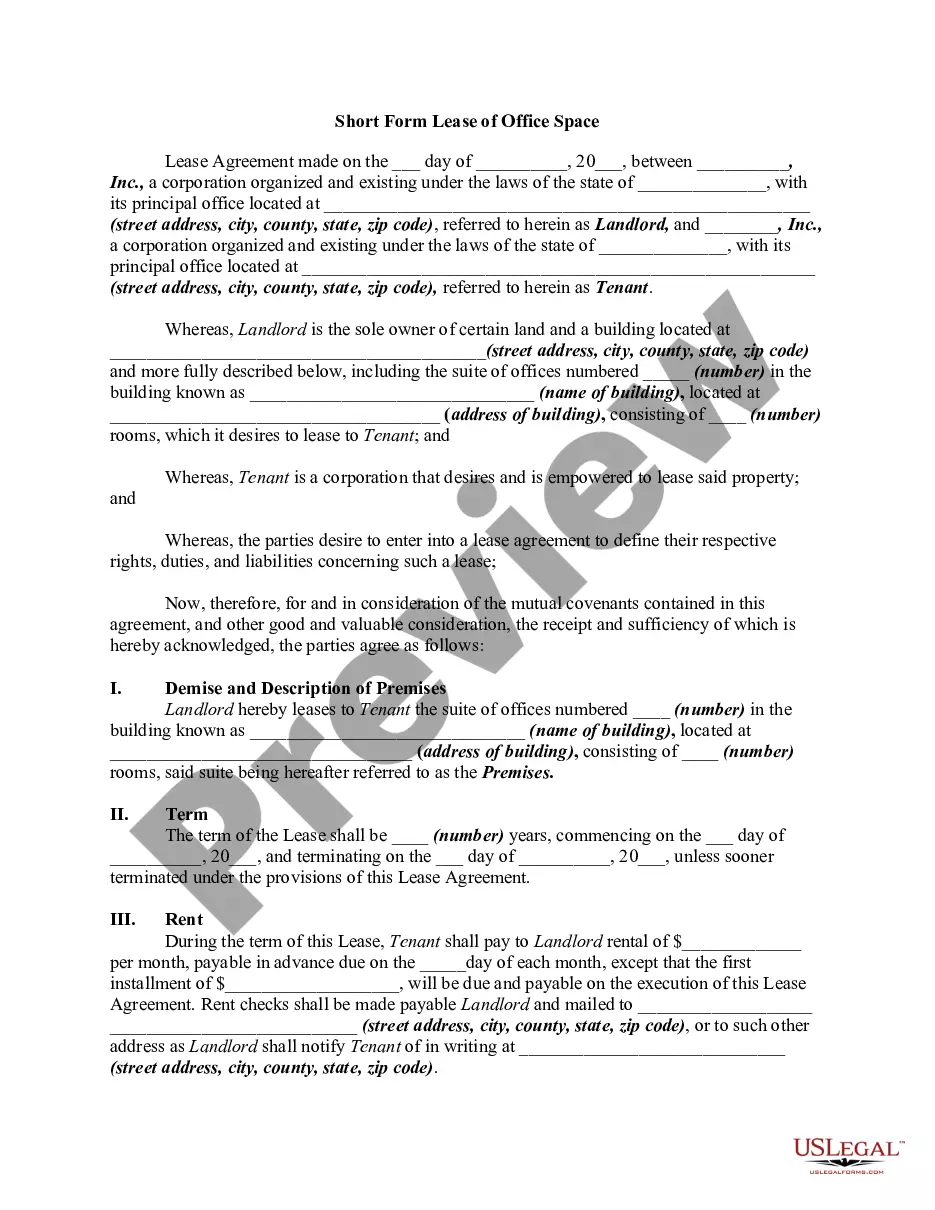
A commercial lease agreement is a contract for a business to rent an office space or other business property from a landlord. The term 'commercial' simply means that the lease is for business activities rather than housing.
10 Tips to Get out of a Commercial Lease Include a Termination Clause. Communicate With Your Landlord. Get Legal Advice. Review Your Insurance. Identify a Breach. Invoke a Clause. Assign Your Lease. Sublet the Property.
Compare Commercial Lease Agreements Gross leases tend to benefit the tenant, whereas net leases are more landlord friendly. In a gross lease, the tenant has more control over how much is spent on such expenses as janitorial services and utilities.
Commercial leases are typically fixed-term agreements, often lasting 12 months or more. A commercial rent agreement is usually a short-term arrangement, often renewing every 30 days, offering more flexibility but less long-term security.
Lessees who report under US GAAP (ASC 842), follow a two-model approach for the classification of lessee leases as either finance or operating. For lessors, the classification categories for leases are sales-type, direct financing, or operating.
Retail spaces are designed to sell products directly to customers. Think of stores where you buy clothes or groceries. Commercial spaces are used for a wider range of business activities, such as office work, manufacturing, product storage, and medical care.
