Long Term Lease For In Massachusetts
Description
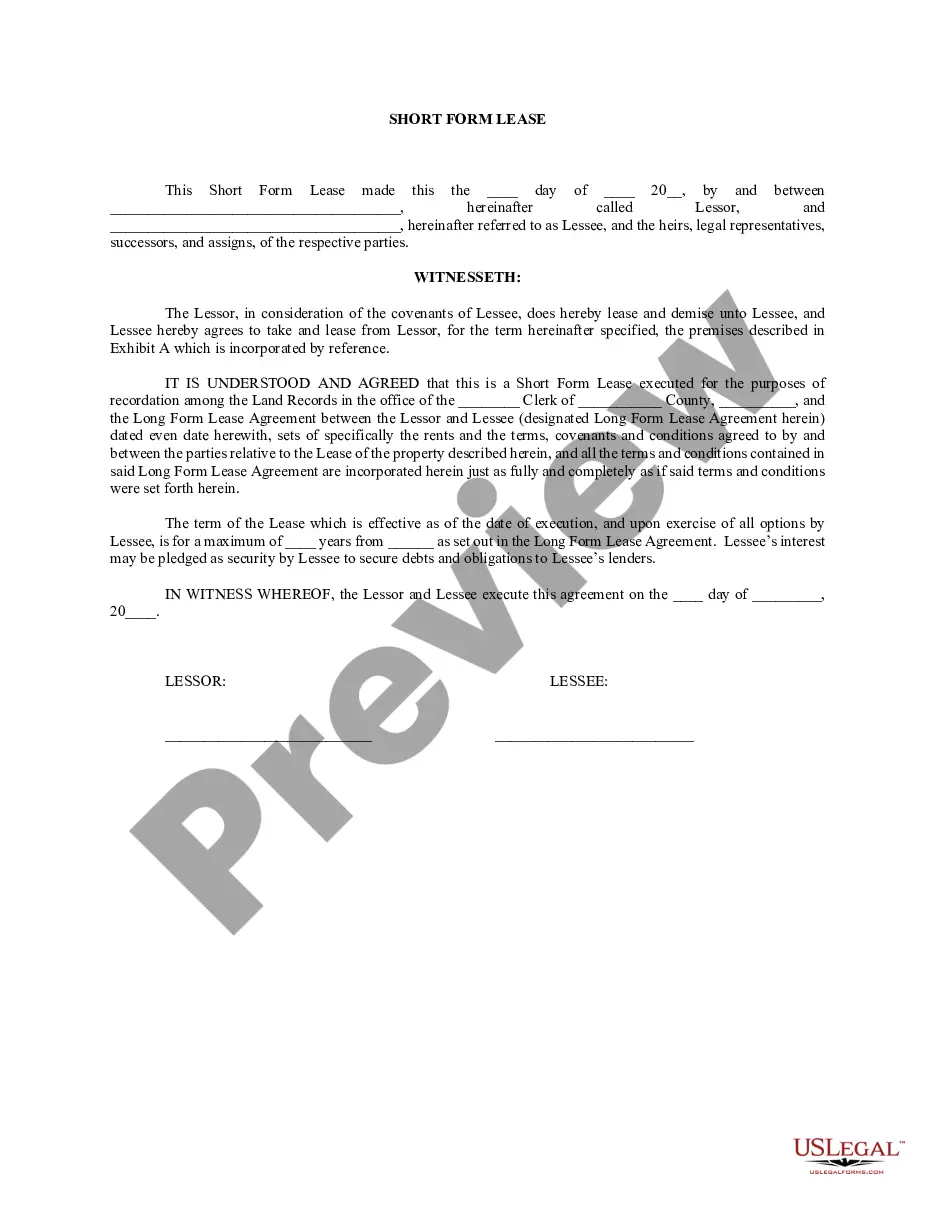
Get your form ready online
Our built-in tools help you complete, sign, share, and store your documents in one place.
Make edits, fill in missing information, and update formatting in US Legal Forms—just like you would in MS Word.
Download a copy, print it, send it by email, or mail it via USPS—whatever works best for your next step.
Sign and collect signatures with our SignNow integration. Send to multiple recipients, set reminders, and more. Go Premium to unlock E-Sign.
If this form requires notarization, complete it online through a secure video call—no need to meet a notary in person or wait for an appointment.
We protect your documents and personal data by following strict security and privacy standards.

Make edits, fill in missing information, and update formatting in US Legal Forms—just like you would in MS Word.

Download a copy, print it, send it by email, or mail it via USPS—whatever works best for your next step.

Sign and collect signatures with our SignNow integration. Send to multiple recipients, set reminders, and more. Go Premium to unlock E-Sign.

If this form requires notarization, complete it online through a secure video call—no need to meet a notary in person or wait for an appointment.

We protect your documents and personal data by following strict security and privacy standards.
Looking for another form?






Form popularity
FAQ
Long lasting: A 100-year lease offers decades of ownership and may never become an issue during your time in the property. Potential for extension: Most leasehold properties allow owners to extend the lease, often by an additional 90 years, ensuring long-term value.
Emergency help with housing payments (RAFT) You may be eligible for RAFT if: You're at risk for homelessness or housing instability. Your income is less than 50% of your city/town's Area Median Income (AMI) Your income is less than 60% of your city/town's AMI and you are at risk of domestic violence.
In the law of several US states, a 99-year lease will always be the longest possible contract for realty by statute, but many states have enacted shorter terms and some allow infinite terms.
999 years is the maximum term for a lease. A formal lease extension is limited to 90 years, but an informal extension can extend up to 999 years. Extending to 999 years can add 5 to 7% to the value of the property.
In the law of several US states, a 99-year lease will always be the longest possible contract for realty by statute, but many states have enacted shorter terms and some allow infinite terms.
Key Features of Long-Term Leases These leases typically extend beyond 5 years and can last up to 25 years or more. While these often require more front-end legal work, they offer tenants more certainty.
The main difference between leasing and renting a property is the length of the contract. Leasehold is usually granted for at least 21 years and can last as long as 999 years.
Limited Flexibility- Long-term leases aren't suitable for everyone, like those with uncertain future plans or frequent relocations. Long-Term Commitment- Committing to a longer lease can limit options if circumstances change unexpectedly.
If the tenant is able to prove their claim to their landlord, they may be able to break the lease early. Overall, tenants must provide a notice letter with an attached copy of a valid protection order, court record, or written verification from a qualified person that confirms the claim.
Key Features of Long-Term Leases These leases typically extend beyond 5 years and can last up to 25 years or more. While these often require more front-end legal work, they offer tenants more certainty.
