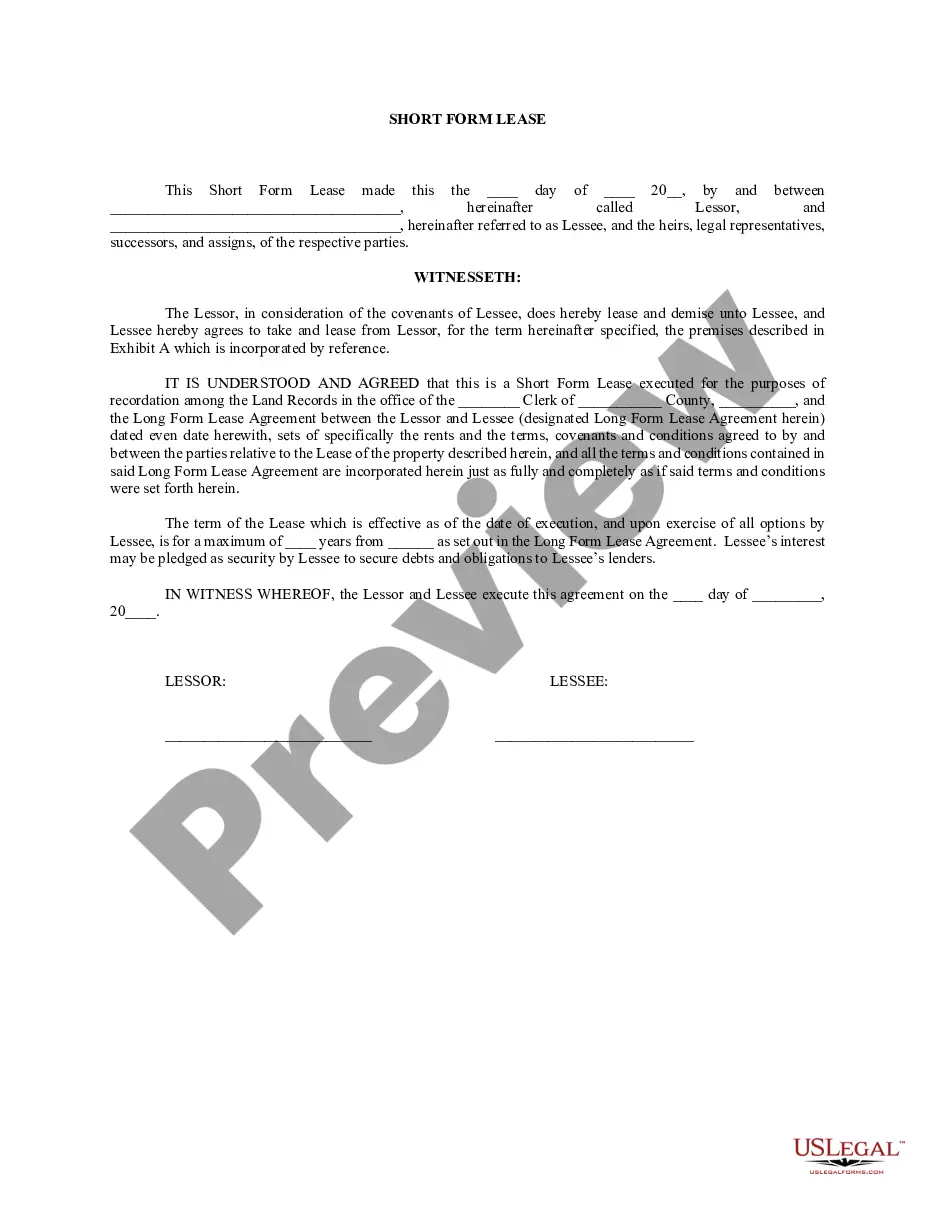
Long Term Lease Agreement For Land In Cuyahoga
Description
Get your form ready online
Our built-in tools help you complete, sign, share, and store your documents in one place.
Make edits, fill in missing information, and update formatting in US Legal Forms—just like you would in MS Word.
Download a copy, print it, send it by email, or mail it via USPS—whatever works best for your next step.
Sign and collect signatures with our SignNow integration. Send to multiple recipients, set reminders, and more. Go Premium to unlock E-Sign.
If this form requires notarization, complete it online through a secure video call—no need to meet a notary in person or wait for an appointment.
We protect your documents and personal data by following strict security and privacy standards.

Make edits, fill in missing information, and update formatting in US Legal Forms—just like you would in MS Word.

Download a copy, print it, send it by email, or mail it via USPS—whatever works best for your next step.

Sign and collect signatures with our SignNow integration. Send to multiple recipients, set reminders, and more. Go Premium to unlock E-Sign.

If this form requires notarization, complete it online through a secure video call—no need to meet a notary in person or wait for an appointment.

We protect your documents and personal data by following strict security and privacy standards.
Looking for another form?

Form popularity
FAQ
A lease agreement is a legally binding contract outlining the terms under which one party agrees to rent property, whether real or personal, from another party. This agreement includes important details such as the rent amount, duration, responsibilities of both parties, and conditions for terminating the agreement.
In the law of several US states, a 99-year lease will always be the longest possible contract for realty by statute, but many states have enacted shorter terms and some allow infinite terms.
Negotiating a Longer Lease Perhaps you can offer a slightly longer lease with a move-in date that works for them. Focus on Mutually Beneficial Terms: While a longer lease benefits the landlord with stability, you can still negotiate for perks.
If you own your flat, you can extend your lease by law if you meet certain conditions: it must be a 'long lease' – a lease with an original term of more than 21 years when it was first granted. your landlord is not a charity providing a flat for you as part of their work. it is not a business or commercial lease.
In many places, there is no strict legal maximum, but rental agreements typically range from 6 months to 1 year for residential leases. Some locations allow longer-term leases, such as 2 to 3 years, while others may require renewal after a certain period.
A leasehold agreement will outline the length of the lease – It usually starts off at 125 years or 1000 years. Essentially, this means you rent your property on a 125 or 1000 year contract. Unlike a normal rental property, you own this lease and have the right to sell it to someone else.
In the law of several US states, a 99-year lease will always be the longest possible contract for realty by statute, but many states have enacted shorter terms and some allow infinite terms.
What is a Lease? A lease is an implied or written agreement specifying the conditions under which a lessor accepts to let out a property to be used by a lessee. The agreement promises the lessee use of the property for an agreed length of time while the owner is assured consistent payment over the agreed period.
A property can be leased out for a period of time between 30 years to 99 years. is basically if anyone has purchased the land as a 99 year leasehold, that person will be the owner of the property for 99 years only after that the land will be given back to the original land owner.
