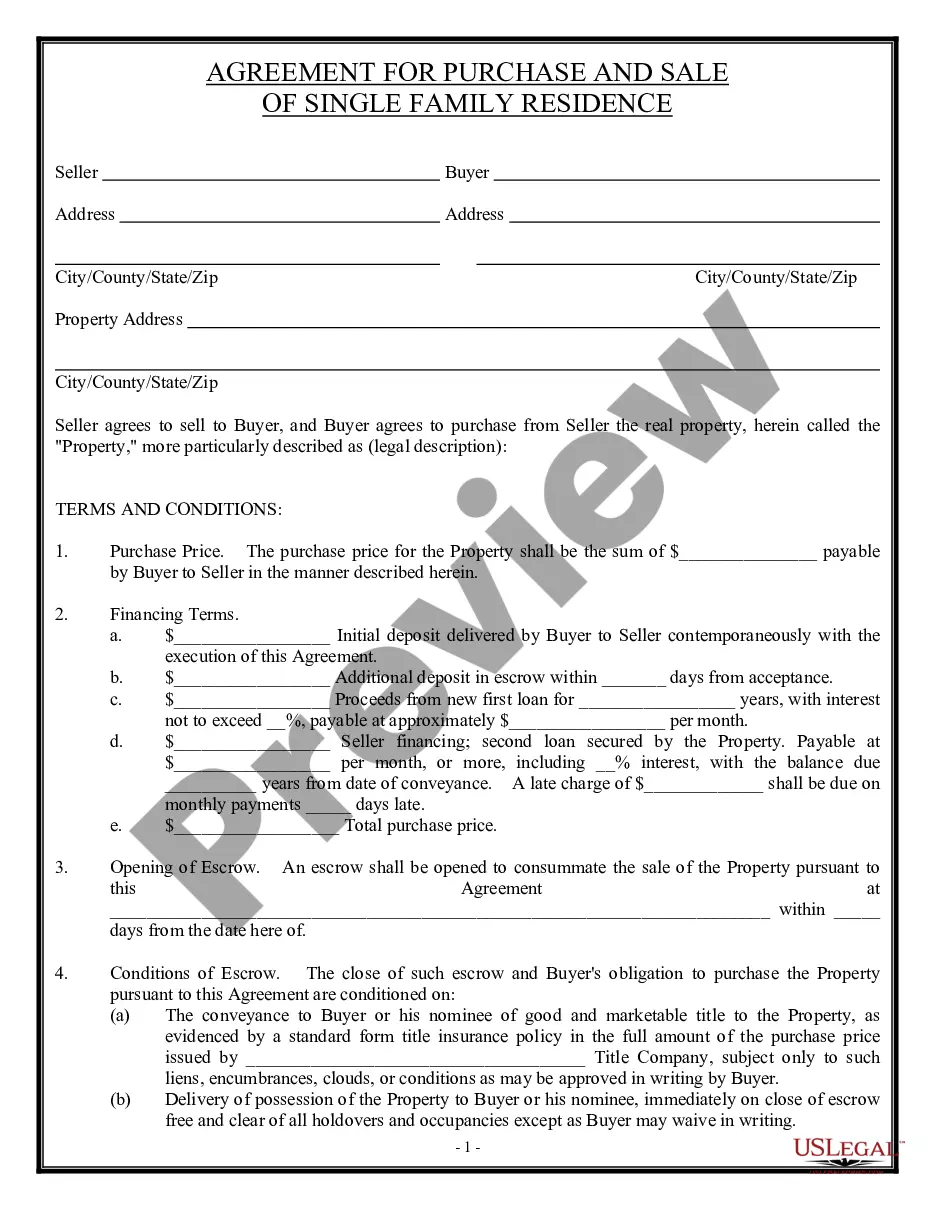
Purchase Agreement For Sale By Owner Fort Wayne In King
Description


Form popularity
FAQ
To write a simple contract, title it clearly, identify all parties and specify terms (services or payments). Include an offer, acceptance, consideration, and intent. Add a signature and date for enforceability. Written contracts reduce disputes and offer better legal security than verbal ones.
What should be included in a buy-sell agreement? Any stakeholders, including partners or owners, and their current stake in the business' equity. Events that would trigger a buyout, such as death, disability, divorce, retirement, or bankruptcy. A recent business valuation.
Write the contract in six steps Start with a contract template. Open with the basic information. Describe in detail what you have agreed to. Include a description of how the contract will be ended. Write into the contract which laws apply and how disputes will be resolved. Include space for signatures.
In Indiana, a breach can take several forms, including: Failure to perform on time: A party may breach the contract if they fail to complete their obligations by the deadline set forth in the agreement. Failure to perform as agreed: Even if performance occurs on time, it may not satisfy the terms of the contract.
Land contracts (aka “land installment contracts” or “contracts for deed”) are agreements in which a homebuyer makes regular payments to the seller but the deed does not transfer at the outset; instead, the seller retains full ownership of the property until the final payment.
The Land Contract or Memorandum must state that the buyer is responsible for paying the property taxes. The Land Contract or Memorandum must be selling the property.
In Indiana, a seller ordinarily must foreclose on a land contract buyer, who has defaulted under the land contract. Generally, the seller cannot evict the buyer, or seek forfeiture. The distinction being made here is between the remedies of foreclosure versus forfeiture. This distinction looms large in Indiana.
A SPA is a legally binding contract that sets out the terms and conditions of a sale between a buyer and a seller. It is typically used in the context of buying and selling a business or a significant asset, such as shares in a company.
