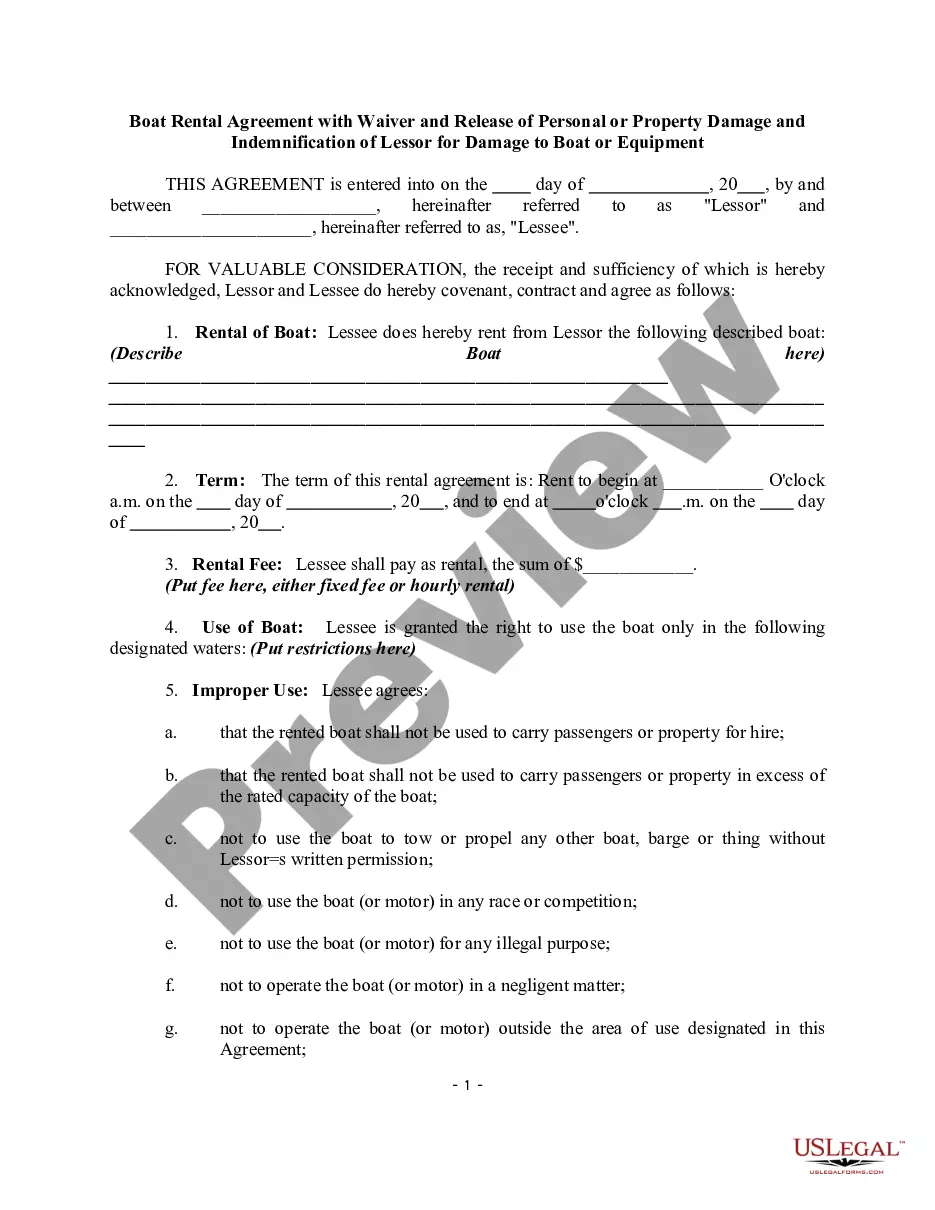
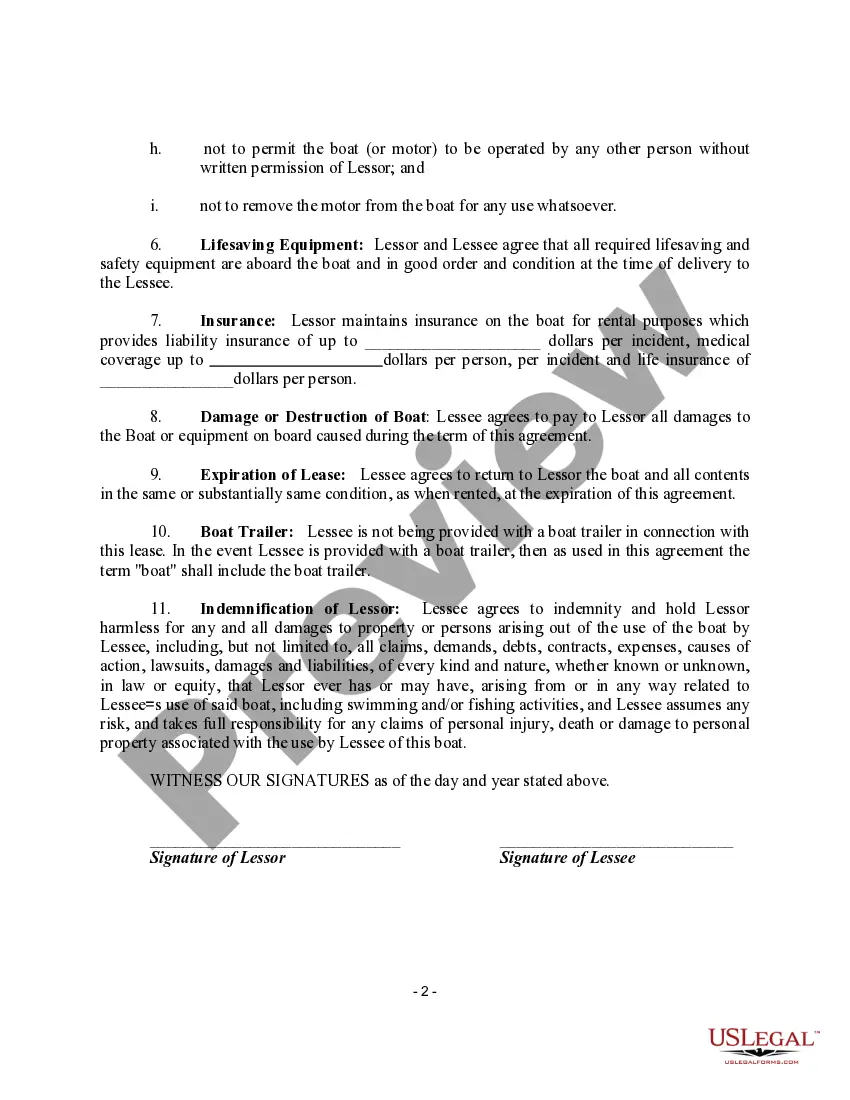
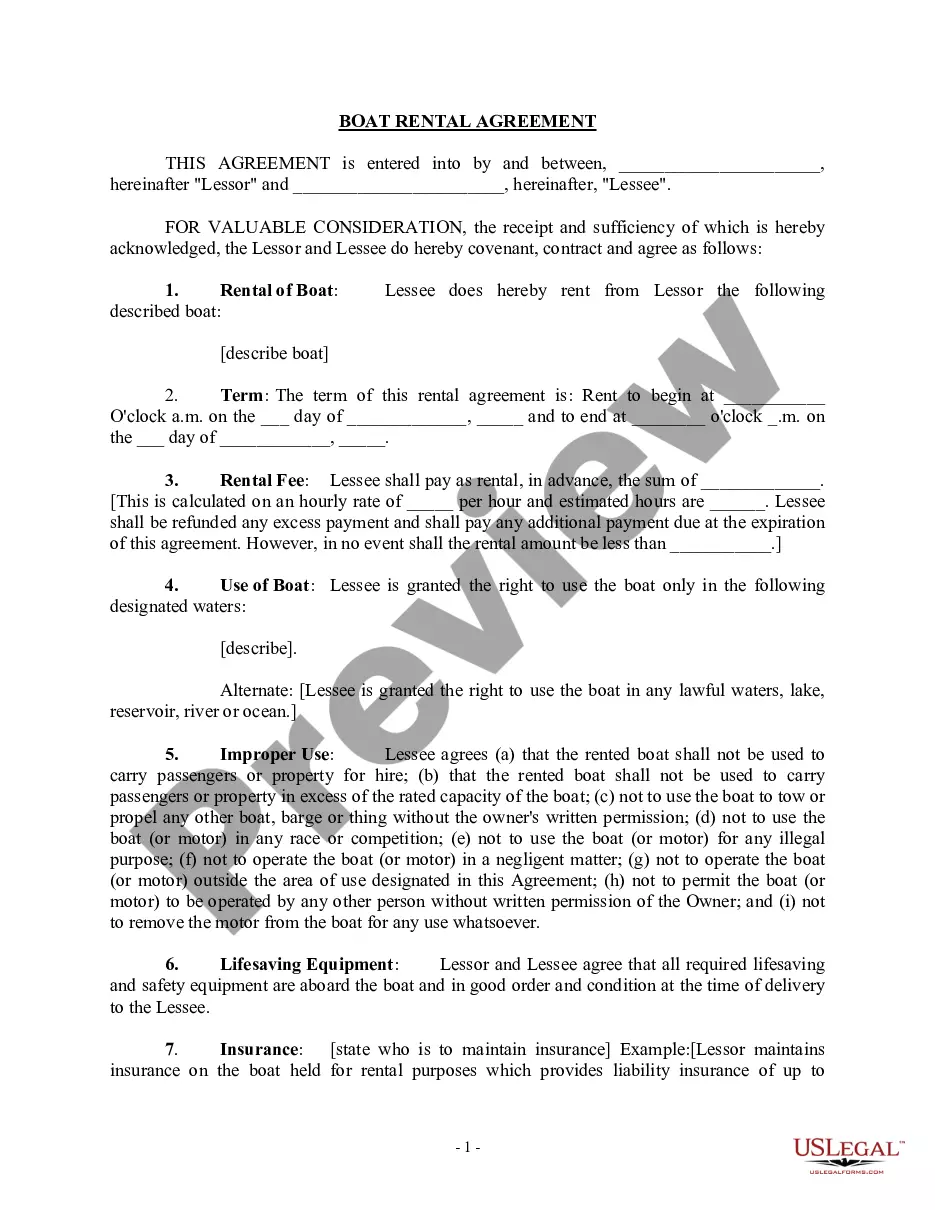
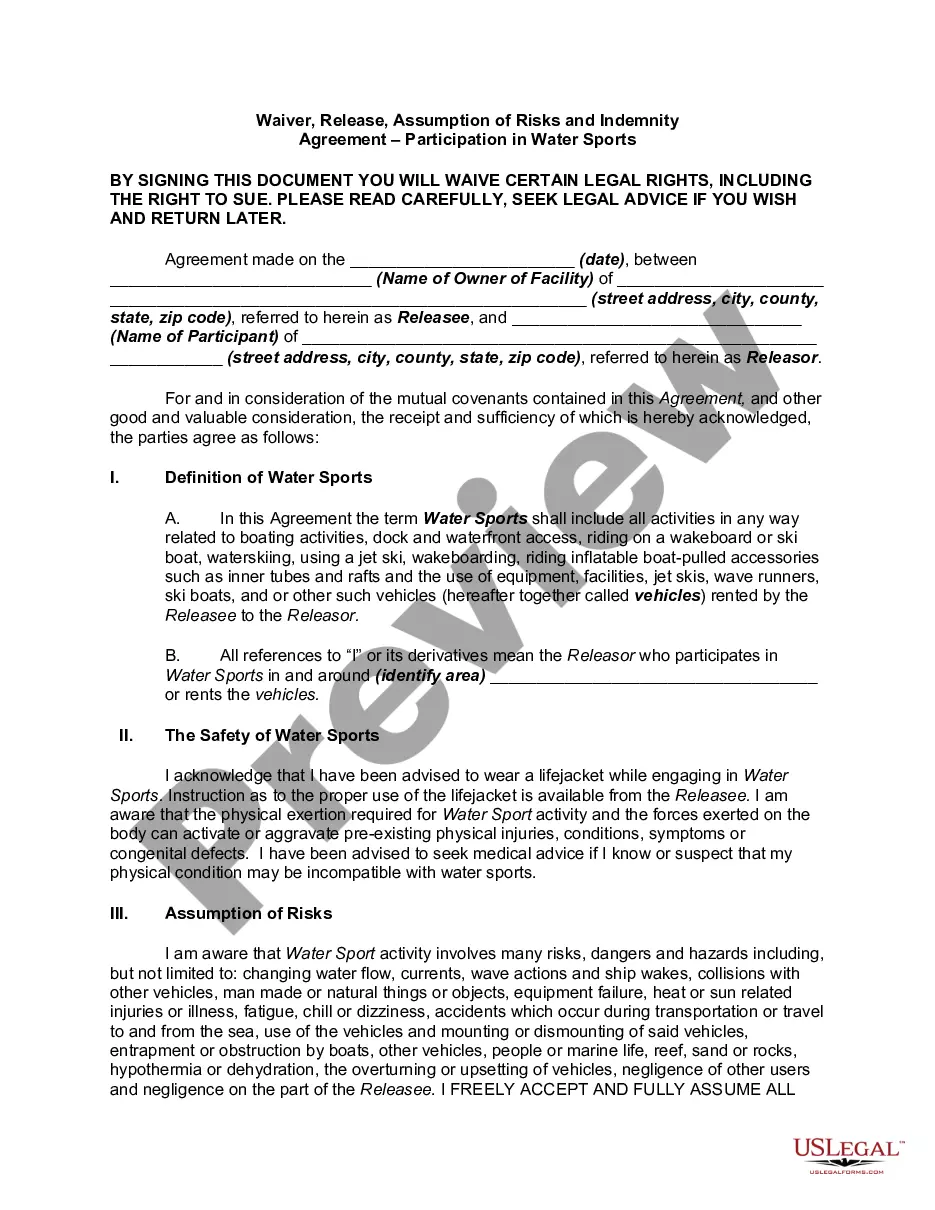
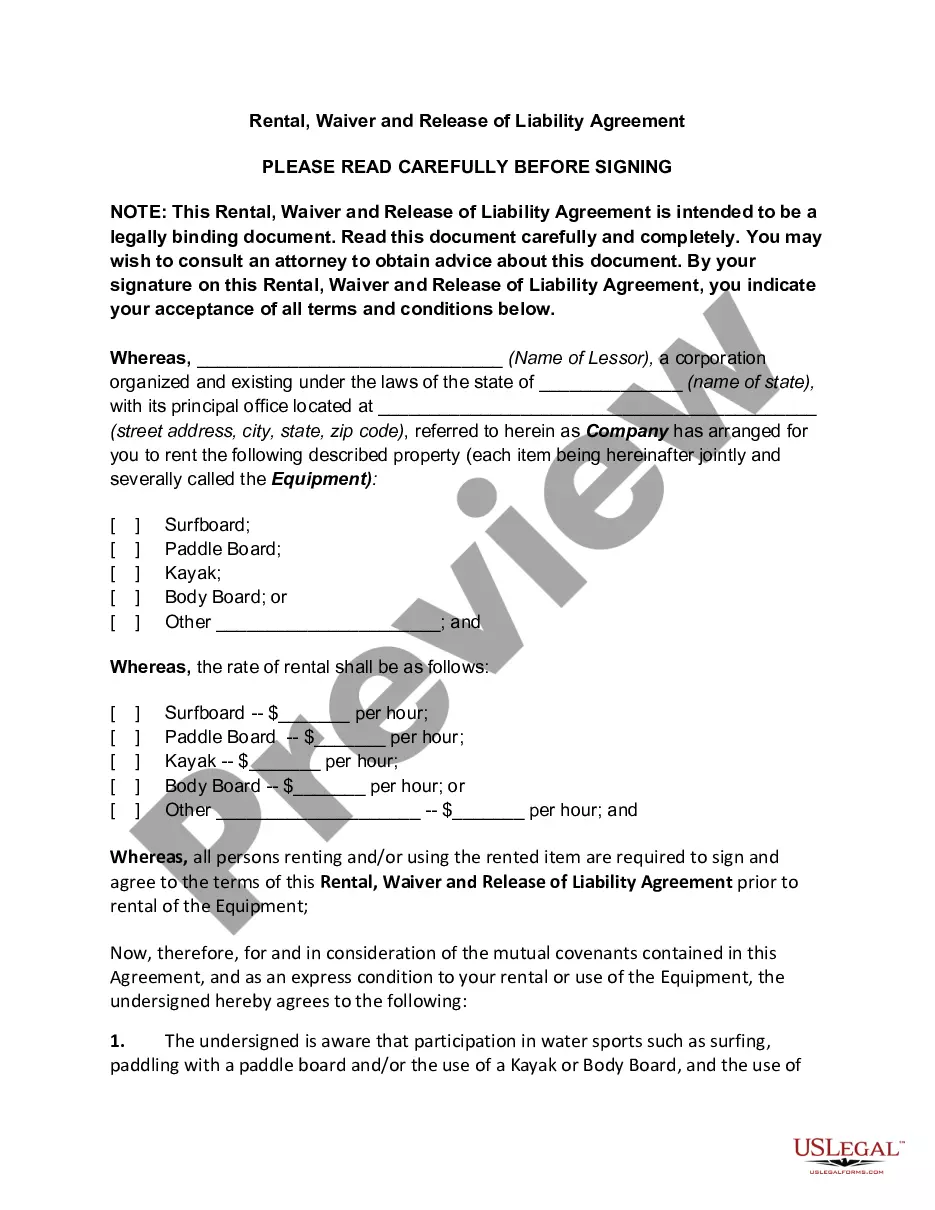
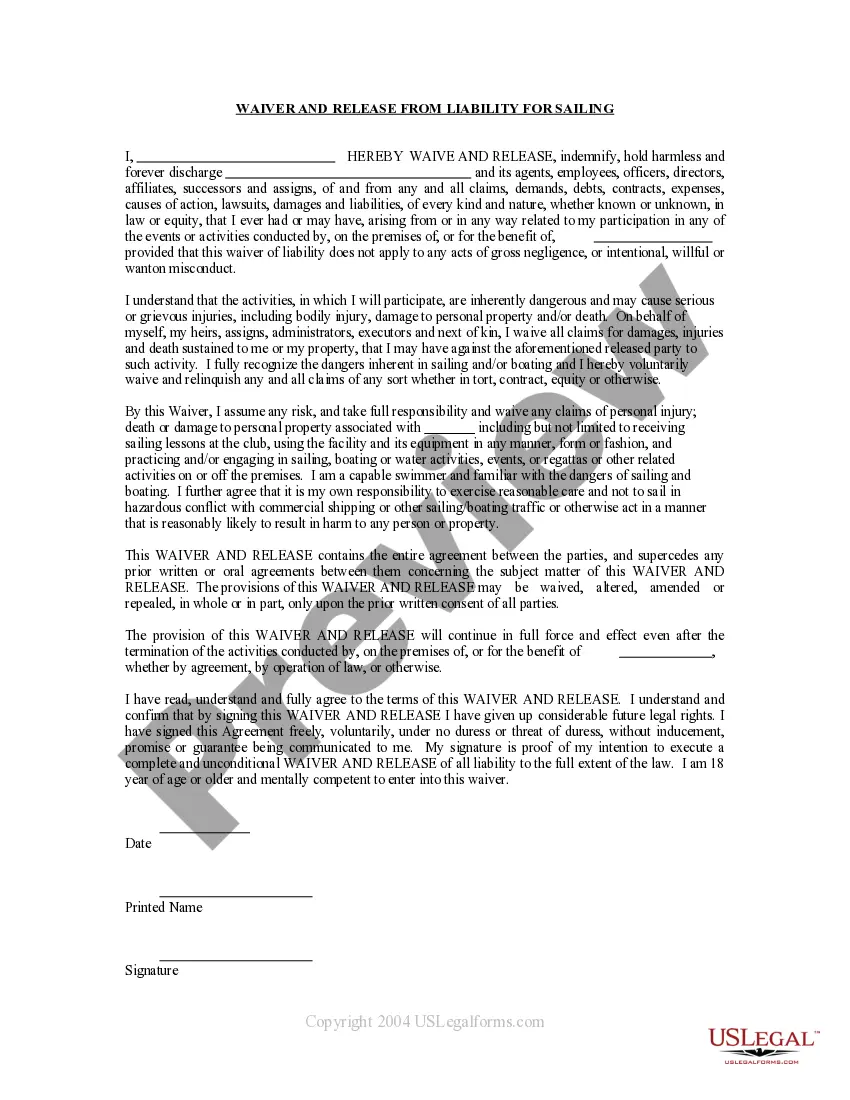
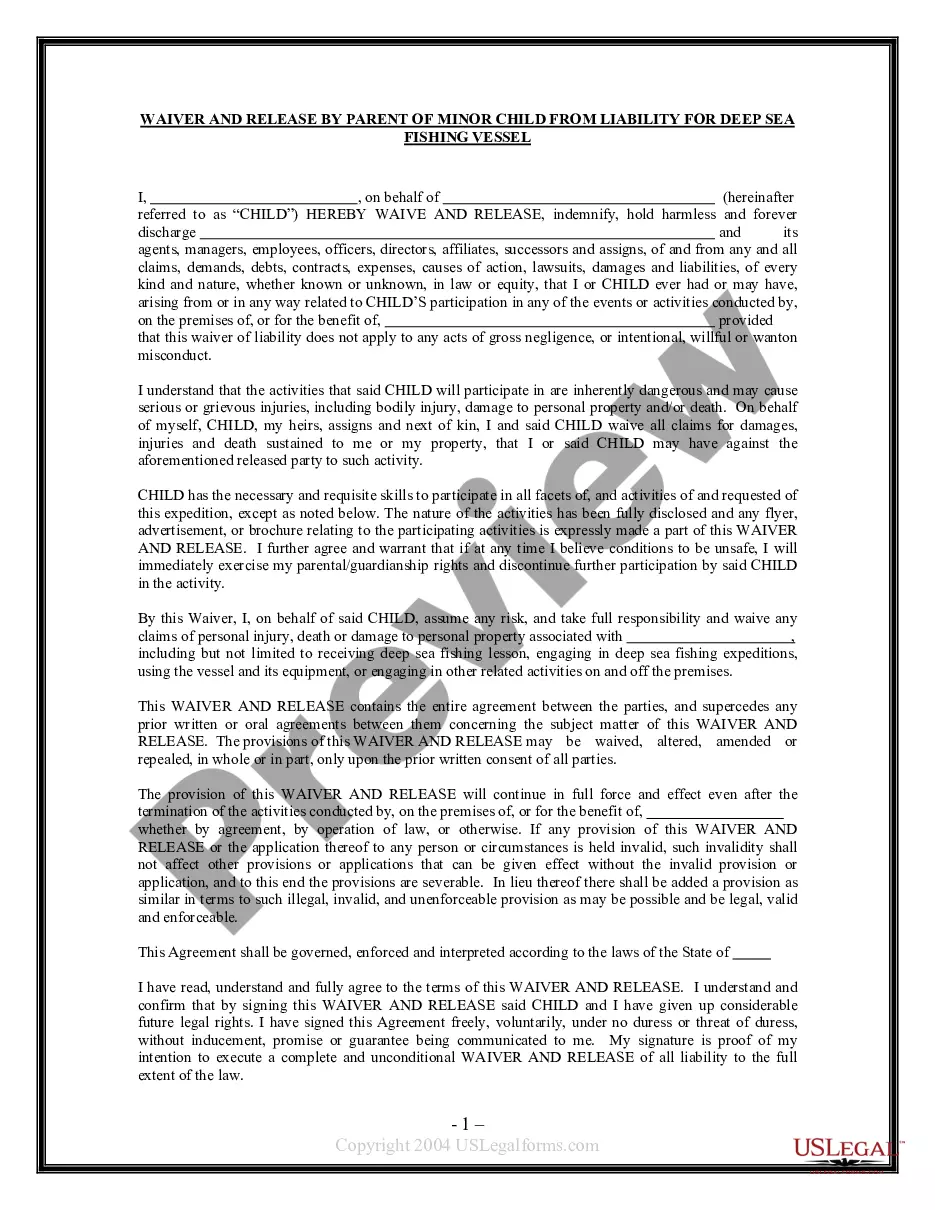
Boat Rental Liability Waiver For Liability In Texas
Description
Get your form ready online
Our built-in tools help you complete, sign, share, and store your documents in one place.
Make edits, fill in missing information, and update formatting in US Legal Forms—just like you would in MS Word.
Download a copy, print it, send it by email, or mail it via USPS—whatever works best for your next step.
Sign and collect signatures with our SignNow integration. Send to multiple recipients, set reminders, and more. Go Premium to unlock E-Sign.
If this form requires notarization, complete it online through a secure video call—no need to meet a notary in person or wait for an appointment.
We protect your documents and personal data by following strict security and privacy standards.

Make edits, fill in missing information, and update formatting in US Legal Forms—just like you would in MS Word.

Download a copy, print it, send it by email, or mail it via USPS—whatever works best for your next step.

Sign and collect signatures with our SignNow integration. Send to multiple recipients, set reminders, and more. Go Premium to unlock E-Sign.

If this form requires notarization, complete it online through a secure video call—no need to meet a notary in person or wait for an appointment.

We protect your documents and personal data by following strict security and privacy standards.
Looking for another form?
Form popularity
FAQ
In general, liability waivers are enforceable in Texas as long as they meet the requirements of fair notice. This means that the waiver must be: Clear and unambiguous.
How to create a liability waiver List the names and addresses of the parties. Give the date of the agreement and how long it is in effect for. List the location of the event or activity. Describe the activity or event the customer is going to participate in. List the possible risks and injuries.
Texas law requires you to have at least $30,000 of coverage for injuries per person, up to a total of $60,000 per accident, and $25,000 of coverage for property damage. This is called 30/60/25 coverage.
A release of liability, or “waiver of liability,” is a legally binding agreement between two parties. It outlines the voluntary assumption of risk for a situation and releases one party from any legal claims or damages that may arise from a specific activity, event, or relationship.
Absent a statute or public policy concern, exculpatory clauses that release a party, such as a service provider, from or limit its liability for its own ordinary negligence are generally enforceable in Texas and most other states (see Ordinary Negligence Versus Gross Negligence).
Each liable defendant is jointly and severally liable for damages recoverable by the claimant if the defendant's percentage of responsibility is greater than 50% or the defendant acted with specific intent to do harm and committed a felony (, kidnapping, etc.)
In a liability case, the person suing must show that the other person did something wrong and that it caused harm. Texas follows a modified comparative negligence system. Comparative responsibility allows a plaintiff to get compensation even if they are partly to blame, as long as their share of fault is under 51%.
In general, we will see that waivers will be deemed invalid if: The provisions of the agreement are illegal or “unconscionable.” The language of the waiver is not comprehensible, clear, or explicit. The waiver was obtained through deception, misrepresentation, fraud, undue influence, or when a person was under duress.
In general, liability waivers are enforceable in Texas as long as they meet the requirements of fair notice. This means that the waiver must be: Clear and unambiguous.