Boat Contract With Us In Massachusetts
Description
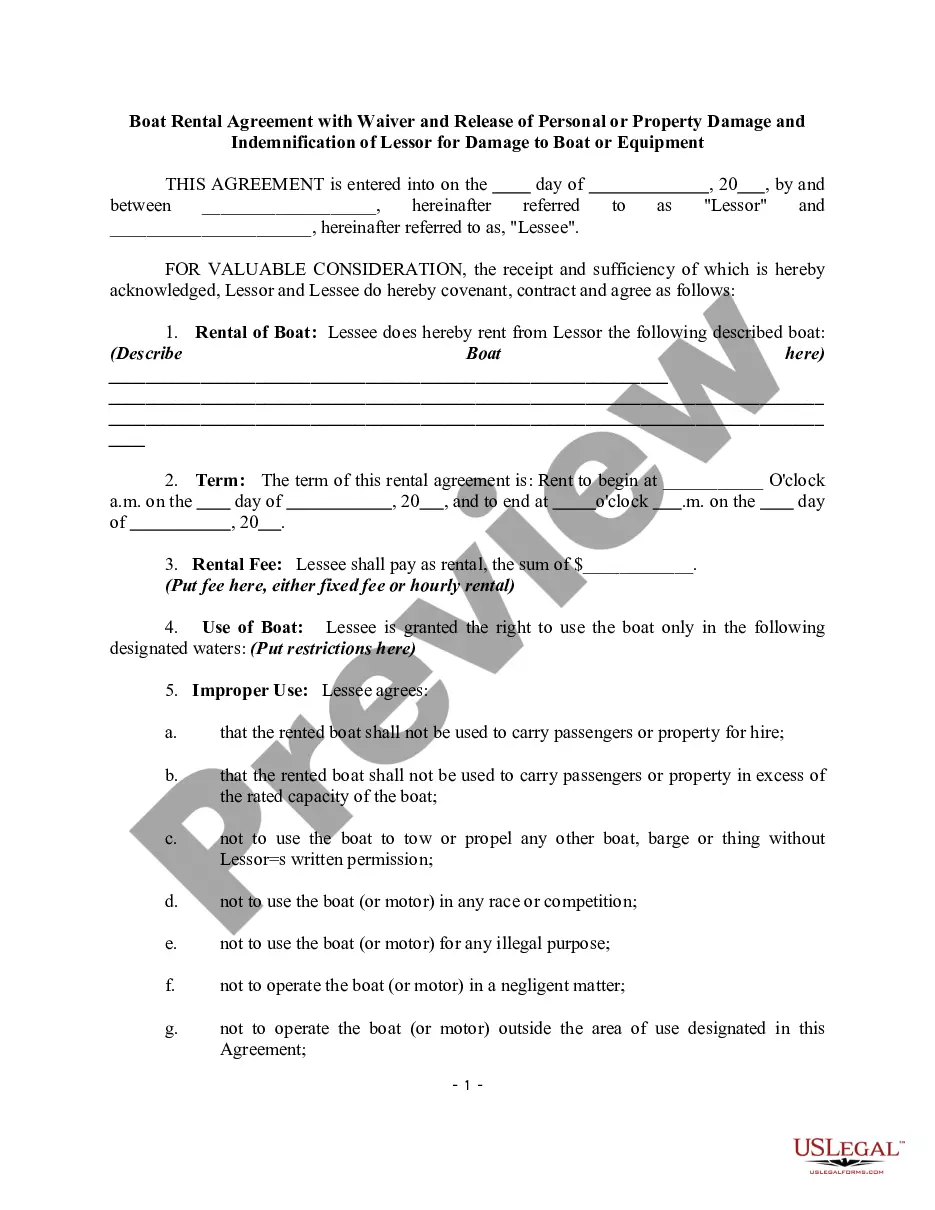
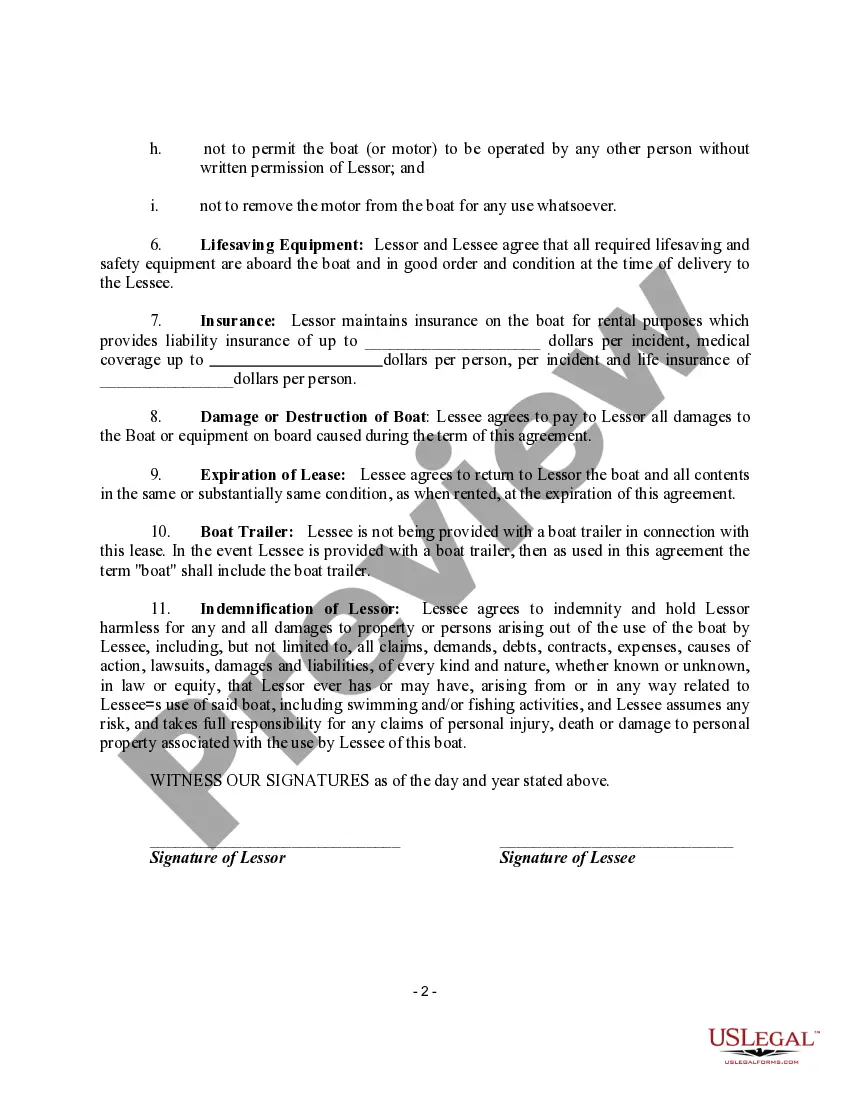
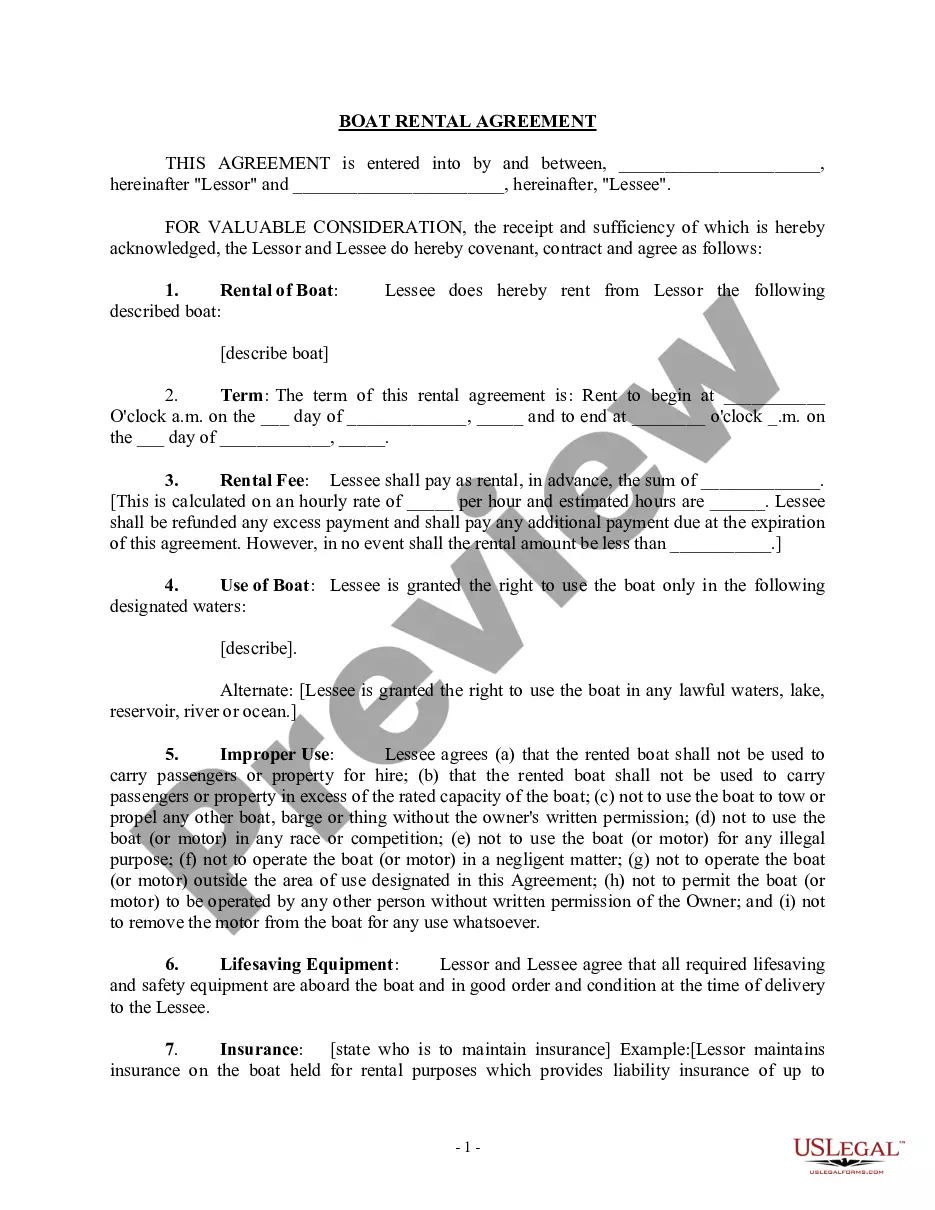
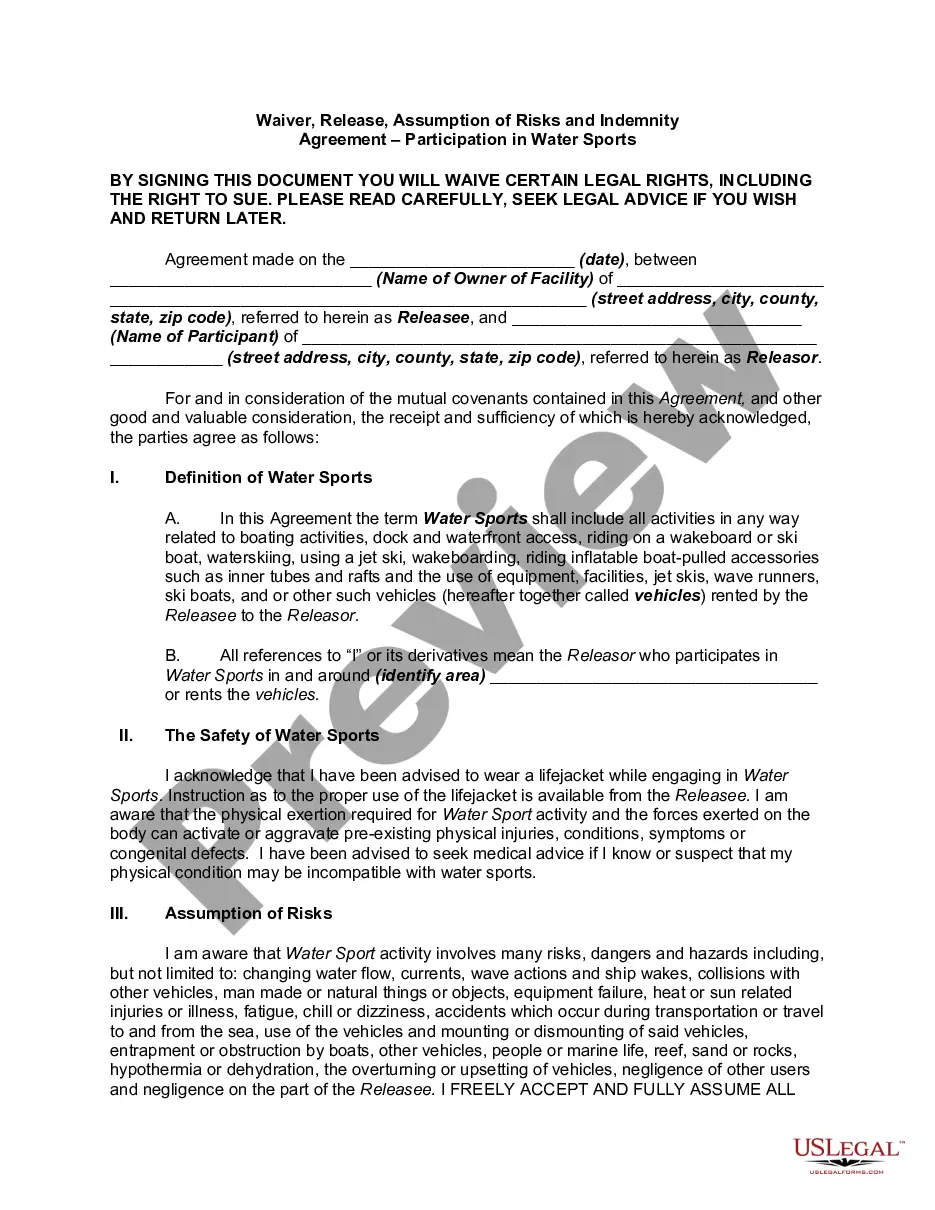
Get your form ready online
Our built-in tools help you complete, sign, share, and store your documents in one place.
Make edits, fill in missing information, and update formatting in US Legal Forms—just like you would in MS Word.
Download a copy, print it, send it by email, or mail it via USPS—whatever works best for your next step.
Sign and collect signatures with our SignNow integration. Send to multiple recipients, set reminders, and more. Go Premium to unlock E-Sign.
If this form requires notarization, complete it online through a secure video call—no need to meet a notary in person or wait for an appointment.
We protect your documents and personal data by following strict security and privacy standards.

Make edits, fill in missing information, and update formatting in US Legal Forms—just like you would in MS Word.

Download a copy, print it, send it by email, or mail it via USPS—whatever works best for your next step.

Sign and collect signatures with our SignNow integration. Send to multiple recipients, set reminders, and more. Go Premium to unlock E-Sign.

If this form requires notarization, complete it online through a secure video call—no need to meet a notary in person or wait for an appointment.

We protect your documents and personal data by following strict security and privacy standards.
Looking for another form?




Form popularity
FAQ
Is it legal to live on a boat? It is, provided you get the right mooring.
Ing to Customs and Border Protection (CBP), the current duty rates that apply to boats are: Sailboats and motorboats other than outboard motorboats: 1.5% Outboard motorboats: 1%
A person 16 or 17 years of age may operate a PWC on Massachusetts waters only if he or she has passed a state-approved boating education course. A person 18 years of age or older may operate a PWC on Massachusetts waters without age restrictions. It is illegal to lease or rent a PWC to any person under 16 years of age.
Yes, foreigners are allowed to buy land in the USA. There are no federal restrictions on foreign ownership of land, but state laws can vary, especially regarding the country of origin of the borrower and the intended use of the land. It's important for potential buyers to check local restrictions.
Specific requirements vary from state to state, but over 70% of the U.S. requires boaters who meet certain criteria to take a safety education course. The resulting accreditation is called a certificate, not a license, because it is good for life and doesn't expire.
Specific requirements vary from state to state, but over 70% of the U.S. requires boaters who meet certain criteria to take a safety education course. The resulting accreditation is called a certificate, not a license, because it is good for life and doesn't expire.
A person 16 or 17 years of age may operate a PWC on Massachusetts waters only if he or she has passed a state-approved boating education course. A person 18 years of age or older may operate a PWC on Massachusetts waters without age restrictions. It is illegal to lease or rent a PWC to any person under 16 years of age.
And it's much better for a world Cruiser. It was a super straightforward. Process all we needed wasMoreAnd it's much better for a world Cruiser. It was a super straightforward. Process all we needed was a documentation agent. And that was it. But with the new boat.
Exceptions to registration are: Vessels without any kind of motor (canoes, sailboats, or dinghies that are unpowered) Vessels properly registered in another state and using Massachusetts waters for 60 or fewer consecutive days.
The master of the boat must report to CBP telephonically and be directed to the nearest Port of Entry to satisfy the face-to-face requirement, or report to the nearest designated reporting location along with the boat's passengers for inspection.
