Corporation Without Bylaws In Santa Clara
Description

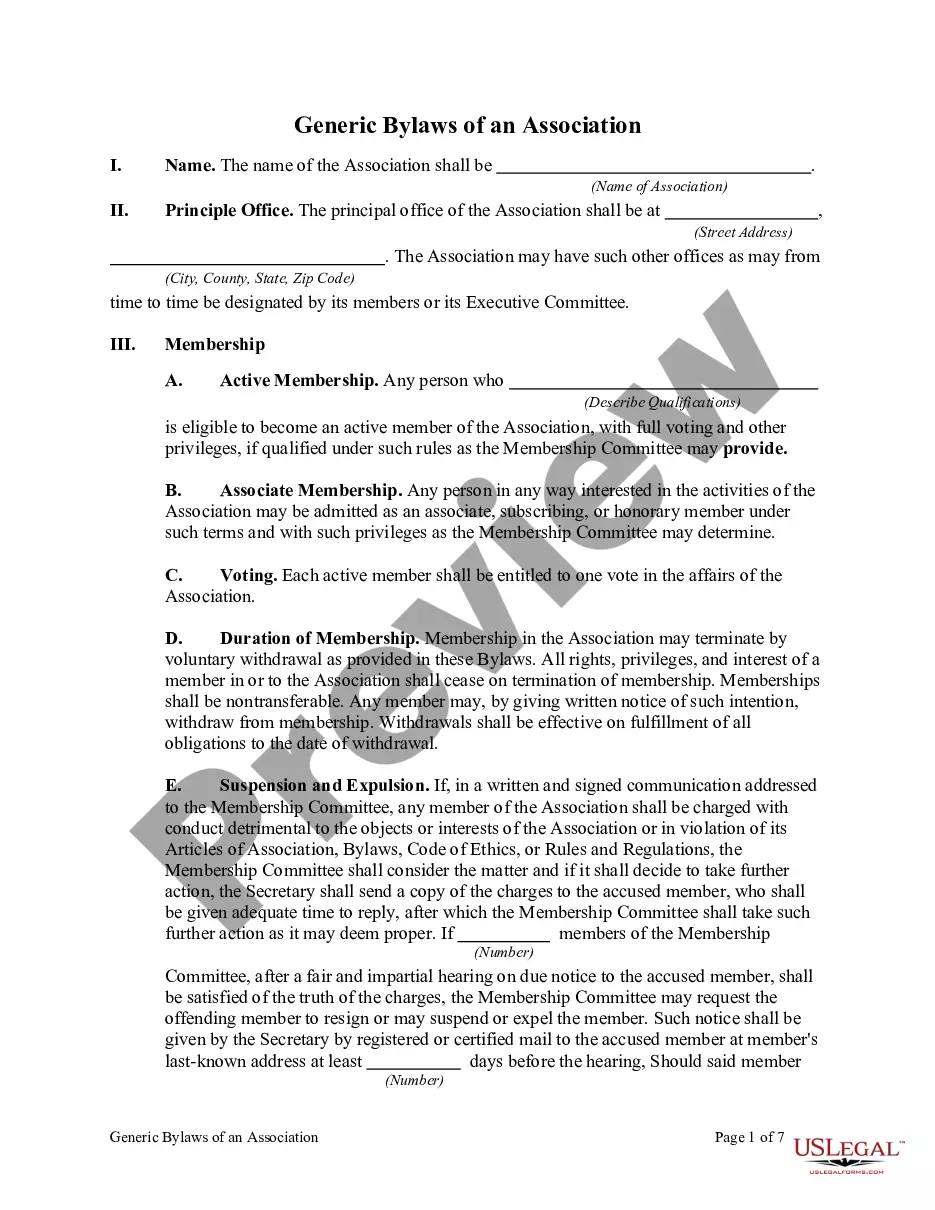

Get your form ready online
Our built-in tools help you complete, sign, share, and store your documents in one place.
Make edits, fill in missing information, and update formatting in US Legal Forms—just like you would in MS Word.
Download a copy, print it, send it by email, or mail it via USPS—whatever works best for your next step.
Sign and collect signatures with our SignNow integration. Send to multiple recipients, set reminders, and more. Go Premium to unlock E-Sign.
If this form requires notarization, complete it online through a secure video call—no need to meet a notary in person or wait for an appointment.
We protect your documents and personal data by following strict security and privacy standards.

Make edits, fill in missing information, and update formatting in US Legal Forms—just like you would in MS Word.

Download a copy, print it, send it by email, or mail it via USPS—whatever works best for your next step.

Sign and collect signatures with our SignNow integration. Send to multiple recipients, set reminders, and more. Go Premium to unlock E-Sign.

If this form requires notarization, complete it online through a secure video call—no need to meet a notary in person or wait for an appointment.

We protect your documents and personal data by following strict security and privacy standards.
Looking for another form?






Form popularity
FAQ
In fact, all types of businesses have to apply for and obtain California business licenses irrespective of whether you start an online business from home or a store front.
To form a corporation in California, Articles of Incorporation must be filed with the California Secretary of State's office. Forms for the most common types of Articles of Incorporation are available on our Forms, Samples and Fees webpage. You may use the form or prepare your own statutorily compliant document.
There's also the fact that if you don't list the number of directors in your Articles of Incorporation, you're legally required to list that information in your bylaws (see California Corp Code § 212). The bottom line: corporate bylaws are not legally required, but they're pretty much essential for your corporation.
How to Form a Professional Corporation in California Step 1: File the Articles of Incorporation with the California Secretary of State (required) ... Step 2: Register with the Appropriate Government Agency (required) ... Step 3: Prepare Corporate Bylaws. Step 4: Appoint the Professional Corporation's Directors (required)
By-laws Adoption. – Every corporation formed under this code, must, within one month after receipt of official notice of the issuance of its certificate of incorporation by the Securities and Exchange Commission, adopt a new code of by-laws for its government not inconsistent with this code.
All bylaw enforcement officers employed in Canada are peace officers; in most provinces, bylaw officers are explicitly appointed as peace officers or special constables for the purpose of enforcing municipal laws, while in others, such as British Columbia, enforcement officers get their authority from court decisions ...
Creating by-laws When incorporating under the Canada Not-for-profit Corporations Act (NFP Act), you have to create by-laws. They set out the rules for governing and operating the corporation. They can be modified at a later date as the needs of the corporation change.
The “by” in bylaw is an old Norse word that means “town.” A bylaw is simply a town, or local, law. Bylaws can't be created out of thin air. Canadian municipalities don't have constitutional status of their own, so they can only pass laws authorized by other levels of government.
Creating by-laws When incorporating under the Canada Not-for-profit Corporations Act (NFP Act), you have to create by-laws. They set out the rules for governing and operating the corporation. They can be modified at a later date as the needs of the corporation change.
