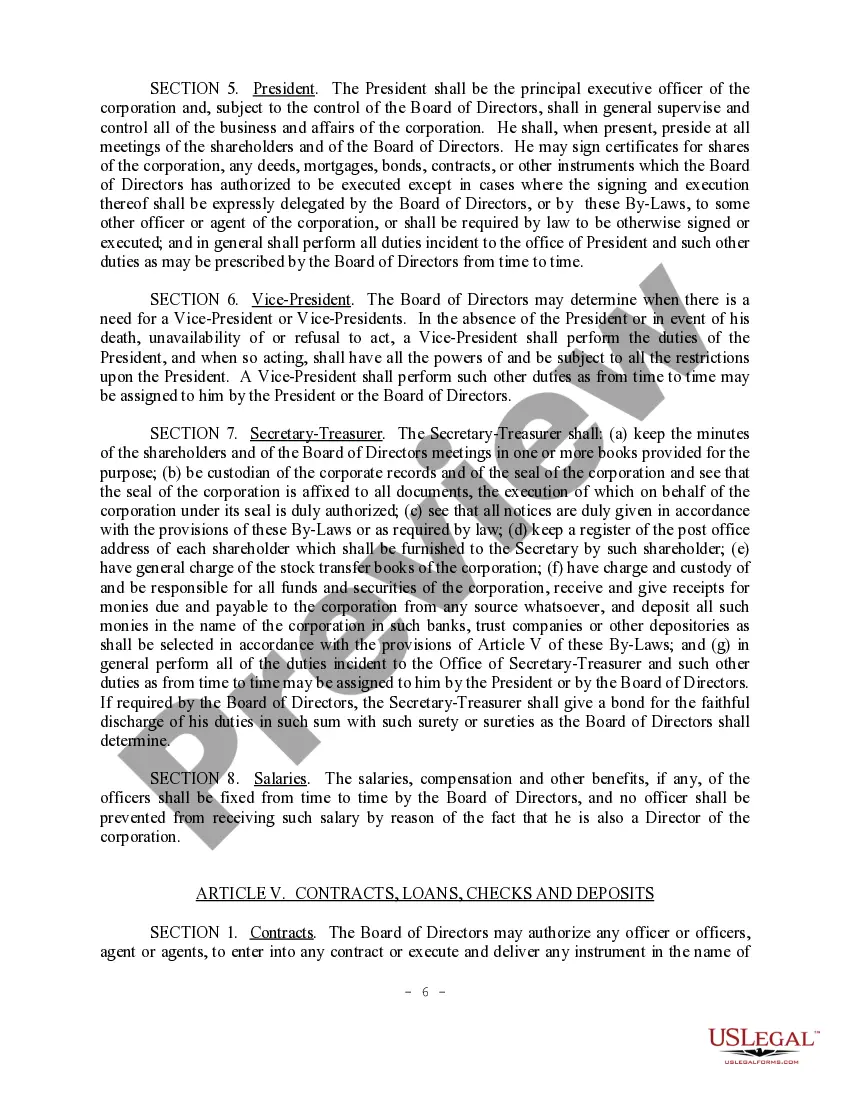
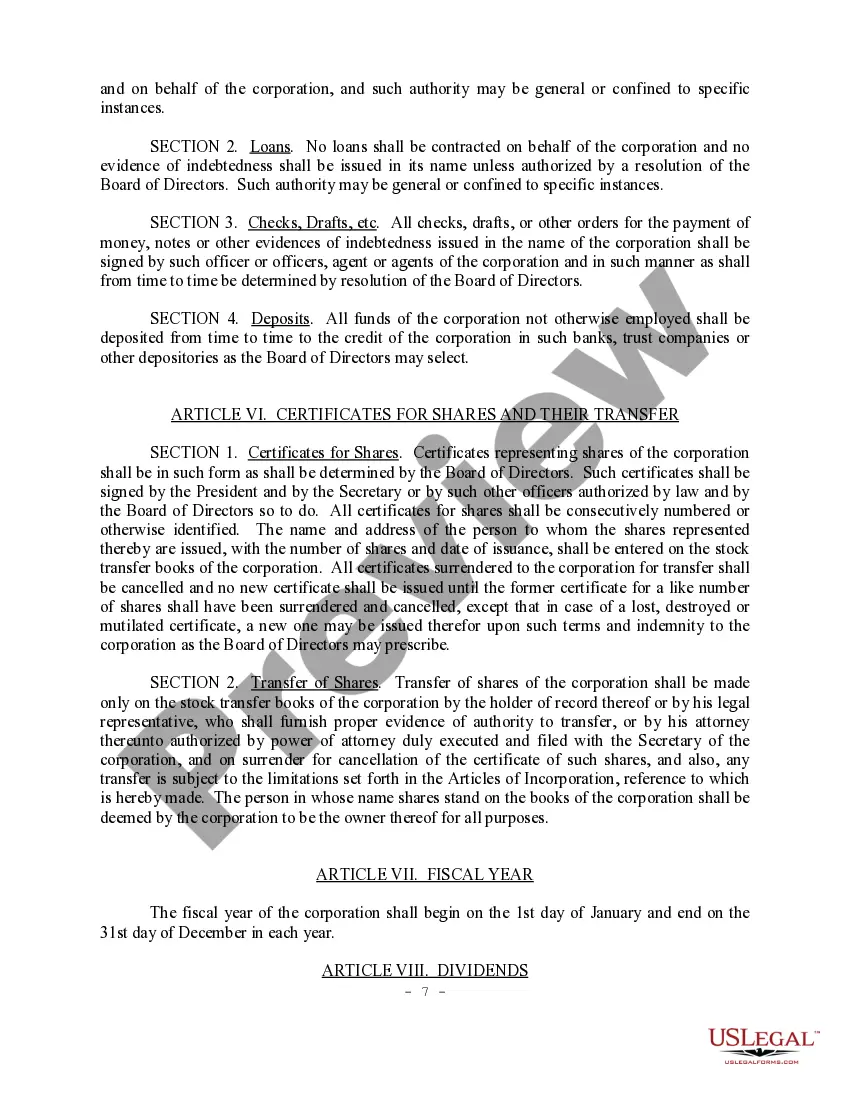
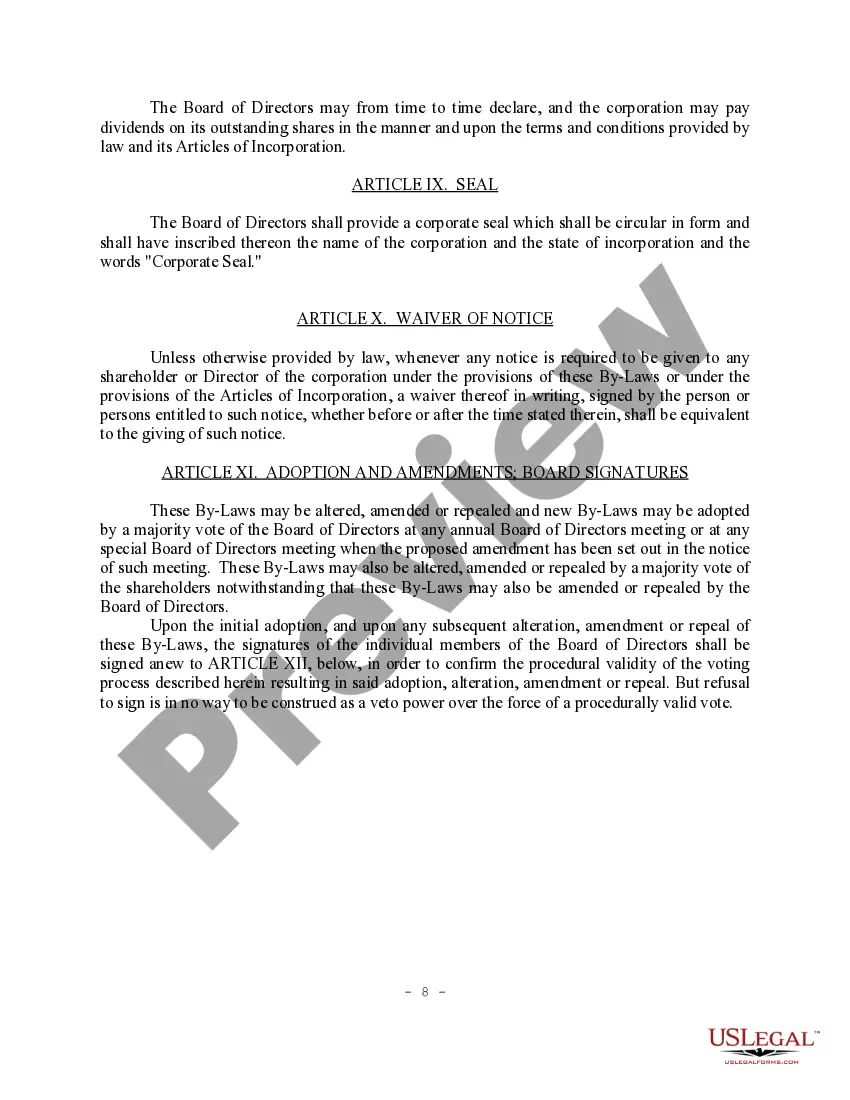
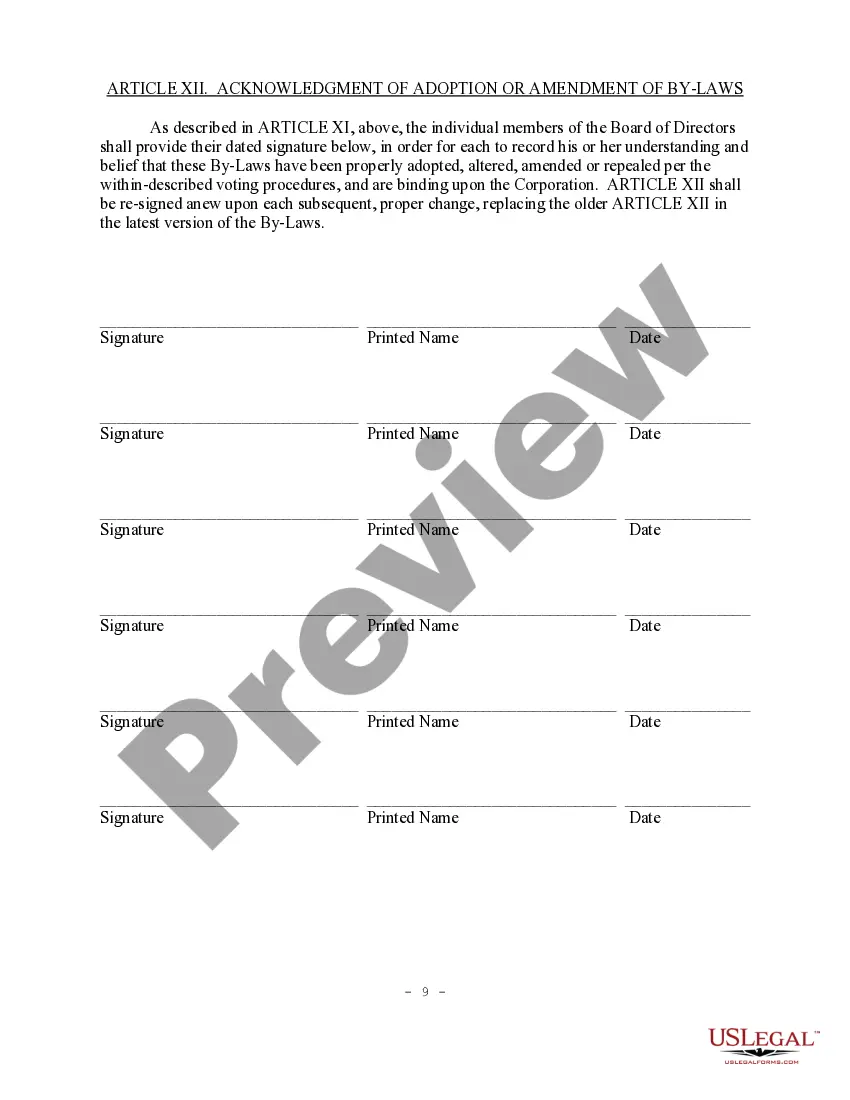
Proper Format For Bylaws In San Antonio
Description



Get your form ready online
Our built-in tools help you complete, sign, share, and store your documents in one place.
Make edits, fill in missing information, and update formatting in US Legal Forms—just like you would in MS Word.
Download a copy, print it, send it by email, or mail it via USPS—whatever works best for your next step.
Sign and collect signatures with our SignNow integration. Send to multiple recipients, set reminders, and more. Go Premium to unlock E-Sign.
If this form requires notarization, complete it online through a secure video call—no need to meet a notary in person or wait for an appointment.
We protect your documents and personal data by following strict security and privacy standards.

Make edits, fill in missing information, and update formatting in US Legal Forms—just like you would in MS Word.

Download a copy, print it, send it by email, or mail it via USPS—whatever works best for your next step.

Sign and collect signatures with our SignNow integration. Send to multiple recipients, set reminders, and more. Go Premium to unlock E-Sign.

If this form requires notarization, complete it online through a secure video call—no need to meet a notary in person or wait for an appointment.

We protect your documents and personal data by following strict security and privacy standards.
Looking for another form?








Form popularity
FAQ
How do I write Corporate Bylaws? Step 1: Select your corporation type. This is where you will list your company as a for-profit or a nonprofit. Step 2: Describe your incorporation status. Step 3: State your location. Step 4: Provide your corporation's registered name. Step 5: Outline shareholder meeting rules.
Bylaws generally define things like the group's official name, purpose, requirements for membership, officers' titles and responsibilities, how offices are to be assigned, how meetings should be conducted, and how often meetings will be held.
10 steps for writing bylaws for an association Research. Form a committee. Create the structure. Outline your organization's key roles and responsibilities. Establish your meeting rules. Define your membership. Address finances. Outline the amendment process.
A set of bylaws should include at least the following: Name of the organization. Purpose of the organization. Membership. Governing body. Officers. Meetings. Fiscal year, financial matters, audit (Including any requirements your state may have for the financial governance of not-for-profits.)
Disclosure Requirements Disclosure is mandated by law, often through public records and real property records. Before purchasing a home, buyers must receive a set of documents detailing the HOA's health, such as its covenants, conditions, restrictions, bylaws, rules, and financial statements.
Corporations are legally required to adopt bylaws in Texas – Section 21.057 of the Texas Business Organizations Code states that the board of directors of a corporation shall adopt initial bylaws. So, if your company gets caught in a legal battle without bylaws, you could face some serious legal consequences.
No, but signing them is a smart idea. We recommend having your officers and directors sign your bylaws to affirm that they sign on to your policies.
The secretary of state does not maintain the bylaws or tax exempt filings of any nonprofit organization. Some organizations that have obtained tax-exempt status from the Internal Revenue Service are required to make certain documents available to the public.
There's plenty of work that goes into writing bylaws, so let's break down what you need to get writing! Research. Form a committee. Create the structure. Outline your organization's key roles and responsibilities. Establish your meeting rules. Define your membership. Address finances. Outline the amendment process.
