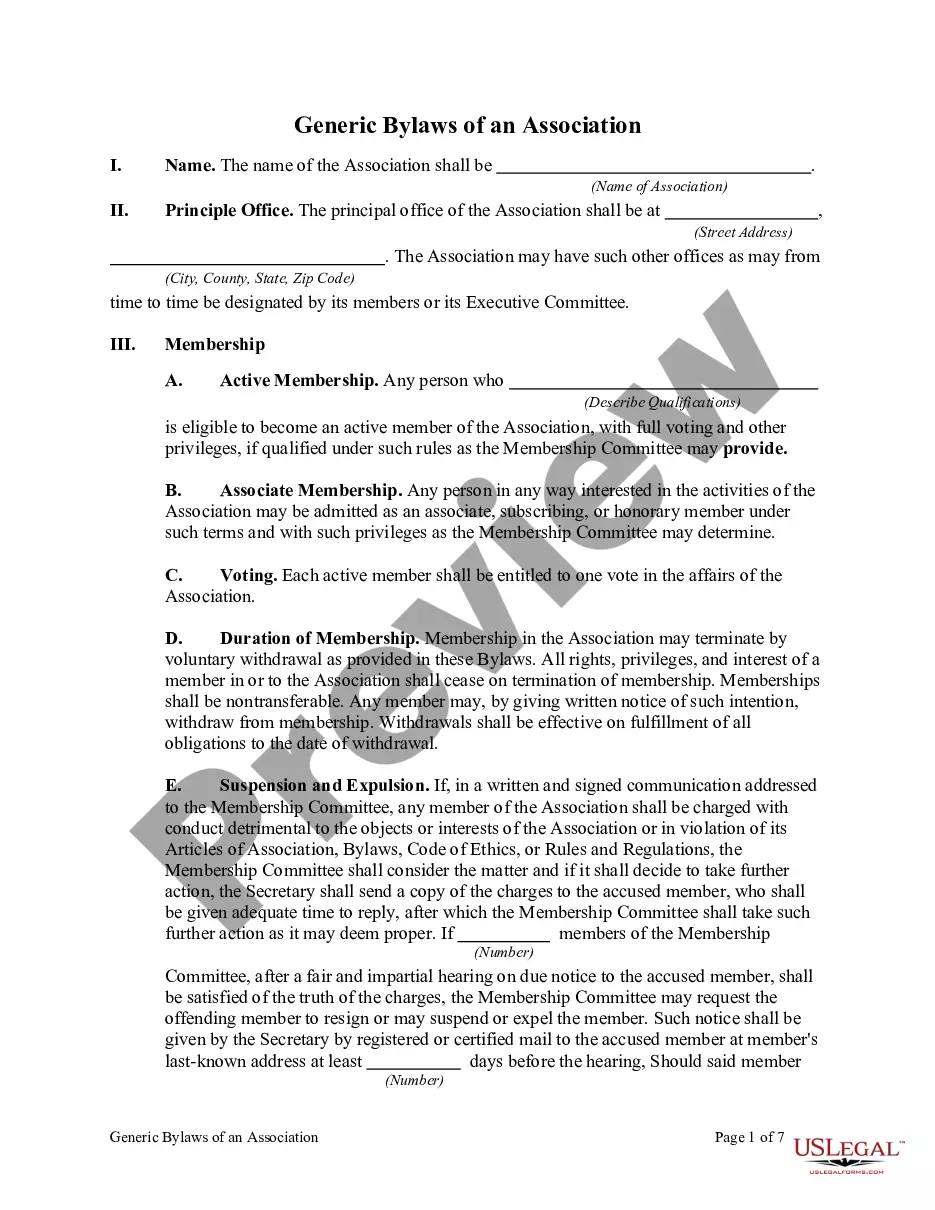
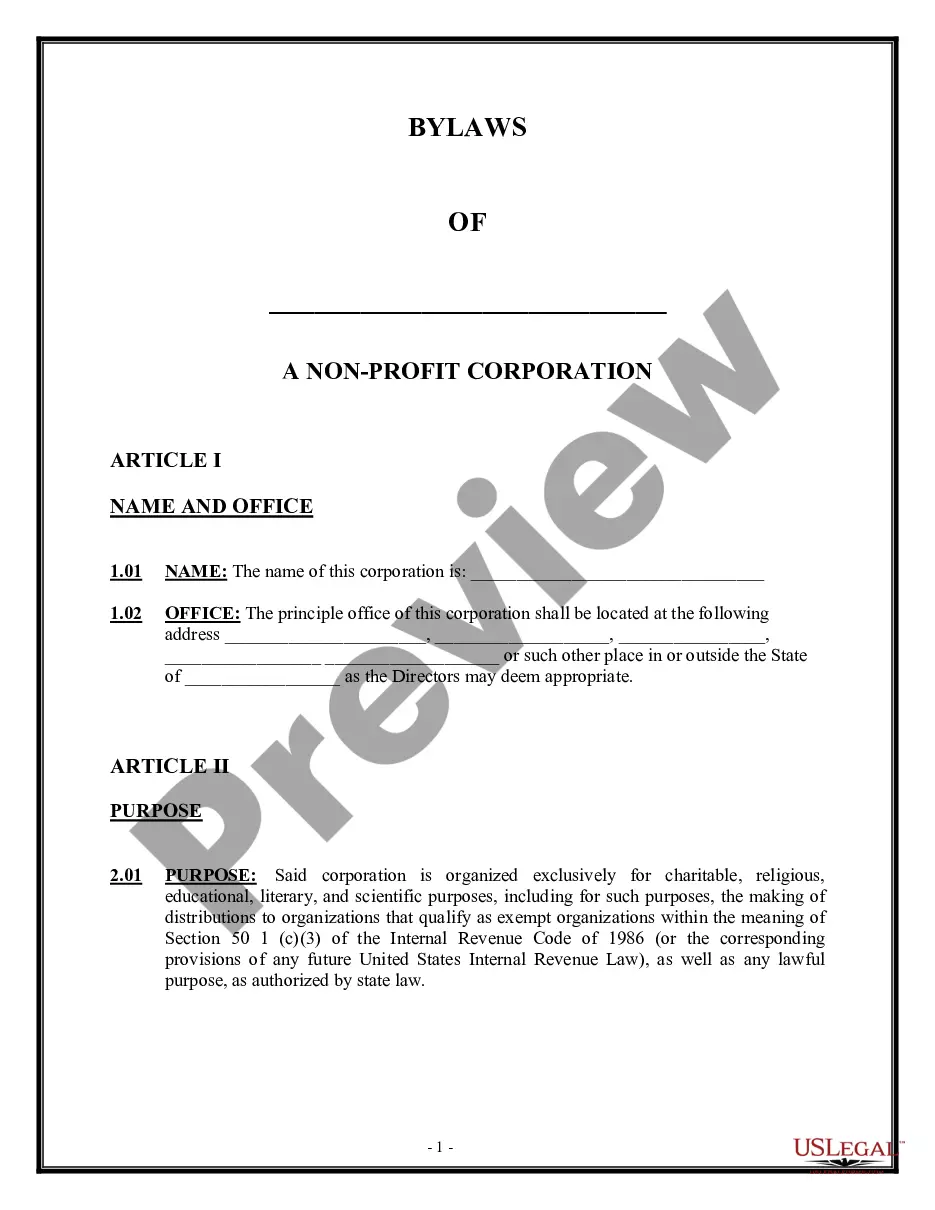
Bylaws Template For Nonprofit In Philadelphia
Description

Get your form ready online
Our built-in tools help you complete, sign, share, and store your documents in one place.
Make edits, fill in missing information, and update formatting in US Legal Forms—just like you would in MS Word.
Download a copy, print it, send it by email, or mail it via USPS—whatever works best for your next step.
Sign and collect signatures with our SignNow integration. Send to multiple recipients, set reminders, and more. Go Premium to unlock E-Sign.
If this form requires notarization, complete it online through a secure video call—no need to meet a notary in person or wait for an appointment.
We protect your documents and personal data by following strict security and privacy standards.

Make edits, fill in missing information, and update formatting in US Legal Forms—just like you would in MS Word.

Download a copy, print it, send it by email, or mail it via USPS—whatever works best for your next step.

Sign and collect signatures with our SignNow integration. Send to multiple recipients, set reminders, and more. Go Premium to unlock E-Sign.

If this form requires notarization, complete it online through a secure video call—no need to meet a notary in person or wait for an appointment.

We protect your documents and personal data by following strict security and privacy standards.
Looking for another form?







Form popularity
FAQ
How Many Directors are Required for a Nonprofit in Pennsylvania? In the state of Pennsylvania, the IRS requires a minimum of one director. Directors are responsible for overseeing the organization's activities, decisions, legal compliance, and ethical standards.
Traditionally, when starting a nonprofit, the best choice for legal structure is to form a nonprofit corporation at the state level and to apply for 501(c)(3) tax exemption at the federal level.
The first 'modern' nonprofit is considered to be The Peabody Education Fund, founded in 1867 with the purpose of integrating poor white and formerly enslaved people in the south.
Although state laws differ, here are some general steps to dissolving your nonprofit organization. Board approval and plan of dissolution. Approval from the state Attorney General. Dissolving the business entity. Notify the IRS. Asset distribution. Additional steps and considerations.
The Revenue Code of 1954 established the 501c structure that we still use today to define the different types of charities. The 501c3 is perhaps the most common, but there are also many other types depending on the organization's purpose.
An effective board size should be small enough to make decisions quickly while also allowing for sufficient diversity of opinion and experience. Generally, a board of three to five members is ideal. Too many members can make decision-making difficult, and too few may not provide the necessary insight and expertise.
The IRS generally requires a minimum of three board members for every nonprofit, but does not dictate board term length. What is important to remember is that board service terms aren't intended to be perpetual, and are typically one to five years.
Traditionally, when starting a nonprofit, the best choice for legal structure is to form a nonprofit corporation at the state level and to apply for 501(c)(3) tax exemption at the federal level.
How to Start a Nonprofit in Pennsylvania Name Your Organization. Recruit Incorporators and Initial Directors. Appoint a Registered Agent. Prepare and File Articles of Incorporation. Publish Incorporation. File Initial Report. Obtain an Employer Identification Number (EIN) ... Store Nonprofit Records.
How to Start a Nonprofit in Pennsylvania Name Your Organization. Recruit Incorporators and Initial Directors. Appoint a Registered Agent. Prepare and File Articles of Incorporation. Publish Incorporation. File Initial Report. Obtain an Employer Identification Number (EIN) ... Store Nonprofit Records.
