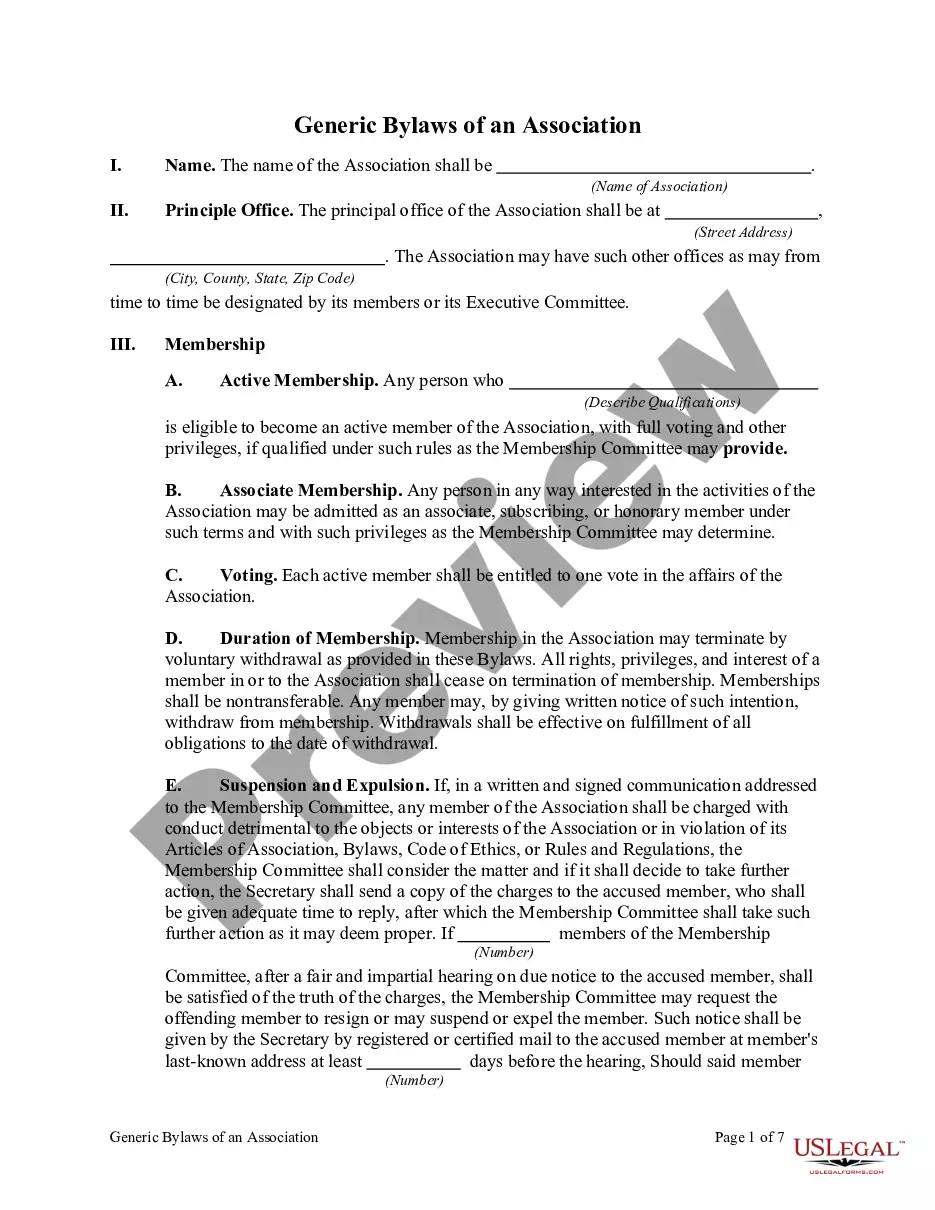
Property Owners Association Bylaws Within A Geographic Area In Orange
Description

Get your form ready online
Our built-in tools help you complete, sign, share, and store your documents in one place.
Make edits, fill in missing information, and update formatting in US Legal Forms—just like you would in MS Word.
Download a copy, print it, send it by email, or mail it via USPS—whatever works best for your next step.
Sign and collect signatures with our SignNow integration. Send to multiple recipients, set reminders, and more. Go Premium to unlock E-Sign.
If this form requires notarization, complete it online through a secure video call—no need to meet a notary in person or wait for an appointment.
We protect your documents and personal data by following strict security and privacy standards.

Make edits, fill in missing information, and update formatting in US Legal Forms—just like you would in MS Word.

Download a copy, print it, send it by email, or mail it via USPS—whatever works best for your next step.

Sign and collect signatures with our SignNow integration. Send to multiple recipients, set reminders, and more. Go Premium to unlock E-Sign.

If this form requires notarization, complete it online through a secure video call—no need to meet a notary in person or wait for an appointment.

We protect your documents and personal data by following strict security and privacy standards.
Looking for another form?






Form popularity
FAQ
The Virginia Property Owners' Association Act covers policies mostly for the common areas of a residential development in Virginia. The seller is obligated to provide a written copy of all association documents before a buyer purchases a home. A buyer may cancel within three days of receiving the association documents.
HOAs in Virginia have the right to establish reasonable restrictions to maintain property values and ensure uniformity in the community. If a community member violates its rules and regulations, an HOA may impose a fine. In Virginia, a HOA can punish a homeowner for breaking its regulations.
The board of directors is the main governing body that oversees the functioning of an HOA. They are responsible for making decisions that affect the community and enforcing the association's bylaws. The board typically consists of elected members from within the community.
The HOA board is responsible for running the association, including duties such as collecting dues, enforcing the rules, and maintaining the common areas. It is equally important for a board to understand the various HOA laws in Virginia that apply to their communities.
Virginia law protects your ability to go solar. Homeowners associations can only stop you from installing solar if the HOA's recorded declaration explicitly prohibits solar installations. A recorded declaration is a legal document that lays out the rules of the HOA at its founding.
HOA: Manages amenities and common areas within the confines of a particular community, which may include parks, pools, or clubhouses. POA: Often oversees larger-scale amenities, such as golf courses, recreational facilities, or expansive common areas that serve multiple neighborhoods.
