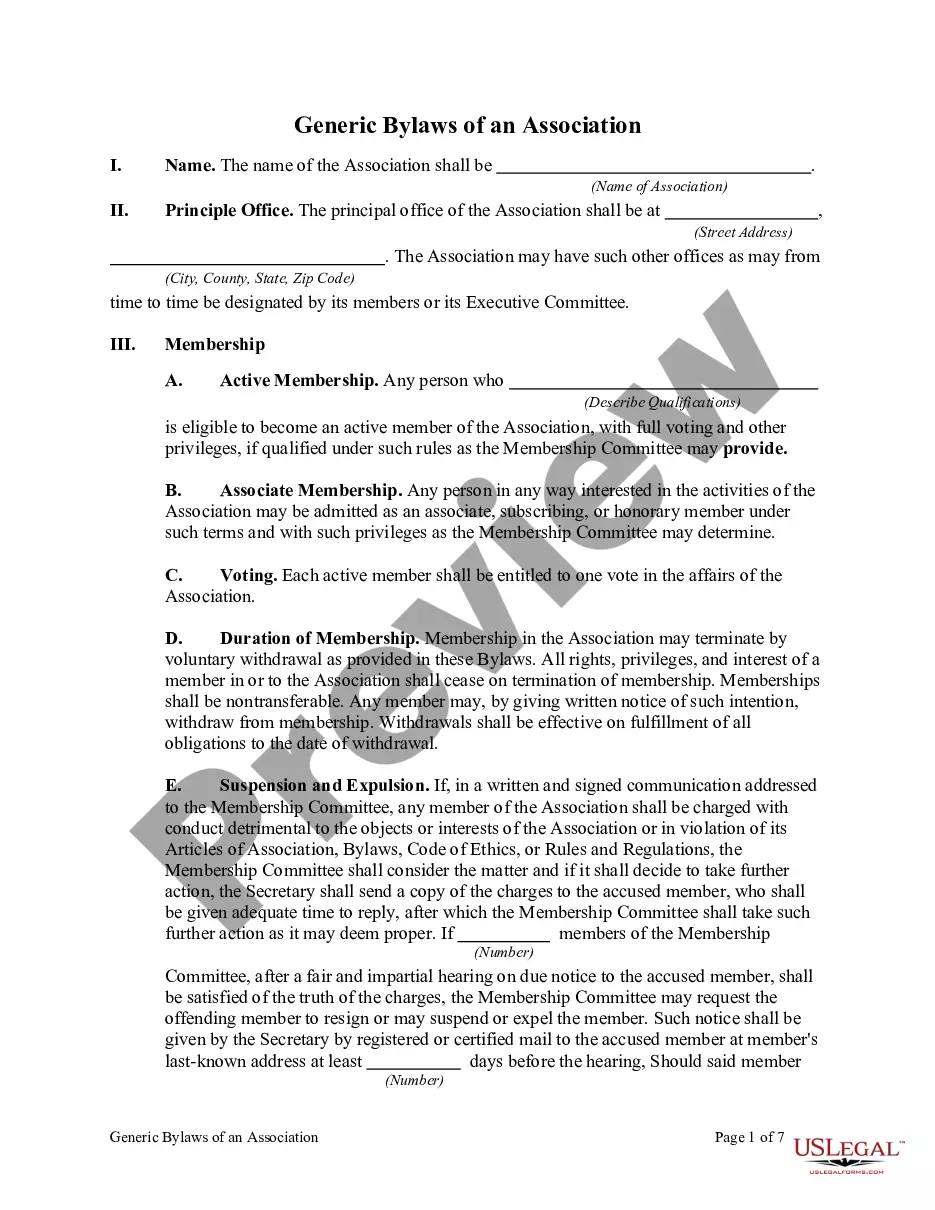
Homeowners Association Bylaws Template For Renters In Alameda
Description


Get your form ready online
Our built-in tools help you complete, sign, share, and store your documents in one place.
Make edits, fill in missing information, and update formatting in US Legal Forms—just like you would in MS Word.
Download a copy, print it, send it by email, or mail it via USPS—whatever works best for your next step.
Sign and collect signatures with our SignNow integration. Send to multiple recipients, set reminders, and more. Go Premium to unlock E-Sign.
If this form requires notarization, complete it online through a secure video call—no need to meet a notary in person or wait for an appointment.
We protect your documents and personal data by following strict security and privacy standards.

Make edits, fill in missing information, and update formatting in US Legal Forms—just like you would in MS Word.

Download a copy, print it, send it by email, or mail it via USPS—whatever works best for your next step.

Sign and collect signatures with our SignNow integration. Send to multiple recipients, set reminders, and more. Go Premium to unlock E-Sign.

If this form requires notarization, complete it online through a secure video call—no need to meet a notary in person or wait for an appointment.

We protect your documents and personal data by following strict security and privacy standards.
Looking for another form?








Form popularity
FAQ
Corporations Code and HOAs Enforcement is through the Office of the Attorney General, or through the courts.
The California Department of Real Estate (DRE) is responsible for regulating real estate brokers and salespersons, including those who work in property management. Property management companies that engage in real estate activities, such as leasing or renting, are required to be licensed by the DRE.
HOAs are usually governed by a board of directors or governors that is elected by the homeowners to make decisions about the HOA and enforce its rules. Most HOAs in California are set up as nonprofit mutual benefit corporations, but some may be structured differently.
HOAs are usually governed by a board of directors or governors that is elected by the homeowners to make decisions about the HOA and enforce its rules. Most HOAs in California are set up as nonprofit mutual benefit corporations, but some may be structured differently.
Under a state law called the Ellis Act (CA Gov. Code Sec. 7060 et seq.), an owner can evict tenants in order to withdraw a rental property from the rental housing market.
Overview of AB 3182 This legislation's key provision is the limitation it places on HOAs' ability to restrict homeowners from renting out their properties. Specifically, HOAs can't enforce rental caps that limit rentals to less than 25% of the units, nor can they impose upfront fees to lease a property.
The eviction process can take 30 - 45 days, or longer. The time starts from when you have eviction court forms delivered to your tenant to the time they must move out. Choose any box, below, to learn more about the eviction process and get step-by-step instructions.
