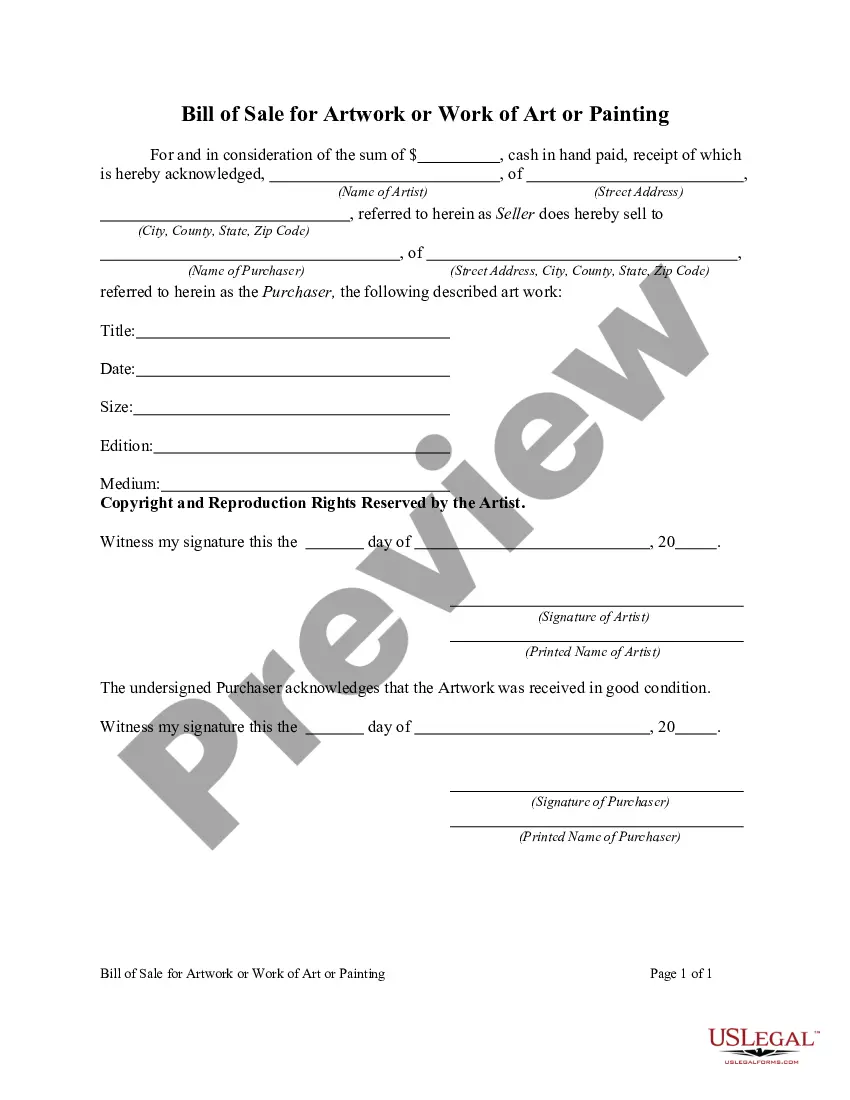
Bill Sale Art Sample With No Experience In Tarrant
Description
Get your form ready online
Our built-in tools help you complete, sign, share, and store your documents in one place.
Make edits, fill in missing information, and update formatting in US Legal Forms—just like you would in MS Word.
Download a copy, print it, send it by email, or mail it via USPS—whatever works best for your next step.
Sign and collect signatures with our SignNow integration. Send to multiple recipients, set reminders, and more. Go Premium to unlock E-Sign.
If this form requires notarization, complete it online through a secure video call—no need to meet a notary in person or wait for an appointment.
We protect your documents and personal data by following strict security and privacy standards.

Make edits, fill in missing information, and update formatting in US Legal Forms—just like you would in MS Word.

Download a copy, print it, send it by email, or mail it via USPS—whatever works best for your next step.

Sign and collect signatures with our SignNow integration. Send to multiple recipients, set reminders, and more. Go Premium to unlock E-Sign.

If this form requires notarization, complete it online through a secure video call—no need to meet a notary in person or wait for an appointment.

We protect your documents and personal data by following strict security and privacy standards.
Looking for another form?





Form popularity
FAQ
An estate may be exempt from the probate process in certain circumstances. Under Texas Estates Code, Title 2, Chapter 205, an estate need not pass through the probate process if there is no will and the total value of the estate (not counting any homestead real estate owned by the Decedent) is $75,000 or less.
To probate a will, you'll need to file an application in a probate court. This is typically done in the county where the deceased had lived. Other rules will apply if the person lived out of state. The court will schedule a hearing to examine the will and listen to any objections.
When considering what assets go through probate, the general guideline is that probate assets in Texas usually include: Real estate held in tenancy-in-common with others, Personal property, Many bank accounts and investments, Business interests held solely by the decedent, and.
Types of Property Exempt from Probate The asset is held in joint tenancy, such as a home where two people's names are on the deed; Community property with the right of survivorship; Payable-on-death bank accounts; Proceeds and benefits that are payable via a life insurance policy; and.
Invoices should contain information about: you the artist. your billing address. your client or customer. their taxable address. your tax reference code (UTR - unique tax reference code if in the UK) the tax date for the product or service rendered. description of the artwork provided or artistic service rendered.
If the judge declares the will valid, it will be admitted to probate. If an executor or administrator is appointed at the same hearing, they can now begin the administration process.
However, not all assets have to go through probate, and Texas laws have different methods that can be used for smaller estates to streamline the probate process. For example, estates valued at less than $75,000 may use a small estate affidavit instead of formal probate proceedings.
Not all property passes through the probate process. Nonprobate property passes directly to the beneficiaries without court approval. This may include certain types of bank accounts, life insurance proceeds, and other assets.
Explore Different Sales Channels: There are various ways to sell your artwork, from online marketplaces and social media platforms to local art galleries and exhibitions. Explore different sales channels and opportunities that align with your target audience and artistic goals.