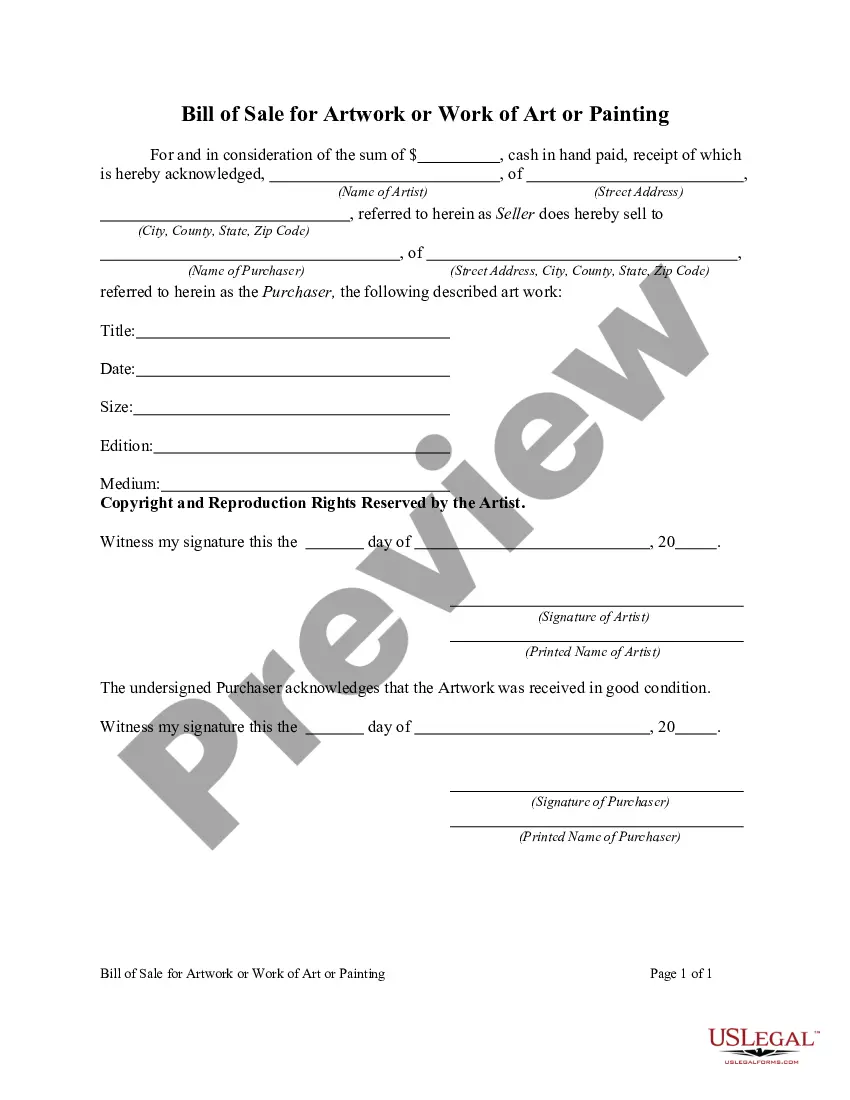
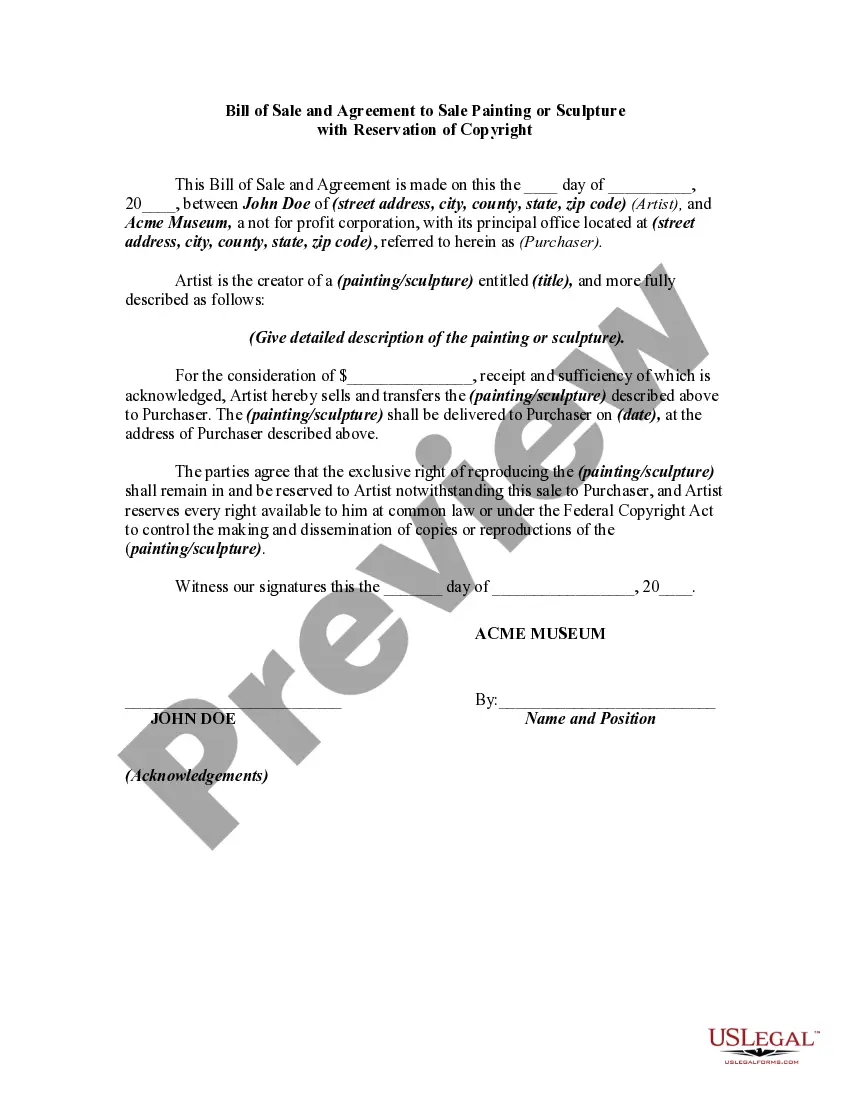
Bill Sale Art Sample For Job In Cook
Description
Get your form ready online
Our built-in tools help you complete, sign, share, and store your documents in one place.
Make edits, fill in missing information, and update formatting in US Legal Forms—just like you would in MS Word.
Download a copy, print it, send it by email, or mail it via USPS—whatever works best for your next step.
Sign and collect signatures with our SignNow integration. Send to multiple recipients, set reminders, and more. Go Premium to unlock E-Sign.
If this form requires notarization, complete it online through a secure video call—no need to meet a notary in person or wait for an appointment.
We protect your documents and personal data by following strict security and privacy standards.

Make edits, fill in missing information, and update formatting in US Legal Forms—just like you would in MS Word.

Download a copy, print it, send it by email, or mail it via USPS—whatever works best for your next step.

Sign and collect signatures with our SignNow integration. Send to multiple recipients, set reminders, and more. Go Premium to unlock E-Sign.

If this form requires notarization, complete it online through a secure video call—no need to meet a notary in person or wait for an appointment.

We protect your documents and personal data by following strict security and privacy standards.
Looking for another form?








Form popularity
FAQ
If your community has an art society this is a great place to start if you want to sell your art locally. Art societies often organize local art fairs and shows, where you can rent a space to sell your work.
There are no qualifications whatsoever needed to become an art dealer. Anyone off the street can rent or lease a space, hang any kind of paintings on the wall, put a sign up (or not), open the door (or not and operate by appointment or just online). The first trick is staying in business as an art dealer.
You have two options - on line or in person. Here are some websites on which you may sell your art : Etsy, Amazon, Fine Art America, Saatchi Art, UGallery, Shopify, Turning Art, Pixpa, Society6, and Zazzle. It would be advantageous for you to go to each of these websites and read their instructions and requirements.
Use social media platforms like Instagram, Facebook, and Twitter to share your work and connect with other artists and potential buyers. Participate in art shows and exhibitions: Participate in local art shows, exhibitions, and fairs to showcase your work and connect with potential buyers and collectors.
Offer Special Promotions and Incentives: To attract potential buyers and generate interest in your artwork, consider offering special promotions, discounts, or incentives. Host online sales events, limited-time offers, or exclusive previews for your loyal followers and subscribers.
3 Tips for Your Art Marketing Take some time to understand what makes you uniquely you and what makes your art unique as well. Start asking questions from people who buy your work - your ideal clients. Tell the story of your special factor and authentic connection throughout all of your marketing materials.
Create some assignments for yourself, put the results in your portfolio, then promote: go to customers, send emails, snail mail, social media or art markets. The more customized to the individual customer the better.
After all, this is where your customer will turn to learn more about your piece. The best artwork descriptions on Artfinder comprise two sections: one detailing the inspiration behind the piece and another presenting the bare facts.
How To Describe Your Art Stand in Their Shoes First. Before you start talking too much about how elegant your composition is, understand your audience. Bring Out the Touch and Feel of Your Work. Leave Your Ego at Home. Make Your Words Lively. Keep It Simple.
Verbal description should include standard information, the artists name, the title of the work, key dates, mediums, dimensions, nationality of the artist, giving the viewer/buyer, quick, relevant, facts that they can easily recall.