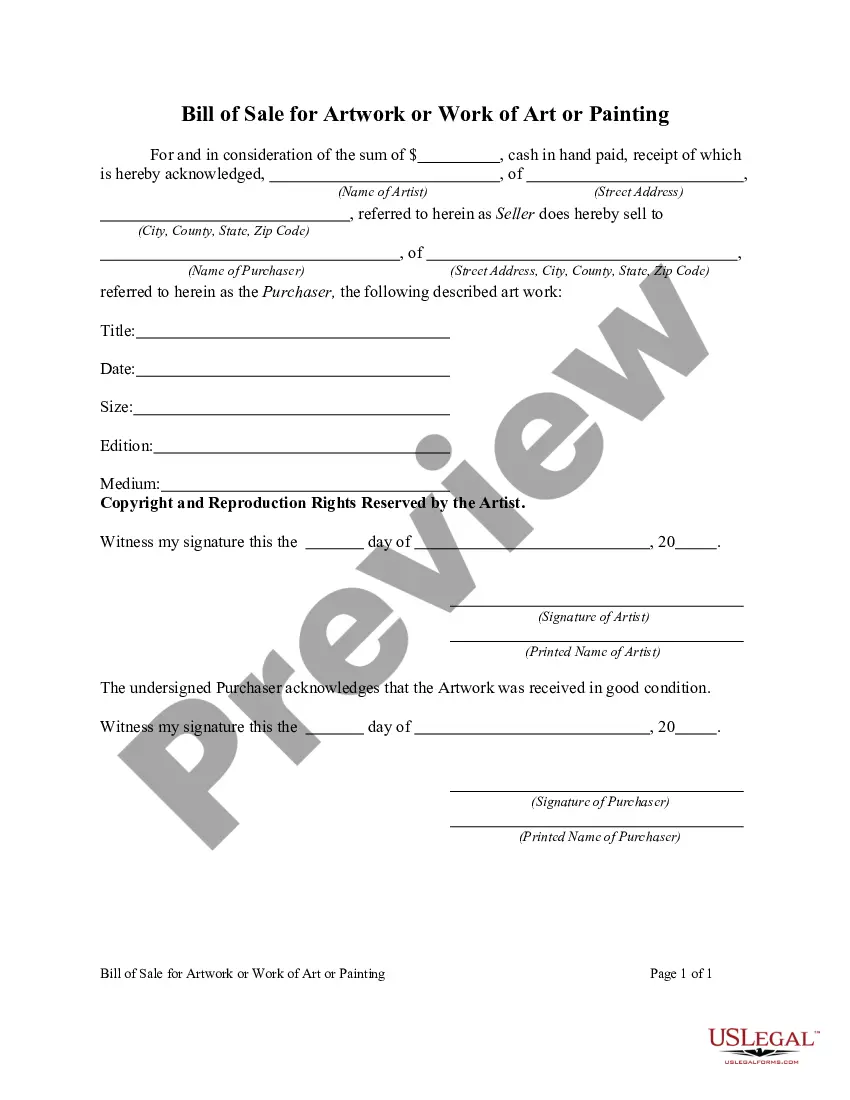
Bill Sale Art Sample Without Permission In Collin
Description
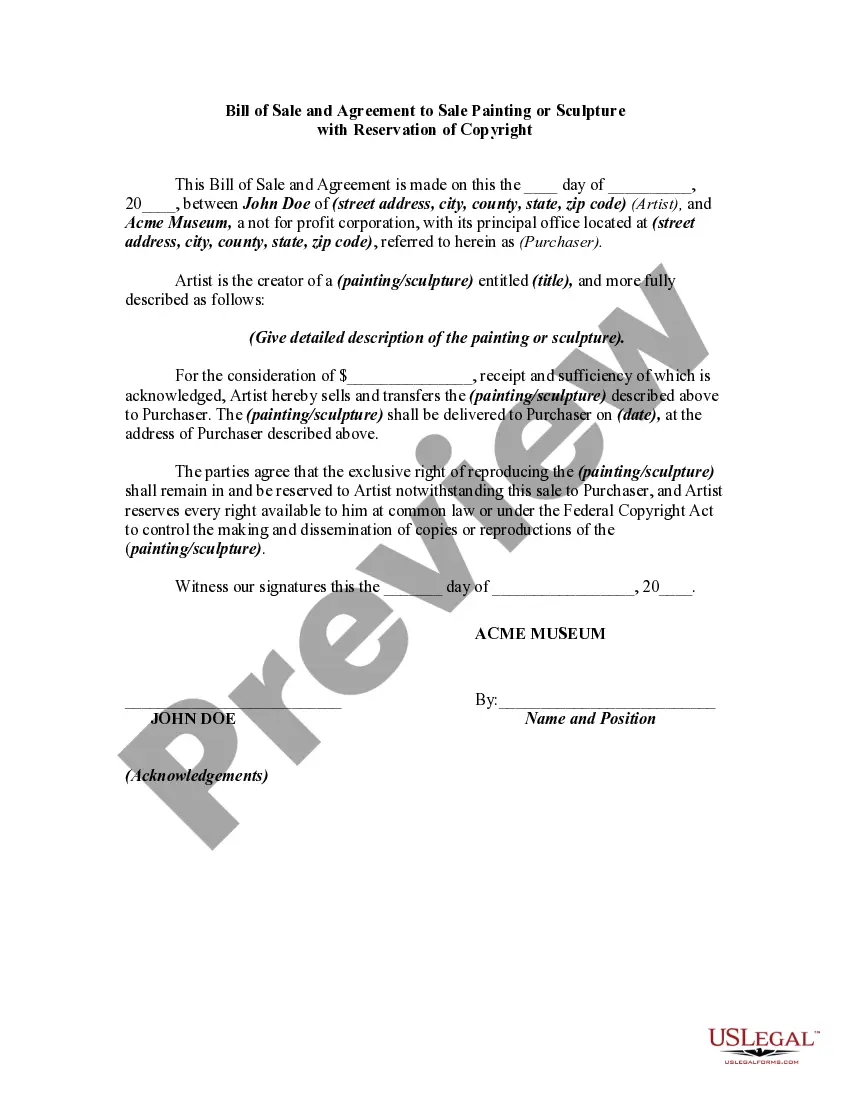
Get your form ready online
Our built-in tools help you complete, sign, share, and store your documents in one place.
Make edits, fill in missing information, and update formatting in US Legal Forms—just like you would in MS Word.
Download a copy, print it, send it by email, or mail it via USPS—whatever works best for your next step.
Sign and collect signatures with our SignNow integration. Send to multiple recipients, set reminders, and more. Go Premium to unlock E-Sign.
If this form requires notarization, complete it online through a secure video call—no need to meet a notary in person or wait for an appointment.
We protect your documents and personal data by following strict security and privacy standards.

Make edits, fill in missing information, and update formatting in US Legal Forms—just like you would in MS Word.

Download a copy, print it, send it by email, or mail it via USPS—whatever works best for your next step.

Sign and collect signatures with our SignNow integration. Send to multiple recipients, set reminders, and more. Go Premium to unlock E-Sign.

If this form requires notarization, complete it online through a secure video call—no need to meet a notary in person or wait for an appointment.

We protect your documents and personal data by following strict security and privacy standards.
Looking for another form?







Form popularity
FAQ
Local art fairs, shows and exhibits Art societies often organize local art fairs and shows, where you can rent a space to sell your work.
Therefore, to legally create street art, you should obtain permission from the building or property owner. If you fail to seek approval, the property owner or local council may remove or paint over your art. However, in saying that, part of the charm of street art is its transient nature.
You can legally sell art on the street with a local license, as part of an organized event, or with permission from a local landowner. You can also take a chance, do it anyway, and apologize if you are moved.
Ready to Exhibit Your Art? Here Are Steps You Can Take Try a home show and invite your friends. Connect with a local business and see if they might be interested in hanging your work in their establishment. Get together with a few other artists and rent a space for your exhibition. Enter juried exhibitions.
You can legally sell art on the street with a local license, as part of an organized event, or with permission from a local landowner. You can also take a chance, do it anyway, and apologize if you are moved.
Billy Collins (born March 22, 1941, New York, New York, U.S.) is an American poet whose uncommonly accessible verse—characterized by plain language, gentle humour, and an alert appreciation for the mundane—made him one of the most popular poets in the United States.
Billy Collins' most famous poems include: "American Sonnet" (1989) "The Afterlife" (1990) "The Art of Drowning" (1991) "The Best Cigarette" (1995) "The Birds of America" (1996) "Introduction to Poetry" (1996) "Aristotle" (1998) "The Revenant" (2003)
There he came under the influence of contemporary poets like Karl Shapiro, Howard Nemerov and Reed Whittemore, and during his adolescence he was influenced by Beat Generation poets as well. In 1975 Collins founded The Mid-Atlantic Review with his friends Walter Blanco and Steve Bailey.
Collins, a native of New York City, was the U.S. Poet Laureate when the attacks occurred in 2001. He wrote the poem and read it at a special joint session of Congress on September 6, 2002.
Billy Collins' most famous poems include: "American Sonnet" (1989) "The Afterlife" (1990) "The Art of Drowning" (1991) "The Best Cigarette" (1995) "The Birds of America" (1996) "Introduction to Poetry" (1996) "Aristotle" (1998) "The Revenant" (2003)