Contingency By Law Definition In Pennsylvania
Description







Get your form ready online
Our built-in tools help you complete, sign, share, and store your documents in one place.
Make edits, fill in missing information, and update formatting in US Legal Forms—just like you would in MS Word.
Download a copy, print it, send it by email, or mail it via USPS—whatever works best for your next step.
Sign and collect signatures with our SignNow integration. Send to multiple recipients, set reminders, and more. Go Premium to unlock E-Sign.
If this form requires notarization, complete it online through a secure video call—no need to meet a notary in person or wait for an appointment.
We protect your documents and personal data by following strict security and privacy standards.
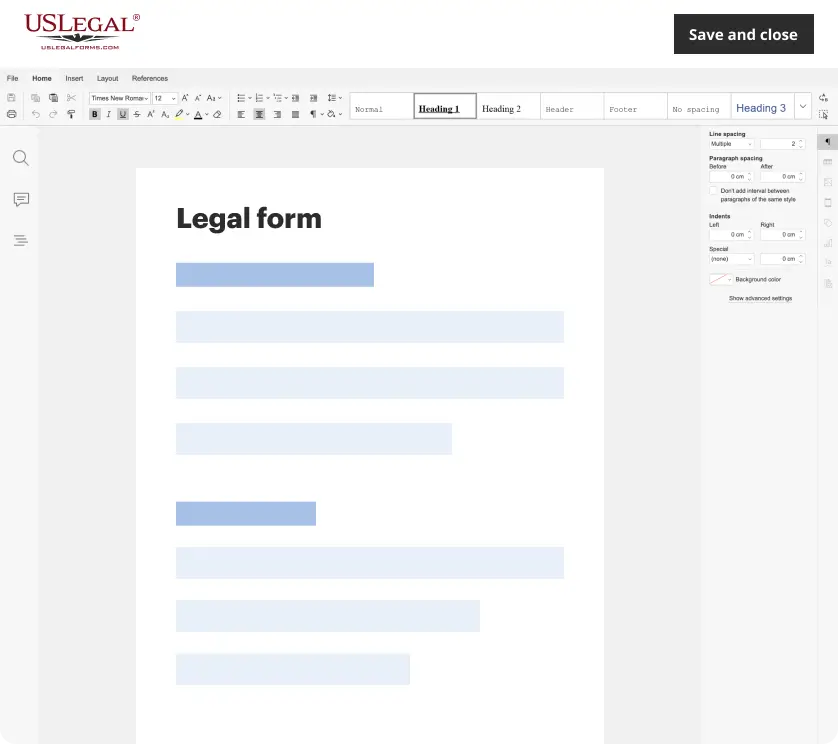
Make edits, fill in missing information, and update formatting in US Legal Forms—just like you would in MS Word.
Download a copy, print it, send it by email, or mail it via USPS—whatever works best for your next step.
Sign and collect signatures with our SignNow integration. Send to multiple recipients, set reminders, and more. Go Premium to unlock E-Sign.

If this form requires notarization, complete it online through a secure video call—no need to meet a notary in person or wait for an appointment.
We protect your documents and personal data by following strict security and privacy standards.
Looking for another form?





Form popularity
FAQ
A contingency is something that might happen in the future. formal I need to examine all possible contingencies. Synonyms: possibility, happening, chance, event More Synonyms of contingency.
Contingency refers to an event that may or may not occur in the future. In other words, it depends on fulfillment of a condition, which is uncertain or incidental.
A contingency clause is a contract provision that requires a specific event or action to take place in order for the contract to be considered valid.
Contingent means that an event may or may not occur in the future, depending on the fulfillment of some condition that is uncertain. This term is often used in contracts where the event will not take effect until the specified condition occurs.
Contracts for the Rotating Site changes as the operation rotates, and from C.C. Barrenland, must be unlocked by clearing the respective operation with a certain threshold of Risk: Clearing the operation for the first time unlocks all Level 1 Contracts. Clearing the operation with Risk 2 unlocks all Level 2 Contracts.
A contingency is part of a real estate contract that requires a certain condition to be met before it is enforceable. If that condition is not met within the timeframe specified, the contingent party can break the contract and exit the transaction without financial consequences.
India Code: Section Details. Contingent contracts to do or not to do anything if an uncertain future event happens cannot be enforced by law unless and until that event has happened. If the event becomes impossible, such contracts become void.
A contingency clause can be considered a type of escape clause for those involved in the contract. It allows one party to cancel a deal if certain requirements are not met, though the party benefiting from the clause has the right to waive it.
The contingent period usually lasts anywhere from 30 to 60 days. If you have a mortgage contingency, the buyer's due date is usually about a week before closing. Overall, a home stays in contingent status for the specified period or until the contingencies are met and the buyer closes on their new house.
