Listing Agreement For Debt Securities In Wayne
Description

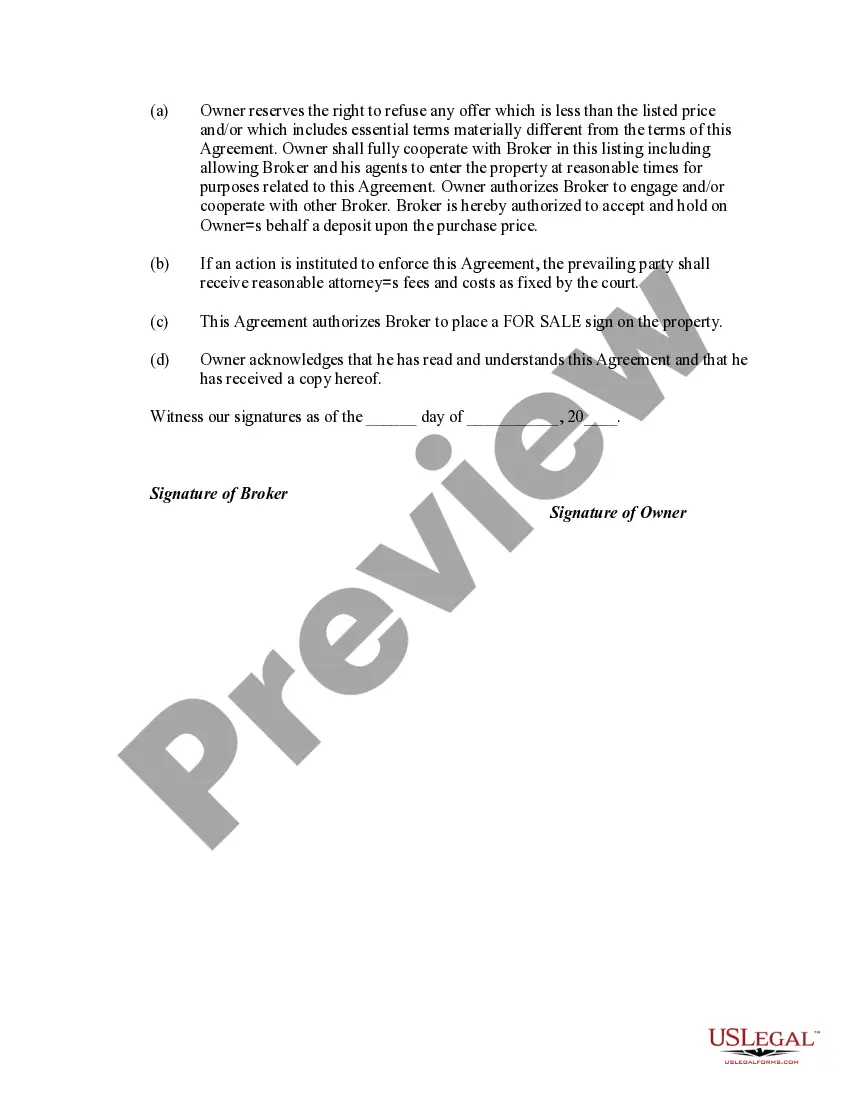

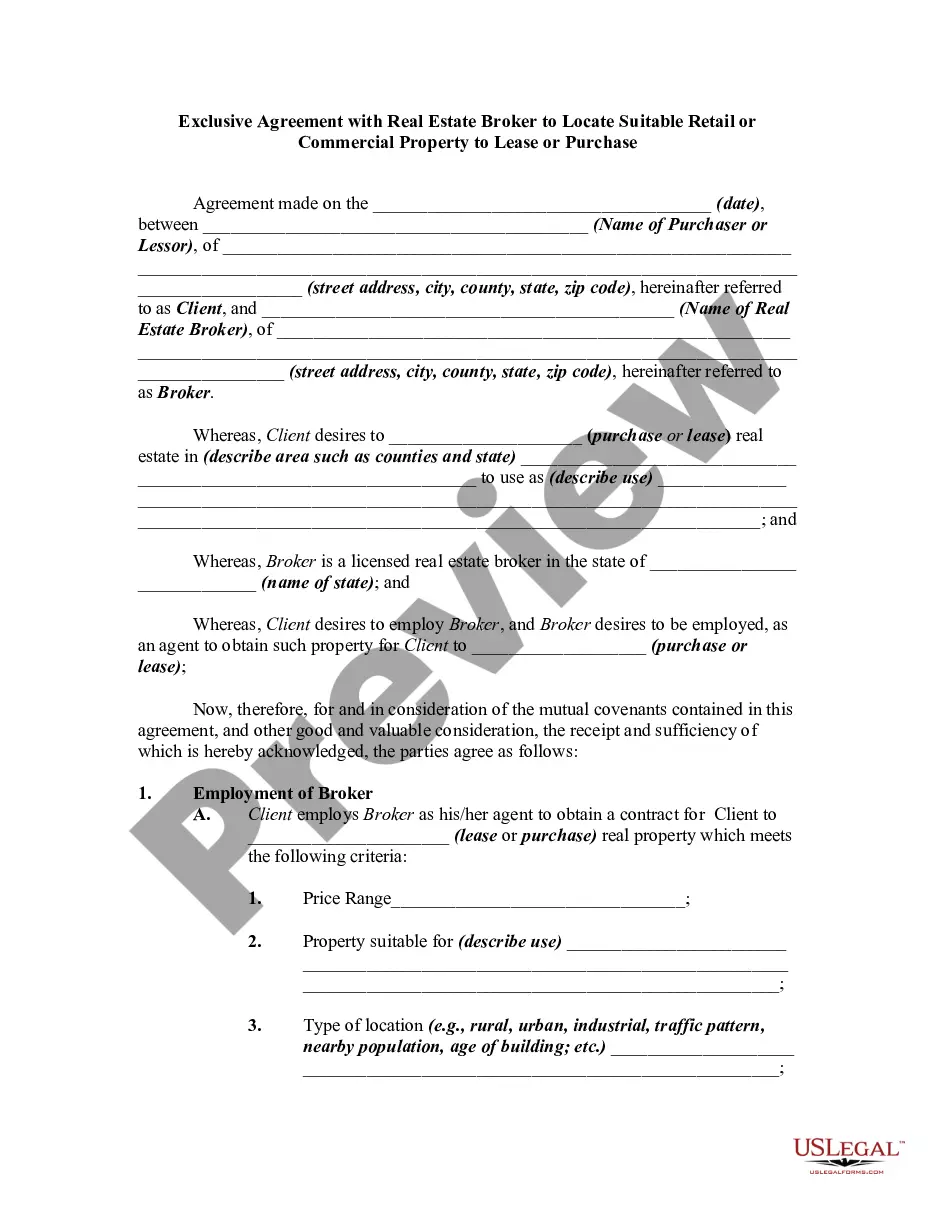
Get your form ready online
Our built-in tools help you complete, sign, share, and store your documents in one place.
Make edits, fill in missing information, and update formatting in US Legal Forms—just like you would in MS Word.
Download a copy, print it, send it by email, or mail it via USPS—whatever works best for your next step.
Sign and collect signatures with our SignNow integration. Send to multiple recipients, set reminders, and more. Go Premium to unlock E-Sign.
If this form requires notarization, complete it online through a secure video call—no need to meet a notary in person or wait for an appointment.
We protect your documents and personal data by following strict security and privacy standards.

Make edits, fill in missing information, and update formatting in US Legal Forms—just like you would in MS Word.

Download a copy, print it, send it by email, or mail it via USPS—whatever works best for your next step.

Sign and collect signatures with our SignNow integration. Send to multiple recipients, set reminders, and more. Go Premium to unlock E-Sign.

If this form requires notarization, complete it online through a secure video call—no need to meet a notary in person or wait for an appointment.

We protect your documents and personal data by following strict security and privacy standards.
Looking for another form?






Form popularity
FAQ
A company, desirous of listing its securities on the Exchange, shall be required to file an application, in the prescribed form, with the Exchange before issue of Prospectus by the company, where the securities are issued by way of a prospectus or before issue of 'Offer for Sale', where the securities are issued by way ...
For trading securities, the changes in value are recorded in operating income. However, for available-for-sale securities, the changes in value go into a special account called Unrealized Gain/Loss – Other Comprehensive Income.
On a T+3 basis) specifies that the listing of debt securities and Non-convertible Redeemable Preference Shares (NCRPS) issued through public issue process shall be completed within T+6 working days from the date of closure of the issue.
The concept of Listing Agreement was inserted in the Securities Contract (Regulation) Act, 1956 (“SCRA”) under Section 21 which provided that "where the securities are listed on the application of any person in any recognised stock exchange, such person shall comply with the conditions of the listing agreement with ...
Understanding Debt Securities Bonds can be issued by the government and non-government entities. They are available in various forms. Typical structures include fixed-rate bonds and zero-coupon bonds. Floating-rate notes, preferred stock, and mortgage-backed securities are also examples of debt securities.
Just like shares are listed on the stock exchange, debt securities are also listed on a stock exchange.
All the Indian companies will mandatorily have T+3 listing at the bourses from December 1 onwards, where 'T' stands for closure date of the issue. It means that the listing candidates will have to make their debut at Dalal Street within three-working days after bidding for the issue ends.
Answer: Three types of debt security are hold-to-maturity, trading securities, and available-for-sale.
A debt security is a debt instrument that can be bought or sold between two parties and has basic terms defined, such as the notional amount (the amount borrowed), interest rate, and maturity and renewal date.
