Listing Agreement Commercial Form With Two Points In Santa Clara
Description


Get your form ready online
Our built-in tools help you complete, sign, share, and store your documents in one place.
Make edits, fill in missing information, and update formatting in US Legal Forms—just like you would in MS Word.
Download a copy, print it, send it by email, or mail it via USPS—whatever works best for your next step.
Sign and collect signatures with our SignNow integration. Send to multiple recipients, set reminders, and more. Go Premium to unlock E-Sign.
If this form requires notarization, complete it online through a secure video call—no need to meet a notary in person or wait for an appointment.
We protect your documents and personal data by following strict security and privacy standards.

Make edits, fill in missing information, and update formatting in US Legal Forms—just like you would in MS Word.

Download a copy, print it, send it by email, or mail it via USPS—whatever works best for your next step.

Sign and collect signatures with our SignNow integration. Send to multiple recipients, set reminders, and more. Go Premium to unlock E-Sign.

If this form requires notarization, complete it online through a secure video call—no need to meet a notary in person or wait for an appointment.

We protect your documents and personal data by following strict security and privacy standards.
Looking for another form?

Form popularity
FAQ
Disclosure documents Vacant land is exempt from the transfer disclosure statement (TDS) that the California Civil Code requires for sales of residential property. However, the seller is still required to disclose any and all known facts that materially affect the value or desirability of the property.
REQUIREMENTS FOR A CONTRACT In order for a contract to be valid, there must be an offer, an acceptance of the offer, an exchange between the parties of something of value, and an agreement to the terms.
For a real estate contract to be valid in California, it must meet several key requirements: Offer and Acceptance: One party must make an offer, and the other must accept it. This mutual agreement is fundamental for the contract to be enforceable. Legality: The contract's purpose must be legal.
It is essential to the existence of a contract that there should be: Parties capable of contracting; Their consent; A lawful object; and, A sufficient cause or consideration.
Are California real estate contracts assignable? Yes, many California real estate contracts can be assignable, but it depends on the specific terms of the contract. An assignable contract allows the original party, known as the assignor, to transfer their rights and obligations to another party, called the assignee.
The seller can back out for reasons written into the contract, including (but not limited to) contingencies. The buyer is in breach of the contract. If the buyer is “failing to perform” — a legal term meaning that they're not holding up their side of the contract — the seller can likely get out of the contract.
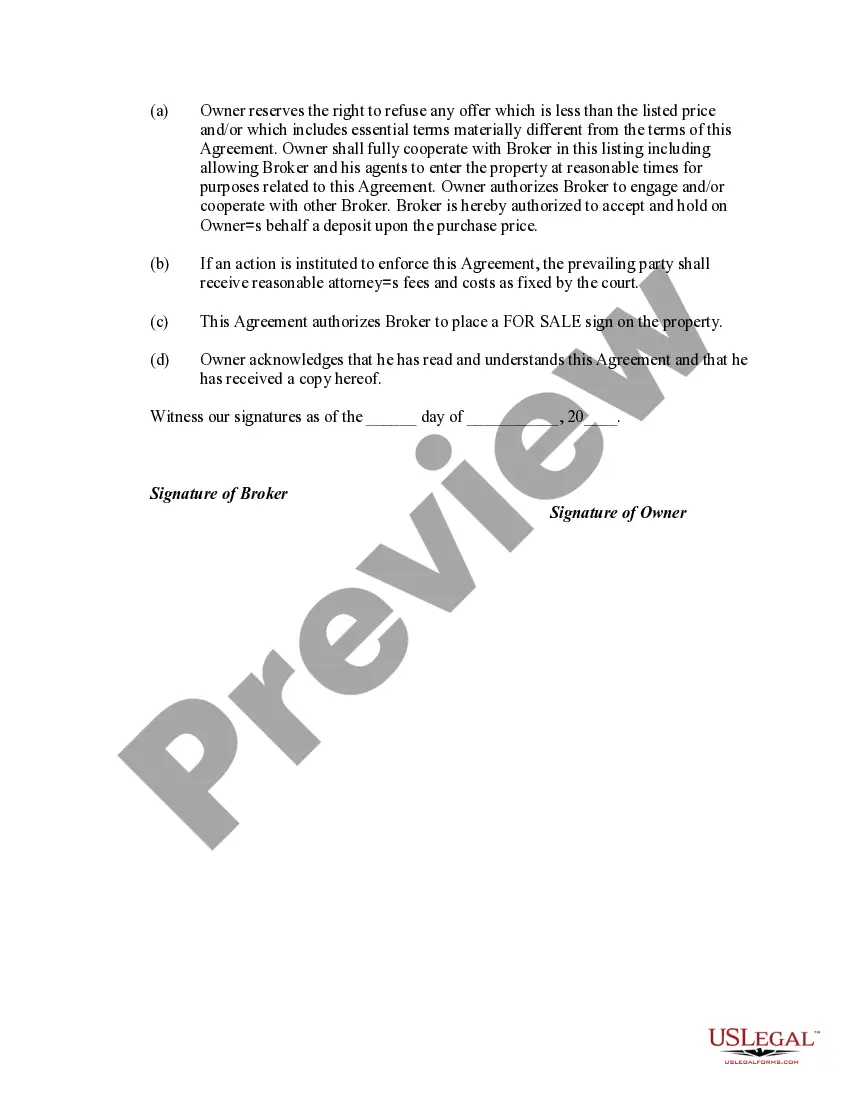
How to Amend a Listing Agreement (3 steps) Discuss the Amendment. The broker and owner should meet and discuss the changes to the listing agreement. Write the Amendment. Once a verbal agreement is made, the amendment should be written. Sign and Attach to Listing Agreement.
Good faith modification: A modified contract is a kind of new agreement, which changes parties' obligations and then requires new consideration. But contract modification made in good faith under UCC is enforceable even without consideration.
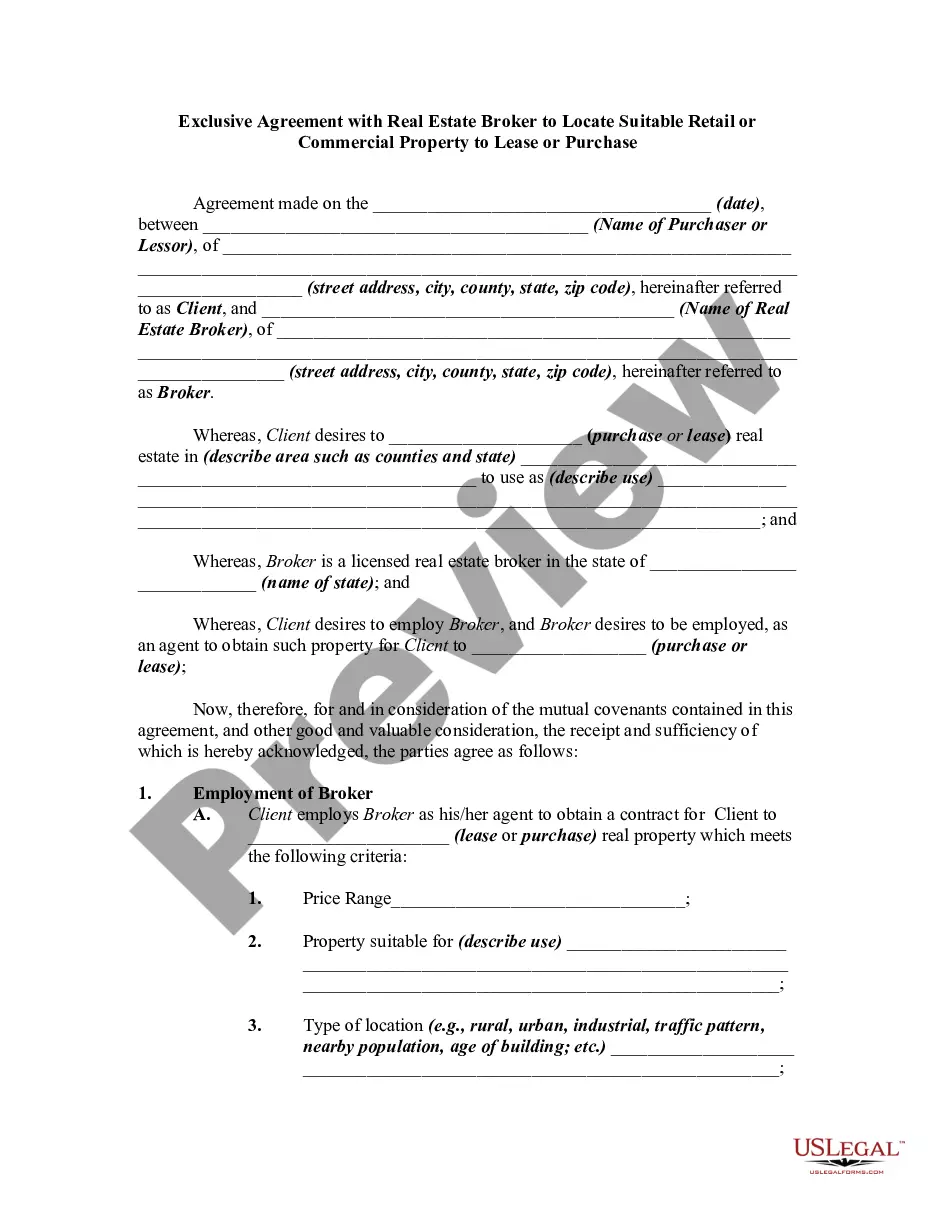
Exclusive Rights-to-Sell Listing This gives the real estate agent the exclusive rights to market your home and list it on MLS. They will receive the full commission as long the home is sold within the designated timeframe. This is the preferred agreement for most real estate agents.
