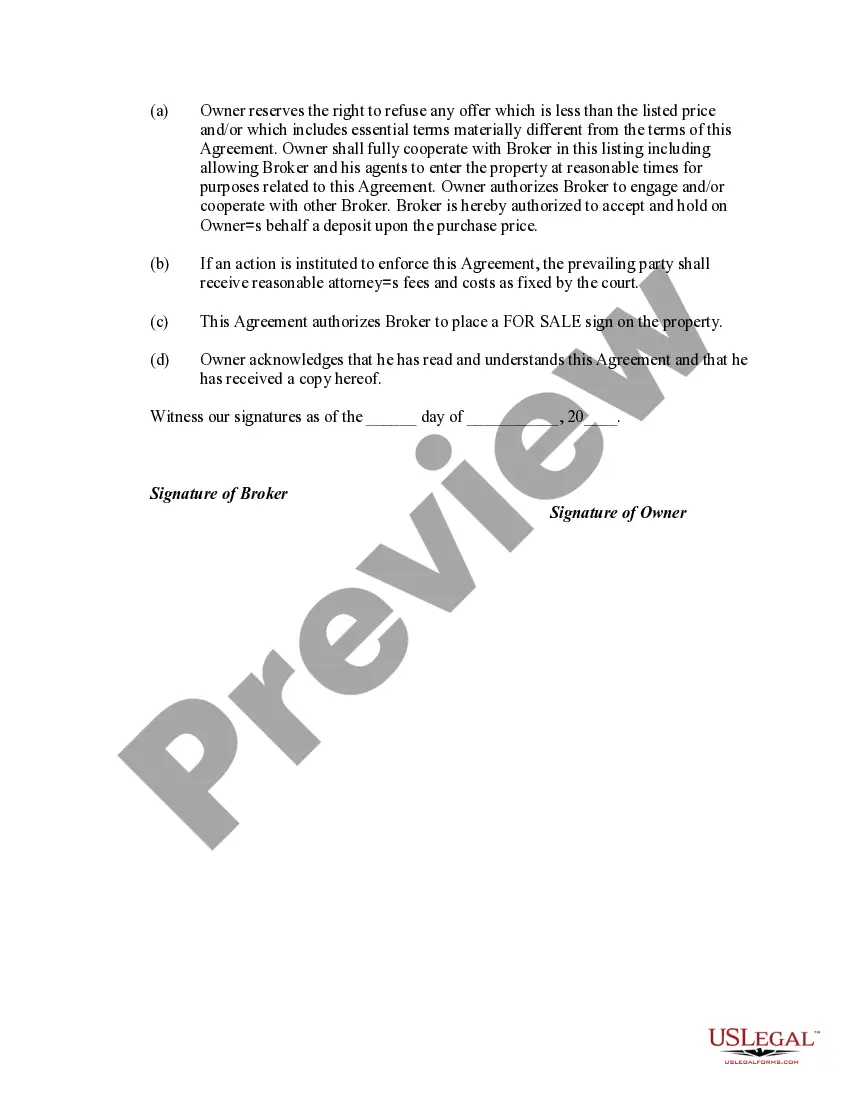
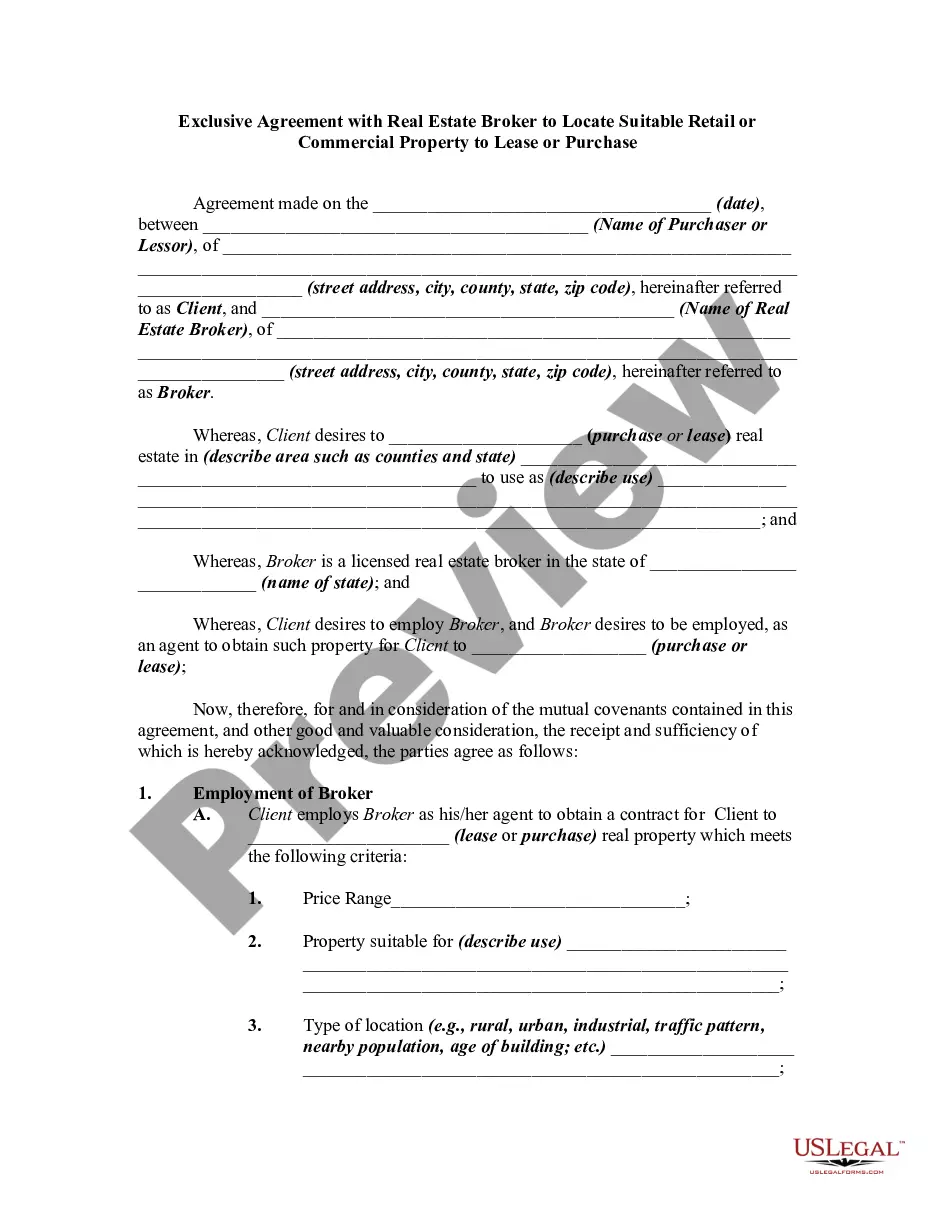
Listing Agreement Commercial Form With Two Points In San Jose
Description


Get your form ready online
Our built-in tools help you complete, sign, share, and store your documents in one place.
Make edits, fill in missing information, and update formatting in US Legal Forms—just like you would in MS Word.
Download a copy, print it, send it by email, or mail it via USPS—whatever works best for your next step.
Sign and collect signatures with our SignNow integration. Send to multiple recipients, set reminders, and more. Go Premium to unlock E-Sign.
If this form requires notarization, complete it online through a secure video call—no need to meet a notary in person or wait for an appointment.
We protect your documents and personal data by following strict security and privacy standards.

Make edits, fill in missing information, and update formatting in US Legal Forms—just like you would in MS Word.

Download a copy, print it, send it by email, or mail it via USPS—whatever works best for your next step.

Sign and collect signatures with our SignNow integration. Send to multiple recipients, set reminders, and more. Go Premium to unlock E-Sign.

If this form requires notarization, complete it online through a secure video call—no need to meet a notary in person or wait for an appointment.

We protect your documents and personal data by following strict security and privacy standards.
Looking for another form?





Form popularity
FAQ
2. Exclusive right to sell listing agreement. An exclusive right to sell listing is the most widely-used listing agreement. Under this agreement, the broker has the exclusive right to market the property for a specified period of time.
Steps for how to write an amendment to a contract. Identify needs. Begin by identifying the specific sections or terms of the contract that require modification. Discuss proposed changes. Draft. Effective date. Obtain signatures. Keep records. Implement and monitor.
How to Amend a Listing Agreement (3 steps) Discuss the Amendment. The broker and owner should meet and discuss the changes to the listing agreement. Write the Amendment. Once a verbal agreement is made, the amendment should be written. Sign and Attach to Listing Agreement.
The seller can back out for reasons written into the contract, including (but not limited to) contingencies. The buyer is in breach of the contract. If the buyer is “failing to perform” — a legal term meaning that they're not holding up their side of the contract — the seller can likely get out of the contract.
Under common law, contract modification provisions should require modifications to be: 1) made in writing, 2) signed by both parties, 3) made in good faith, and 4) supported by consideration (new benefits or detriments exchanged between the parties which induces each to enter the modification, frequently this is more ...
1. Review the Agreement: Check for a cancellation or termination clause that outlines the process and any potential penalties. 2. Written Notice: Provide a written notice to your agent or their brokerage firm stating your desire to cancel, citing the reasons clearly and professionally.
In California's dynamic real estate market, the listing agreement stands as a cornerstone for home sellers, ensuring a seamless and legally sound transaction. This formal contract between a property owner and a real estate broker authorizes the broker to represent the seller in marketing and selling the property.
Any amendment should be explained in-full so that all parties are in agreement. Discuss the Amendment. The broker and owner should meet and discuss the changes to the listing agreement. Write the Amendment. Once a verbal agreement is made, the amendment should be written. Sign and Attach to Listing Agreement.
The seller can back out for reasons written into the contract, including (but not limited to) contingencies. The buyer is in breach of the contract. If the buyer is “failing to perform” — a legal term meaning that they're not holding up their side of the contract — the seller can likely get out of the contract.
The settlement required real estate licensees to have a written agreement with a buyer before showing properties listed on the Multiple Listing Service (MLS). AB 2992 expands this requirement to all properties, whether it is listed on an MLS or not, and also imposes several additional requirements.
