Right To Sell In San Diego
Description


Get your form ready online
Our built-in tools help you complete, sign, share, and store your documents in one place.
Make edits, fill in missing information, and update formatting in US Legal Forms—just like you would in MS Word.
Download a copy, print it, send it by email, or mail it via USPS—whatever works best for your next step.
Sign and collect signatures with our SignNow integration. Send to multiple recipients, set reminders, and more. Go Premium to unlock E-Sign.
If this form requires notarization, complete it online through a secure video call—no need to meet a notary in person or wait for an appointment.
We protect your documents and personal data by following strict security and privacy standards.

Make edits, fill in missing information, and update formatting in US Legal Forms—just like you would in MS Word.

Download a copy, print it, send it by email, or mail it via USPS—whatever works best for your next step.

Sign and collect signatures with our SignNow integration. Send to multiple recipients, set reminders, and more. Go Premium to unlock E-Sign.

If this form requires notarization, complete it online through a secure video call—no need to meet a notary in person or wait for an appointment.

We protect your documents and personal data by following strict security and privacy standards.
Looking for another form?






Form popularity
FAQ
The Ellis Act is a California state law that gives landlords a legal opportunity to leave the rental market business and evict tenants. The ordinance was adopted in 1985 following the court case Nash v.
To conduct business in the public right of way or on public property, a Sidewalk Vending Permit is required. A Sidewalk Vending Permit is valid for one year from the date of issuance.
California "Rent Cap" CA tenants are protected from unreasonable rent increases. Commonly referred to as the “rent cap,” the law restricts your landlord from increasing your rent more than 5% + the local rate of inflation, or 10% (whichever is less) in a twelve-month period.
The Ellis Act (California Government Code Chapter 12.75) is a 1985 California state law that allows landlords to evict residential tenants to "go out of the rental business" in spite of desires by local governments to compel them to continue providing rental housing.
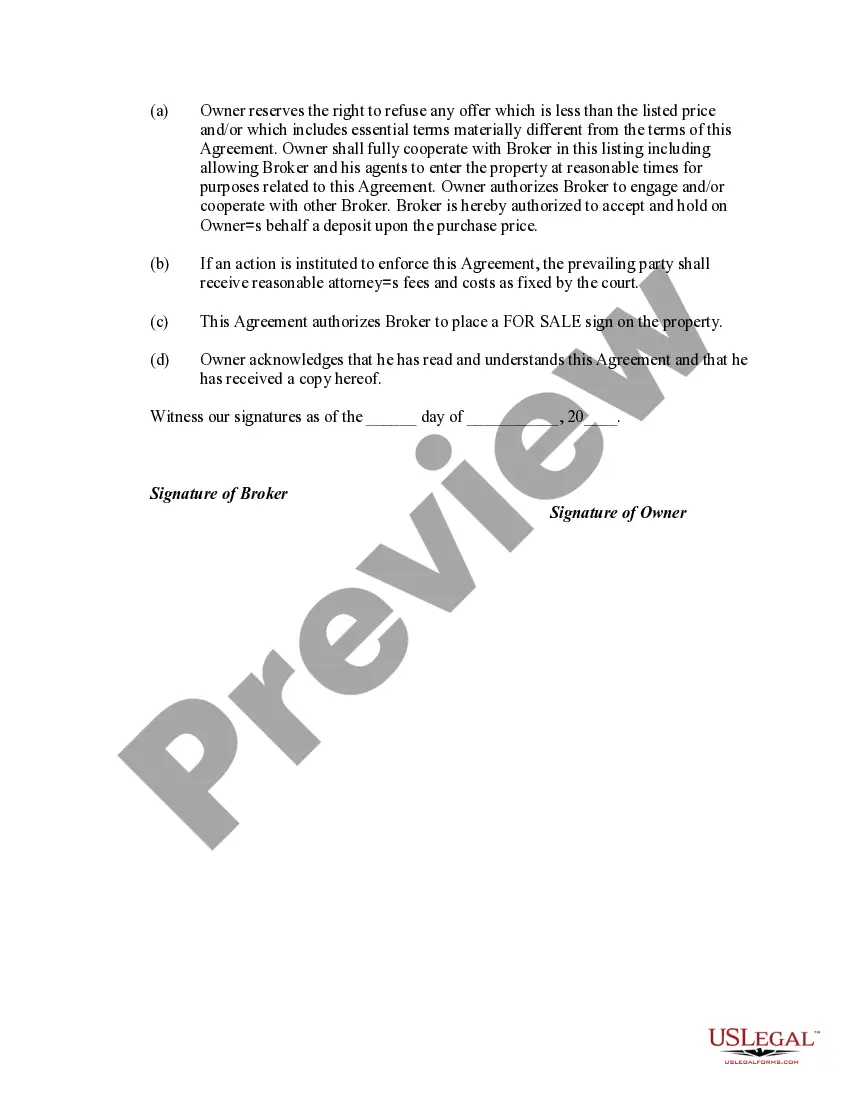
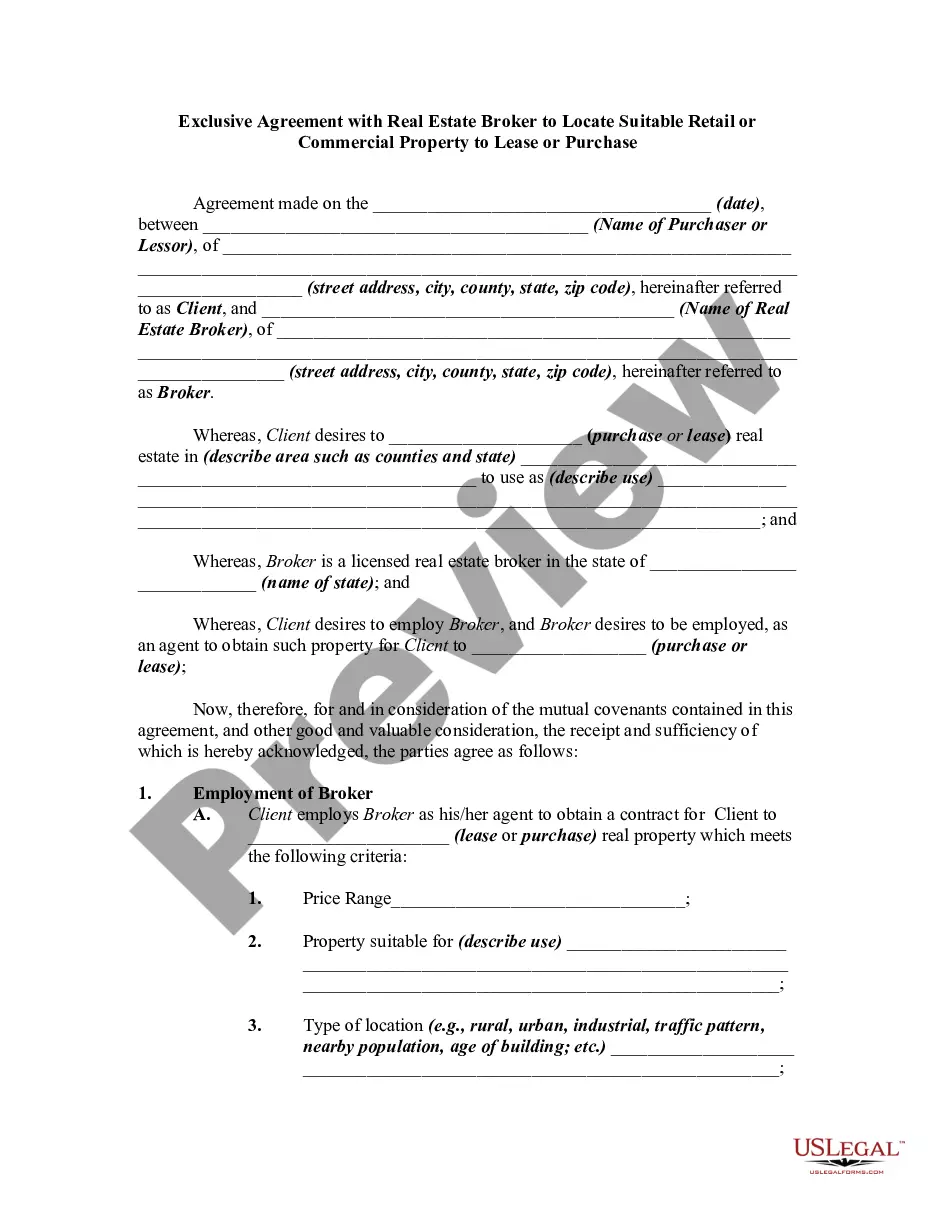
What is an exclusive right to sell a listing? As its name suggests, this type of agreement gives the agent you choose (and their brokerage — i.e., the company for which they work) the unique, unshared right to obtain a buyer for your home. They also get the exclusive right to list and market it.
You can turn right at a red light, if: There is not a NO TURN ON RED sign posted. You stop at the stop or limit line, yield for pedestrians, and turn when it is safe.
Can a house sale fall through after exchange of contracts? Yes, although it is not common for this to happen, a property sale can fall through even at this point of the sale.
Post-sale statute of limitations for liabilities Here are a few examples of the statute of limitation periods in five states: California: 4 years for written contracts, 3 years for property damage.
California law requires sellers to disclose any known defects in a property to protect buyers. If a seller knowingly provides false information, they can face legal consequences such as lawsuits or financial penalties. Buyers have up to three years to sue if undisclosed defects are discovered after the sale.
You're not required to hire a real estate agent to sell your home in California. But selling without one involves a lot of work and a big time commitment. While selling by owner spares you from paying the commission of a seller's agent, you'll still be responsible for the buyer's agent's commission.
