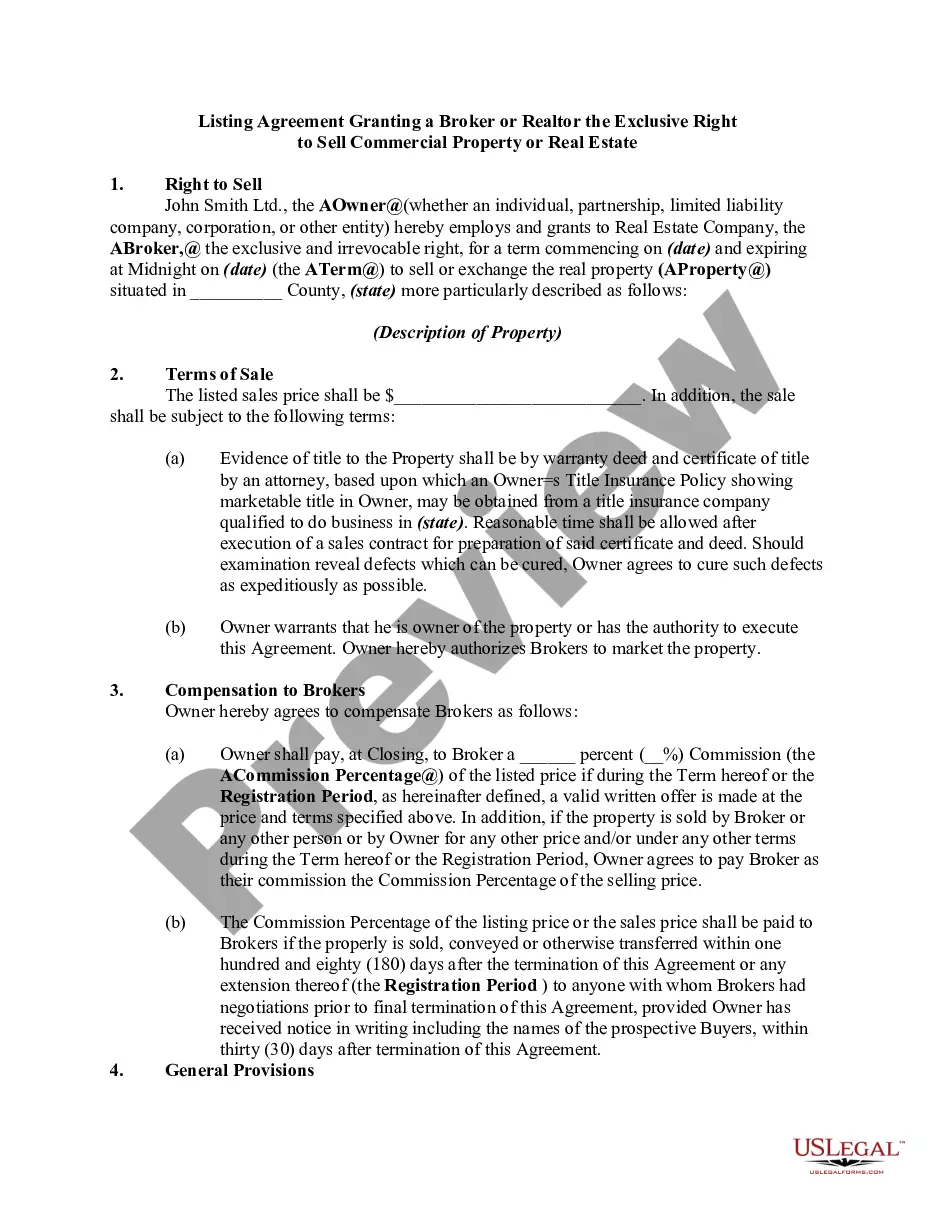
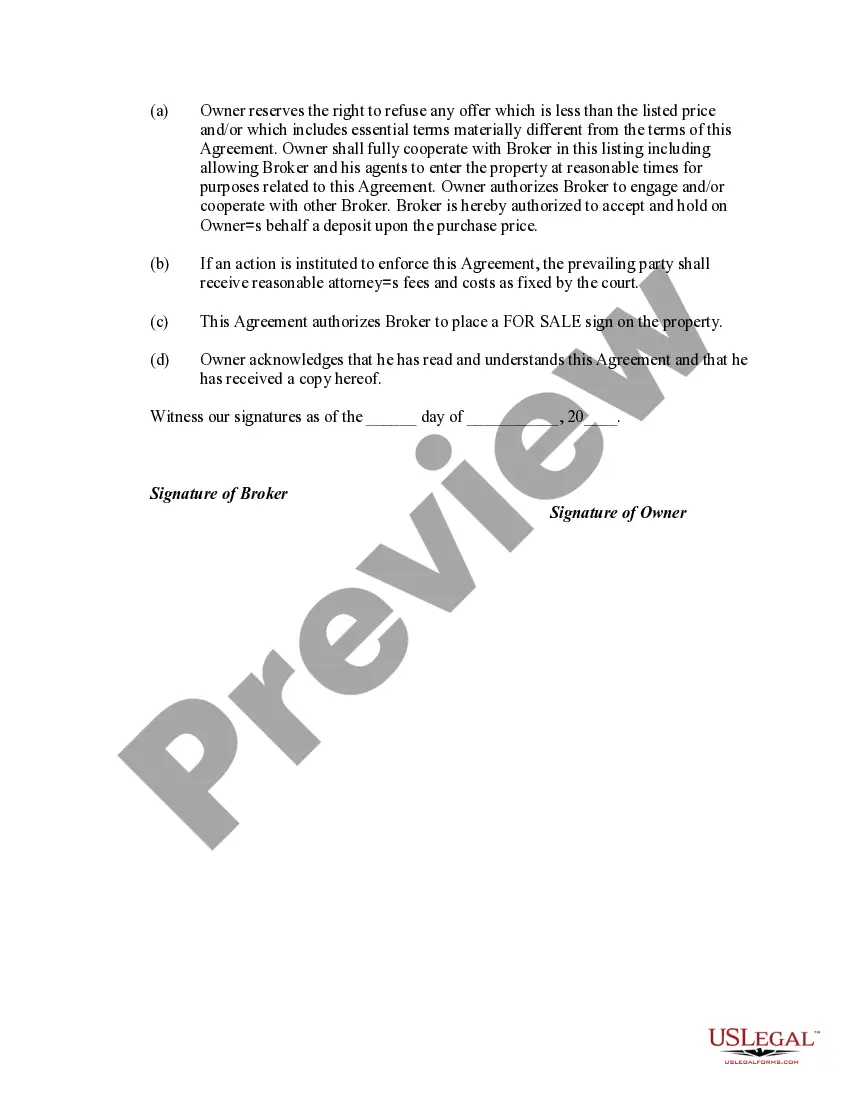
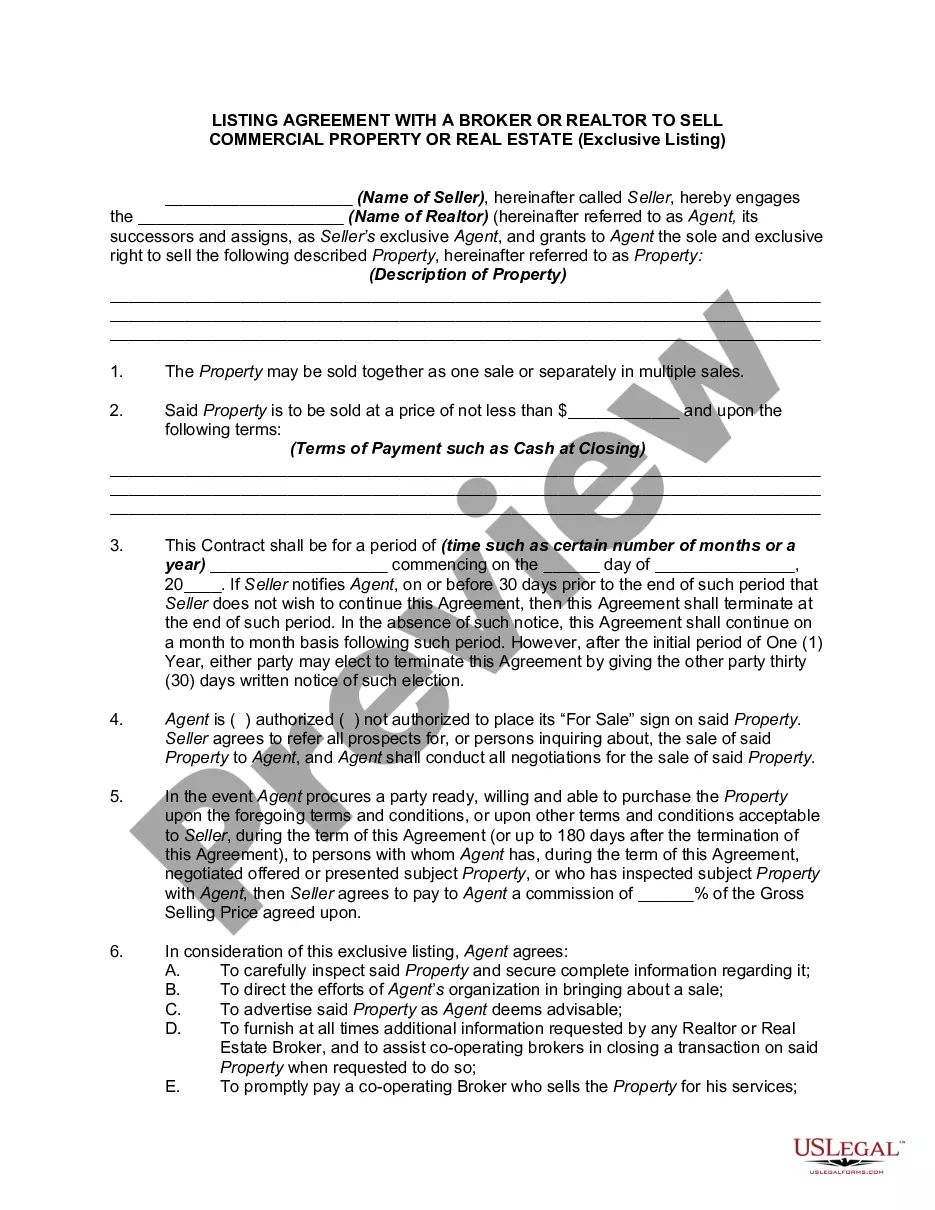
Listing Agreement Commercial Form For Real Estate In Sacramento
Description
Get your form ready online
Our built-in tools help you complete, sign, share, and store your documents in one place.
Make edits, fill in missing information, and update formatting in US Legal Forms—just like you would in MS Word.
Download a copy, print it, send it by email, or mail it via USPS—whatever works best for your next step.
Sign and collect signatures with our SignNow integration. Send to multiple recipients, set reminders, and more. Go Premium to unlock E-Sign.
If this form requires notarization, complete it online through a secure video call—no need to meet a notary in person or wait for an appointment.
We protect your documents and personal data by following strict security and privacy standards.

Make edits, fill in missing information, and update formatting in US Legal Forms—just like you would in MS Word.

Download a copy, print it, send it by email, or mail it via USPS—whatever works best for your next step.

Sign and collect signatures with our SignNow integration. Send to multiple recipients, set reminders, and more. Go Premium to unlock E-Sign.

If this form requires notarization, complete it online through a secure video call—no need to meet a notary in person or wait for an appointment.

We protect your documents and personal data by following strict security and privacy standards.
Looking for another form?
Form popularity
FAQ
C.A.R. standard forms are for your individual use in your real estate transactions only. C.A.R. standard forms are protected by U.S. copyright laws which expressly forbid the unauthorized reproduction, display, or other use of any portion of copyrighted material by any means, including electronic formats.
In California this is not considered illegal or unethical in and of itself, but since the law requires an agent to put their client's interest above their own, pocket listings warrant close scrutiny. A pocket listing is a listing with limited exposure to the general market place.
Under California Civil Code Section 1624, certain contracts – including marriage, real estate, broker, lender, debt repayment, sales agreement, and agreements that take over a year to complete – must be in writing.
The settlement required real estate licensees to have a written agreement with a buyer before showing properties listed on the Multiple Listing Service (MLS). AB 2992 expands this requirement to all properties, whether it is listed on an MLS or not, and also imposes several additional requirements.
This Practice Note considers the specific situations where a contract is required by law to be in writing: assignments, contracts for the sale of land, equitable mortgages, assents, transfers of shares, transfers of intellectual property rights, and guarantees.
Often, smaller, less valuable transactions, or short-term services, may not require a written agreement at all. Depending on your comfort level, however, a written agreement can make sure both buyer and seller are on the same page.
Are California real estate contracts assignable? Yes, many California real estate contracts can be assignable, but it depends on the specific terms of the contract. An assignable contract allows the original party, known as the assignor, to transfer their rights and obligations to another party, called the assignee.
An exclusive right to sell listing is the most widely-used listing agreement. Under this agreement, the broker has the exclusive right to market the property for a specified period of time.
This legal document outlines the terms between a property owner and a real estate broker or agent, detailing what they can expect from each other during the process of selling a property. Let's explore what a listing agreement involves, the different types available, and why it's important for both parties involved.