Listing Agreement For Unimproved Property In Queens
Description

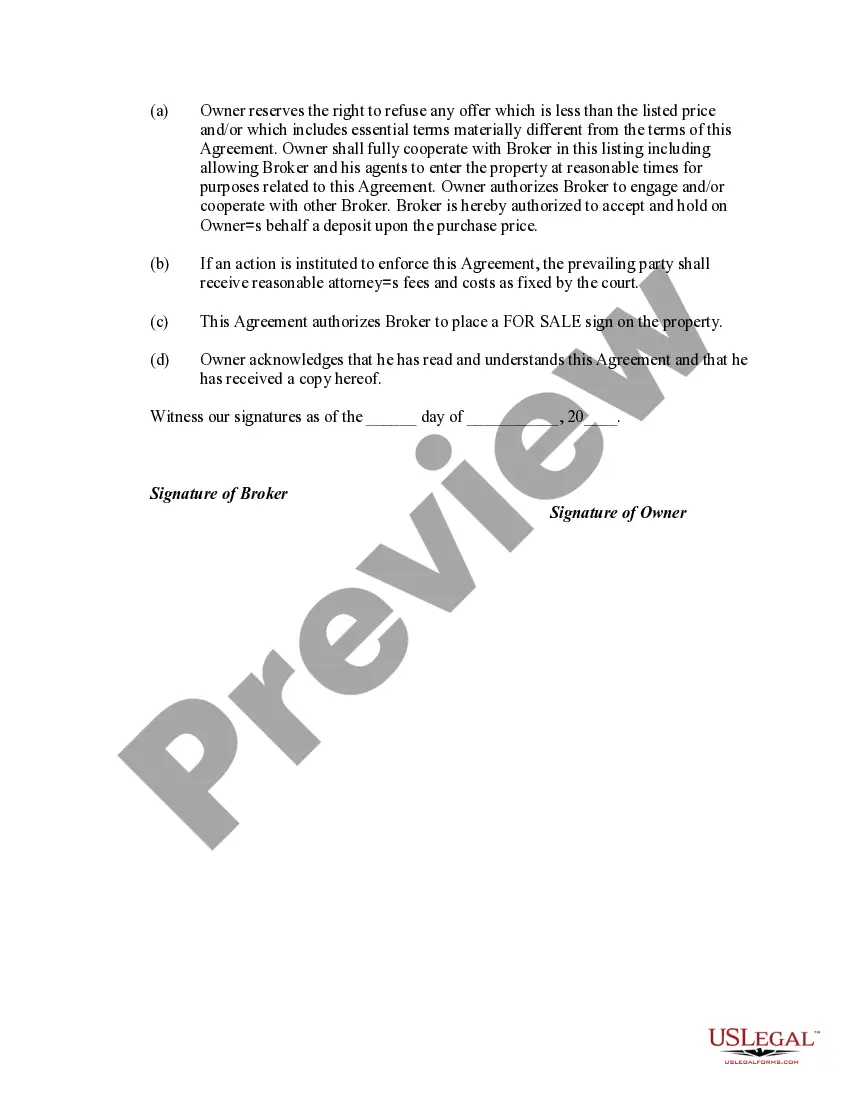

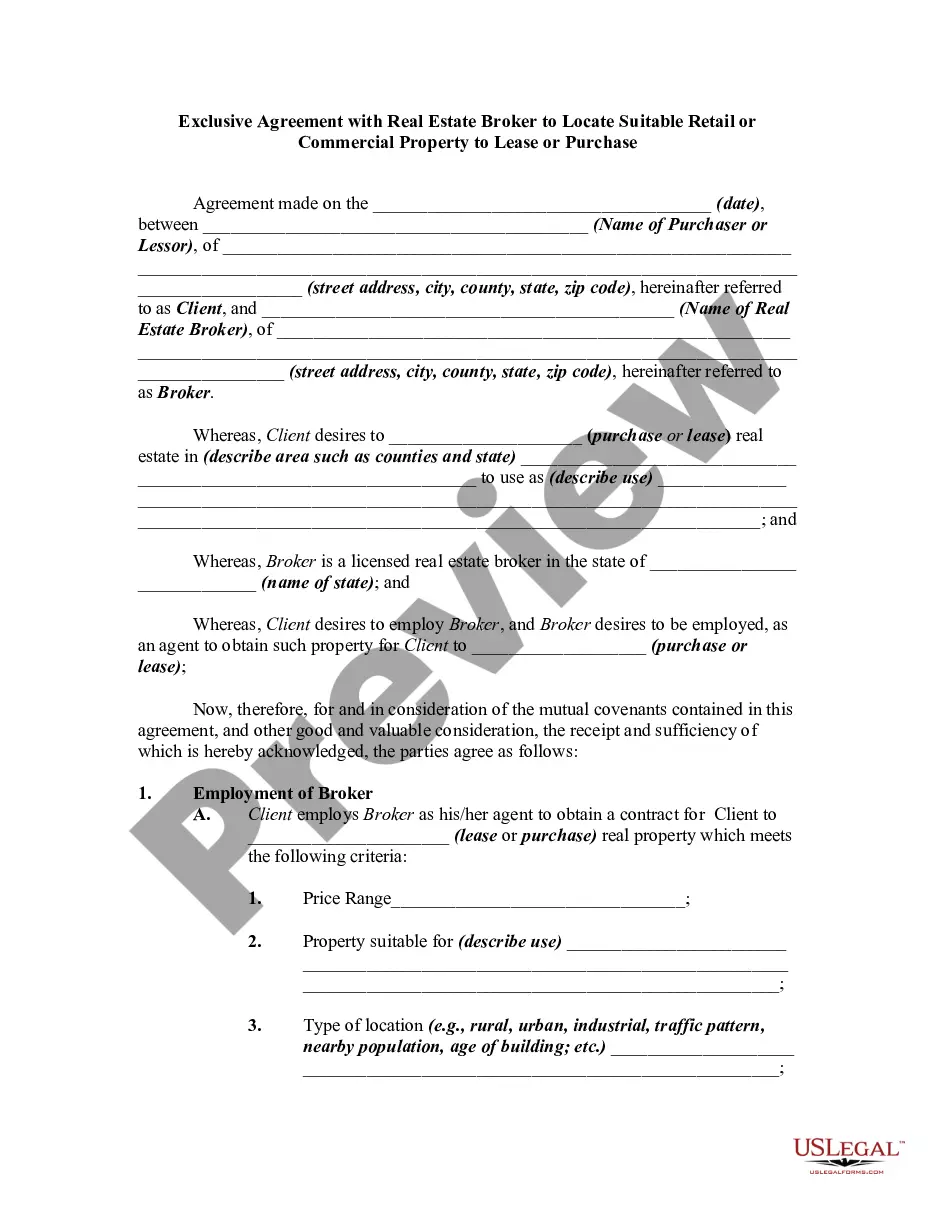
Get your form ready online
Our built-in tools help you complete, sign, share, and store your documents in one place.
Make edits, fill in missing information, and update formatting in US Legal Forms—just like you would in MS Word.
Download a copy, print it, send it by email, or mail it via USPS—whatever works best for your next step.
Sign and collect signatures with our SignNow integration. Send to multiple recipients, set reminders, and more. Go Premium to unlock E-Sign.
If this form requires notarization, complete it online through a secure video call—no need to meet a notary in person or wait for an appointment.
We protect your documents and personal data by following strict security and privacy standards.

Make edits, fill in missing information, and update formatting in US Legal Forms—just like you would in MS Word.

Download a copy, print it, send it by email, or mail it via USPS—whatever works best for your next step.

Sign and collect signatures with our SignNow integration. Send to multiple recipients, set reminders, and more. Go Premium to unlock E-Sign.

If this form requires notarization, complete it online through a secure video call—no need to meet a notary in person or wait for an appointment.

We protect your documents and personal data by following strict security and privacy standards.
Looking for another form?









Form popularity
FAQ
Exclusive Rights-to-Sell Listing This gives the real estate agent the exclusive rights to market your home and list it on MLS. They will receive the full commission as long the home is sold within the designated timeframe. This is the preferred agreement for most real estate agents.
An open listing enables multiple real estate agents to try to sell your home. This setup gives the seller the ability to work with multiple agents at once. This differs from an exclusive listing, in which the seller works exclusively with one listing agent to find a buyer.
Typical time frames for agreements range from three to six months, though they can be shorter or longer. Many include a renewal clause, which provides an option to extend the listing period if both parties agree.
Comparing Exclusive to Non-Exclusive Licenses An exclusive license gives the holder a greater degree of control, while a non-exclusive license is more permissive and allows for multiple parties to use the property. It is also worth noting that a license agreement can include various terms and conditions.
A listing agreement is a type of real estate contract in which a property owner gives a real estate agent or broker the authority to find a buyer for their property. If you decide to sell your home using a realtor, you will likely be asked to sign a listing agreement.
Exclusive listing agreements give a single real estate agent/brokerage the sole right to sell your property. This arrangement can be a great representation structure for limiting complexity and increasing seller control but can also have consequences like limiting exposure.
Any amendment should be explained in-full so that all parties are in agreement. Discuss the Amendment. The broker and owner should meet and discuss the changes to the listing agreement. Write the Amendment. Once a verbal agreement is made, the amendment should be written. Sign and Attach to Listing Agreement.
How to Amend a Listing Agreement (3 steps) Discuss the Amendment. The broker and owner should meet and discuss the changes to the listing agreement. Write the Amendment. Once a verbal agreement is made, the amendment should be written. Sign and Attach to Listing Agreement.
Steps for how to write an amendment to a contract. Identify needs. Begin by identifying the specific sections or terms of the contract that require modification. Discuss proposed changes. Draft. Effective date. Obtain signatures. Keep records. Implement and monitor.
