Listing Agreement For Debt Securities In Florida
Description

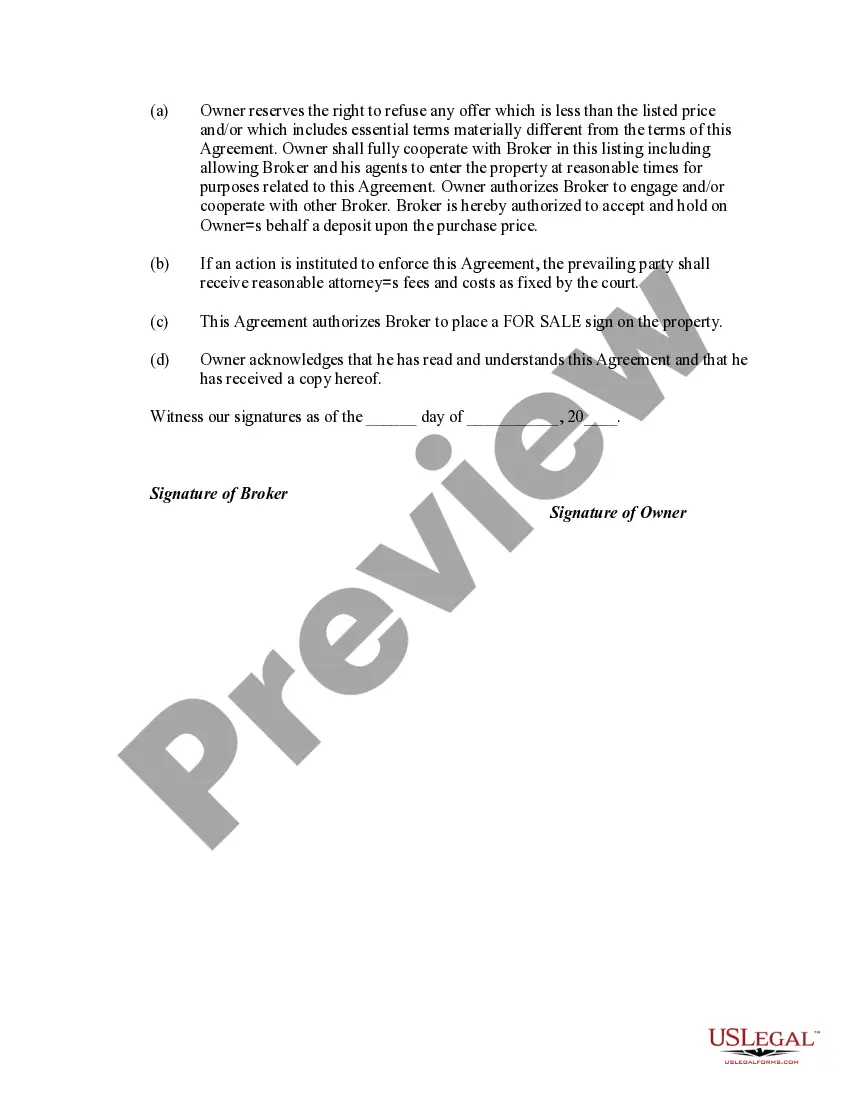

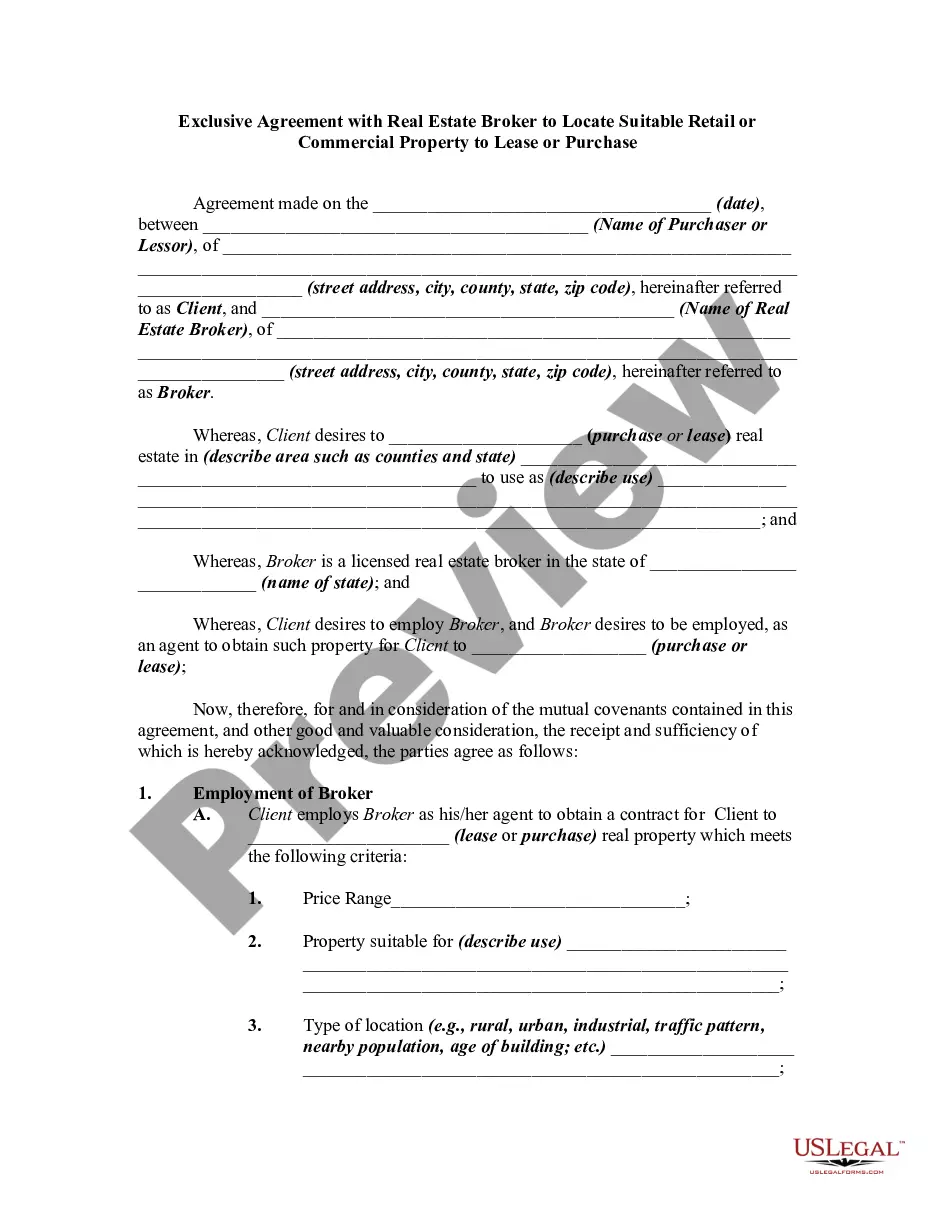
Get your form ready online
Our built-in tools help you complete, sign, share, and store your documents in one place.
Make edits, fill in missing information, and update formatting in US Legal Forms—just like you would in MS Word.
Download a copy, print it, send it by email, or mail it via USPS—whatever works best for your next step.
Sign and collect signatures with our SignNow integration. Send to multiple recipients, set reminders, and more. Go Premium to unlock E-Sign.
If this form requires notarization, complete it online through a secure video call—no need to meet a notary in person or wait for an appointment.
We protect your documents and personal data by following strict security and privacy standards.

Make edits, fill in missing information, and update formatting in US Legal Forms—just like you would in MS Word.

Download a copy, print it, send it by email, or mail it via USPS—whatever works best for your next step.

Sign and collect signatures with our SignNow integration. Send to multiple recipients, set reminders, and more. Go Premium to unlock E-Sign.

If this form requires notarization, complete it online through a secure video call—no need to meet a notary in person or wait for an appointment.

We protect your documents and personal data by following strict security and privacy standards.
Looking for another form?









Form popularity
FAQ
The terms of an open listing can vary, but some common elements include the duration of the agreement, the commission rate, and the broker's marketing responsibilities. In Florida, the seller and the broker must agree upon the terms.
Open listing: Definition An open listing enables multiple real estate agents to try to sell your home. This setup gives the seller the ability to work with multiple agents at once. This differs from an exclusive listing, in which the seller works exclusively with one listing agent to find a buyer.
5 Steps to Get Your Real Estate License in Florida Step 1: Take the pre-license course. Step 2: Apply to take the Florida real estate exam. Step 3: Take and pass the state real estate exam. Step 4: Affiliate with a broker. Step 5: Join a local Realtor association/board.
Florida law acknowledges this sentiment by ensuring tenants are granted certain rights. One of these rights is the expectation of privacy. While a landlord owns the property, they can't arbitrarily invade a tenant's space. Any entry into the rented premises, especially for showings, requires prior notice.
A showing agreement is a document sometimes used by Realtors in Florida to formalize their relationship with prospective buyers. Essentially, it is a prelude to a potential real estate transaction.
While pocket listings are technically legal in all 50 states, the nuances and rules around pocket listings vary from state to state and MLS to MLS. Back in 2020, NAR banned pocket listings, requiring all listings be entered into MLS within 24 hours of signing the listing agreement.
The three types of buyer representation agreements are non-exclusive not-for-compensation contracts, non-exclusive right-to-represent contract and exclusive right-to-represent contract. Among the three types of buyer representation agreements, the exclusive right-to-represent contract is the most common.
There are several different types of listing contracts, but very few of them are used. The "Exclusive Right to Sell" is the most common, but there is the "open listing," the "exclusive agency listing," and the "one-time show."
A listing agreement is used to spell out the contractual relationship between your brokerage firm and a home seller. There are three different types of listing agreements: the open listing, the exclusive agency listing, and the exclusive right to sell listing.
4 Common Types of Listing Agreements in Real Estate Open listing agreement. An open listing is a non-exclusive contract. Exclusive right to sell listing agreement. An exclusive right to sell listing is the most widely-used listing agreement. Exclusive agency listing agreement. Net listing agreement.