Listing Agreement For Land In Contra Costa
Description


Get your form ready online
Our built-in tools help you complete, sign, share, and store your documents in one place.
Make edits, fill in missing information, and update formatting in US Legal Forms—just like you would in MS Word.
Download a copy, print it, send it by email, or mail it via USPS—whatever works best for your next step.
Sign and collect signatures with our SignNow integration. Send to multiple recipients, set reminders, and more. Go Premium to unlock E-Sign.
If this form requires notarization, complete it online through a secure video call—no need to meet a notary in person or wait for an appointment.
We protect your documents and personal data by following strict security and privacy standards.

Make edits, fill in missing information, and update formatting in US Legal Forms—just like you would in MS Word.

Download a copy, print it, send it by email, or mail it via USPS—whatever works best for your next step.

Sign and collect signatures with our SignNow integration. Send to multiple recipients, set reminders, and more. Go Premium to unlock E-Sign.

If this form requires notarization, complete it online through a secure video call—no need to meet a notary in person or wait for an appointment.

We protect your documents and personal data by following strict security and privacy standards.
Looking for another form?









Form popularity
FAQ
The settlement required real estate licensees to have a written agreement with a buyer before showing properties listed on the Multiple Listing Service (MLS). AB 2992 expands this requirement to all properties, whether it is listed on an MLS or not, and also imposes several additional requirements.
Listing agents represent home sellers — as the name suggests, they create and promote the listing for a home that's for sale. Somewhat confusingly, selling agents represent the purchaser's interests and are therefore also known as buyer's agents.
Whether you change your mind about selling, have ethical or performance concerns about the agent, or you just don't find a buyer, you can get out of a listing agreement.
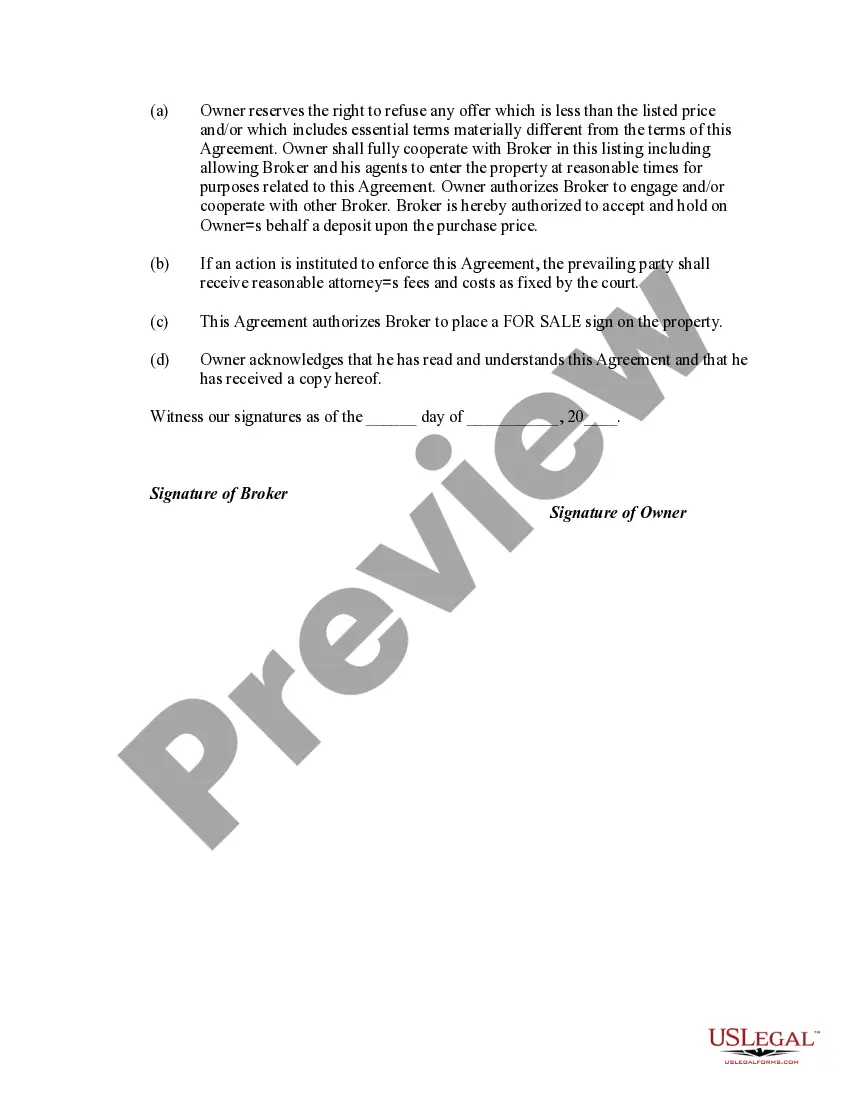
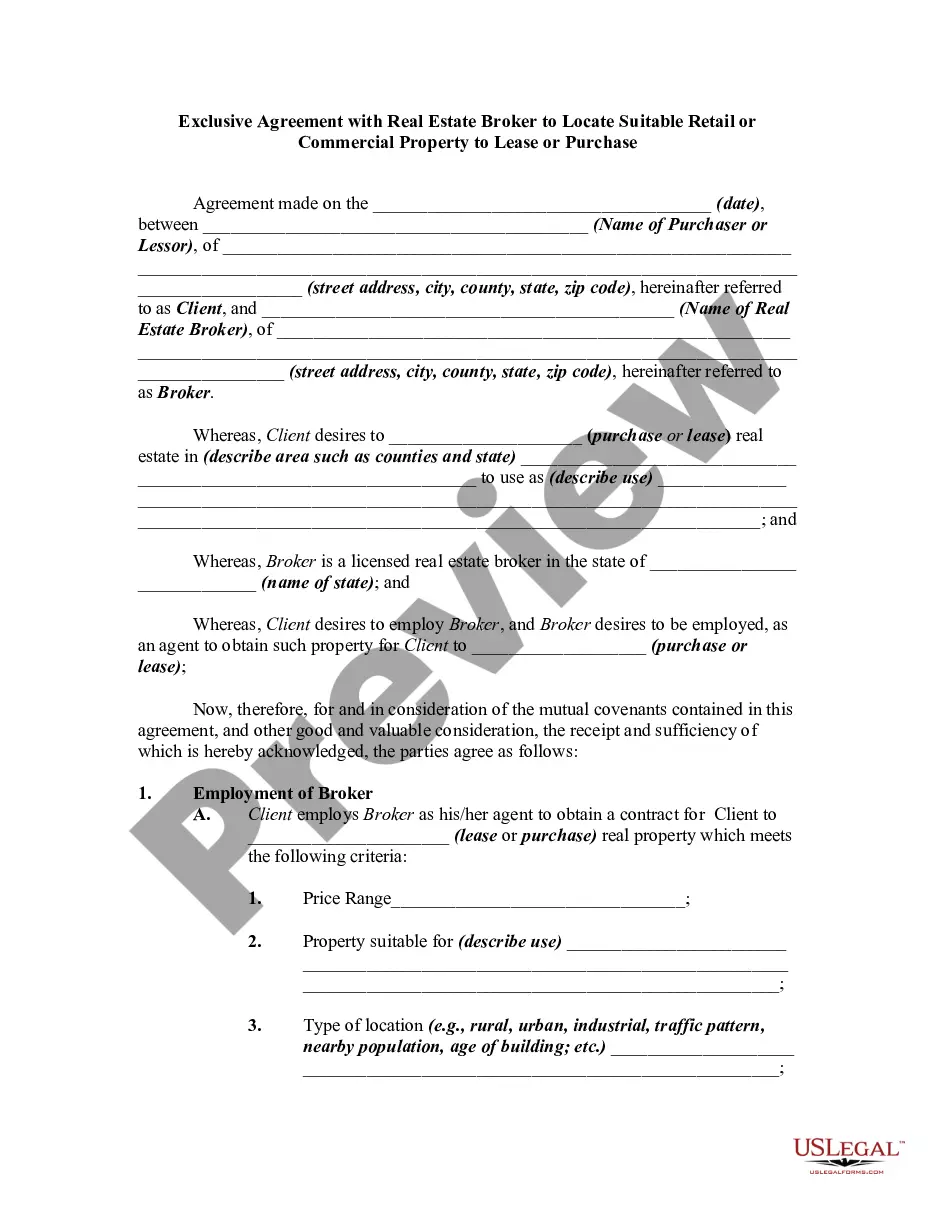
This legal document outlines the terms between a property owner and a real estate broker or agent, detailing what they can expect from each other during the process of selling a property. Let's explore what a listing agreement involves, the different types available, and why it's important for both parties involved.
Also, under the statute of frauds, a listing agreement must be in writing and must be signed by the seller. (If the property has more than one owner, only one of them has to sign the listing.) The broker usually also signs the listing agreement, although her signature is not strictly required.
Signatories sign legal documents, international agreements, and contracts. These types of documents have multiple parties that need to sign the agreement. Signers are anyone who needs to provide a signature to legal documents.
In California's dynamic real estate market, the listing agreement stands as a cornerstone for home sellers, ensuring a seamless and legally sound transaction. This formal contract between a property owner and a real estate broker authorizes the broker to represent the seller in marketing and selling the property.
As noted, to cancel or otherwise amend a listing or buyer agency contract the seller/buyer and brokerage must both agree. Be sure to: Discuss your concerns directly with your Realtor and ask for a resolution of the issues that are bothering you. Keep written notes and make your instructions in writing.
The simplest way to terminate a listing agreement is through mutual consent. If both you and your agent agree to part ways, you can cancel the agreement without penalties. Make sure to document this agreement in writing, as it will serve as evidence in case of any disputes later on.
You can indeed cancel a real estate listing agreement in California. Sellers might be asking themselves, “under what circumstances?” And the answer to that is: almost any. Maybe you changed your mind and you decided you don't want to sell your house after all.
