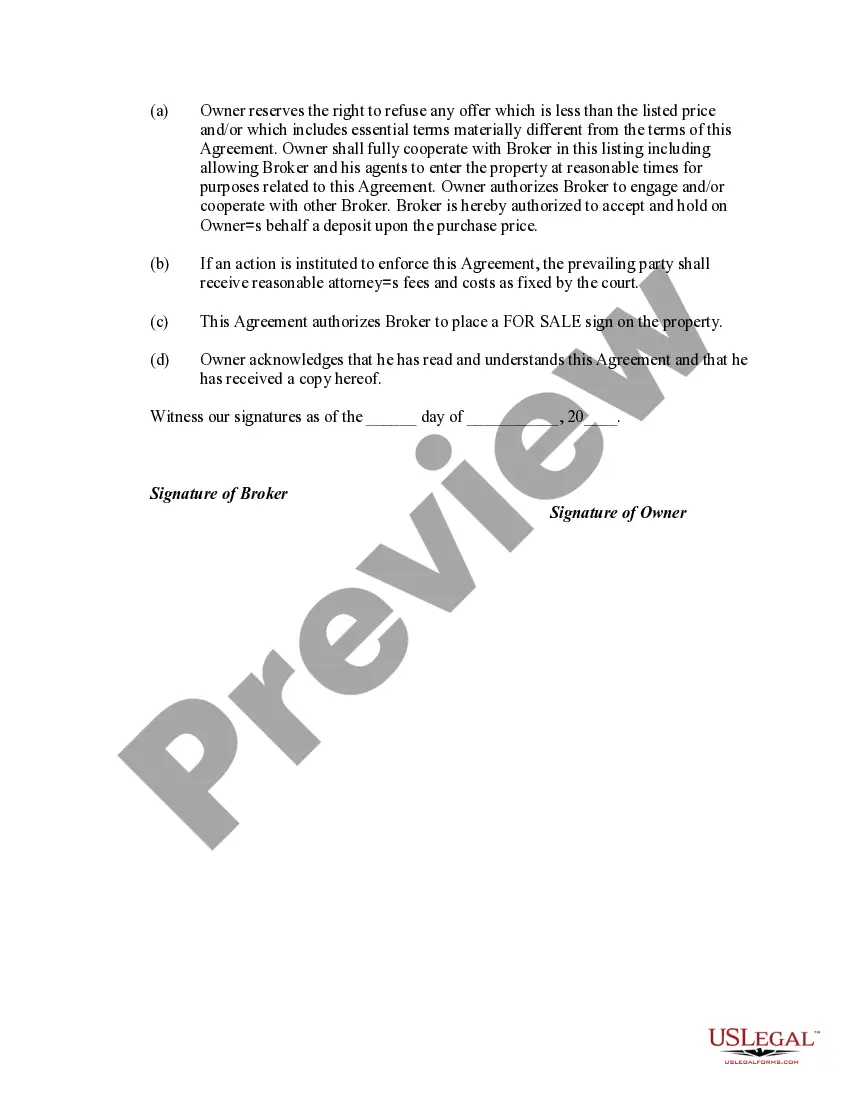
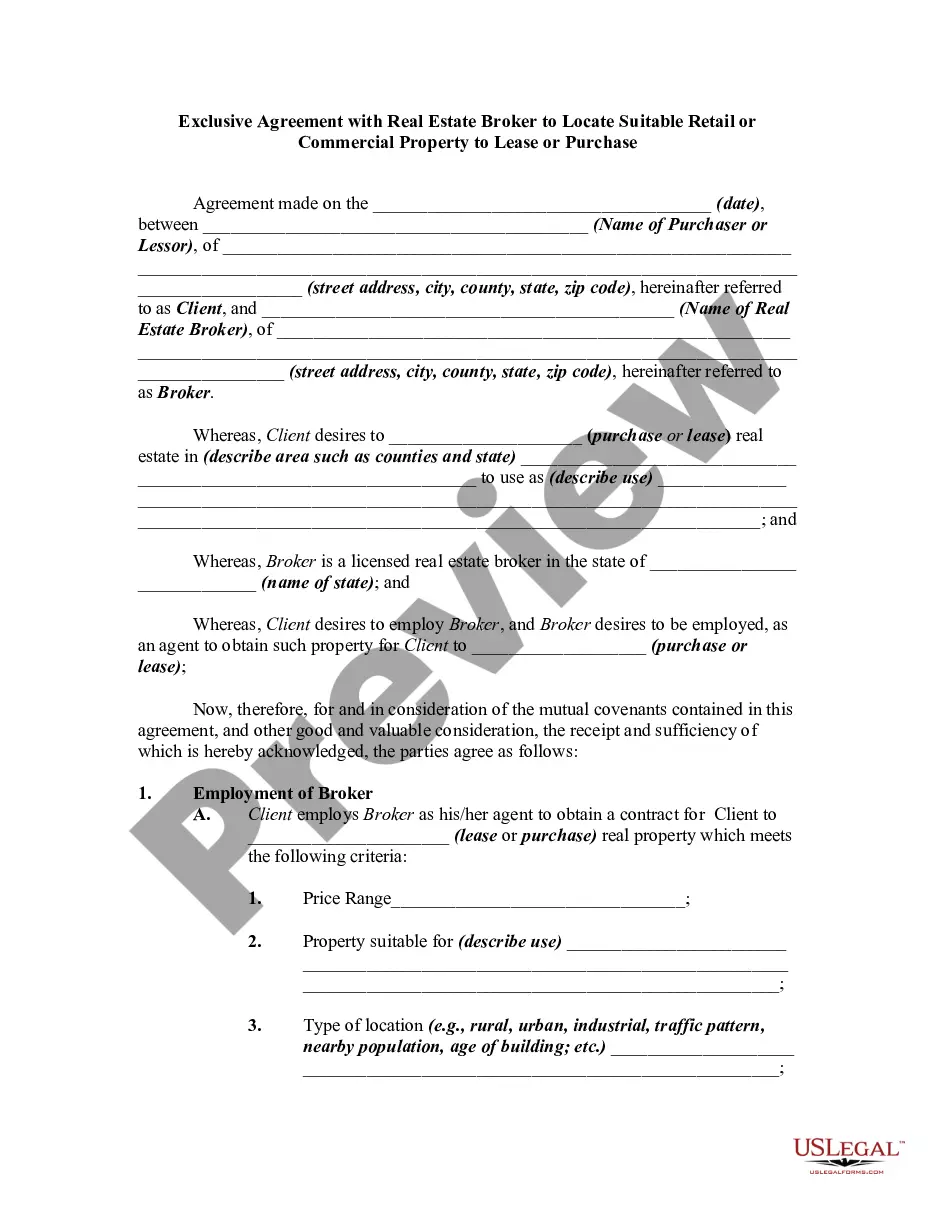
Listing Agreement Commercial Form With Multiple Agents In Contra Costa
Description


Get your form ready online
Our built-in tools help you complete, sign, share, and store your documents in one place.
Make edits, fill in missing information, and update formatting in US Legal Forms—just like you would in MS Word.
Download a copy, print it, send it by email, or mail it via USPS—whatever works best for your next step.
Sign and collect signatures with our SignNow integration. Send to multiple recipients, set reminders, and more. Go Premium to unlock E-Sign.
If this form requires notarization, complete it online through a secure video call—no need to meet a notary in person or wait for an appointment.
We protect your documents and personal data by following strict security and privacy standards.

Make edits, fill in missing information, and update formatting in US Legal Forms—just like you would in MS Word.

Download a copy, print it, send it by email, or mail it via USPS—whatever works best for your next step.

Sign and collect signatures with our SignNow integration. Send to multiple recipients, set reminders, and more. Go Premium to unlock E-Sign.

If this form requires notarization, complete it online through a secure video call—no need to meet a notary in person or wait for an appointment.

We protect your documents and personal data by following strict security and privacy standards.
Looking for another form?








Form popularity
FAQ
How to Amend a Listing Agreement (3 steps) Discuss the Amendment. The broker and owner should meet and discuss the changes to the listing agreement. Write the Amendment. Once a verbal agreement is made, the amendment should be written. Sign and Attach to Listing Agreement.
Legal Protections: Sellers must ensure that their reasons for cancellation align with the legal framework outlined in the sales contract and follow California's real estate law. Unjustified cancellations could lead to legal liabilities.
Most of the time, you can sell your house privately or with a new agent 90 days after the listing contract expires. This will prevent you from paying the agent's commission. Usually, real estate listing agreements have a safety clause that protects the agent from the seller.
The simplest way to terminate a listing agreement is through mutual consent. If both you and your agent agree to part ways, you can cancel the agreement without penalties. Make sure to document this agreement in writing, as it will serve as evidence in case of any disputes later on.
4 Common Types of Listing Agreements in Real Estate Open listing agreement. An open listing is a non-exclusive contract. Exclusive right to sell listing agreement. An exclusive right to sell listing is the most widely-used listing agreement. Exclusive agency listing agreement. Net listing agreement.
The seller can back out for reasons written into the contract, including (but not limited to) contingencies. The buyer is in breach of the contract. If the buyer is “failing to perform” — a legal term meaning that they're not holding up their side of the contract — the seller can likely get out of the contract.
2. Exclusive right to sell listing agreement. An exclusive right to sell listing is the most widely-used listing agreement. Under this agreement, the broker has the exclusive right to market the property for a specified period of time.
The settlement required real estate licensees to have a written agreement with a buyer before showing properties listed on the Multiple Listing Service (MLS). AB 2992 expands this requirement to all properties, whether it is listed on an MLS or not, and also imposes several additional requirements.
The most commonly used form of real estate listing agreement is the exclusive authorization and right to sell listing. This type of listing gives the real estate agent the exclusive right to represent the seller and earn a commission if the property is sold during a specified period, regardless of who finds the buyer.
Home sellers may have the option of offering a real estate agent an exclusive listing or an open listing. An open listing allows other local real estate agents to compete to find a buyer for the property. An exclusive listing gives the sole agent an incentive to work hard for the sale.
