Boundary Lines For My Property In Queens
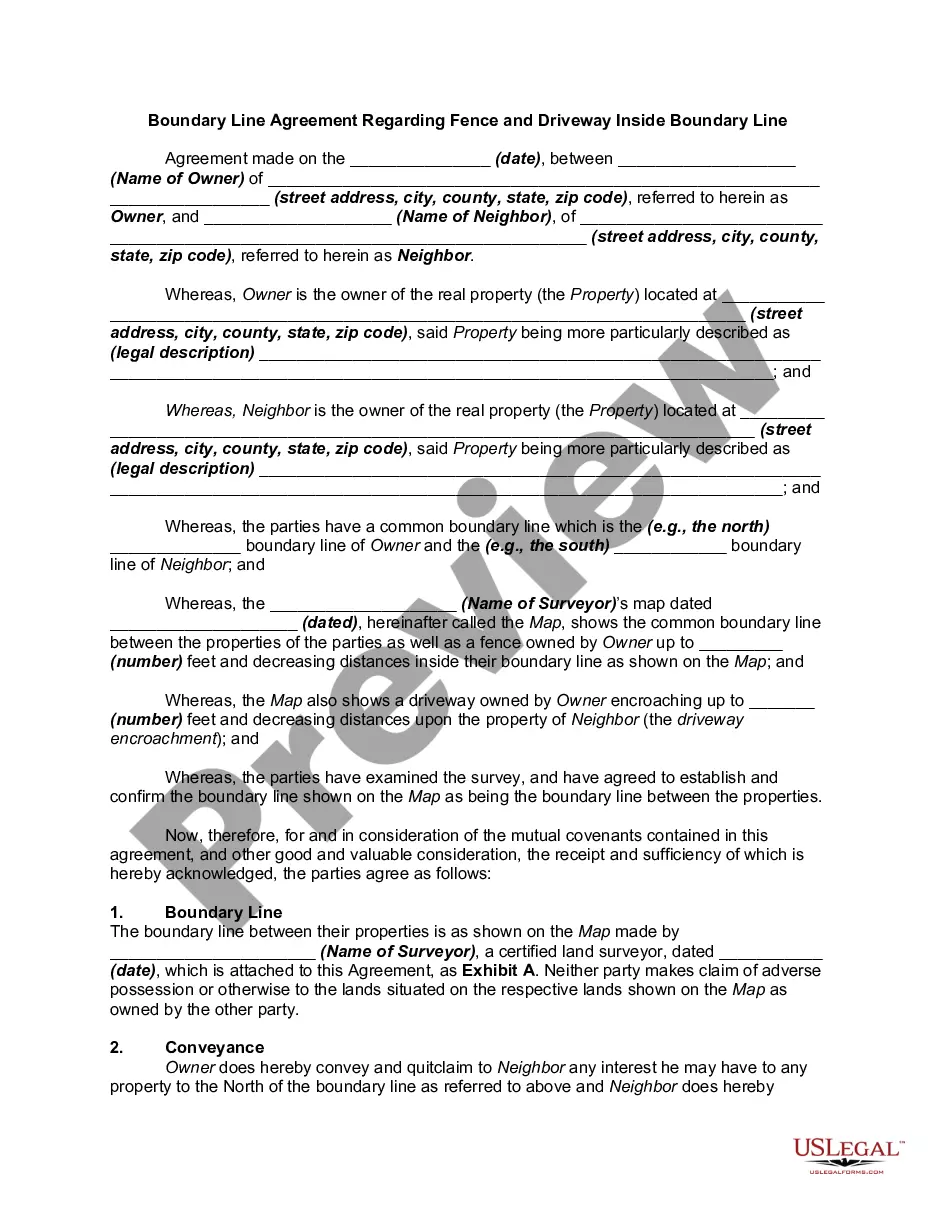
Description


Get your form ready online
Our built-in tools help you complete, sign, share, and store your documents in one place.
Make edits, fill in missing information, and update formatting in US Legal Forms—just like you would in MS Word.
Download a copy, print it, send it by email, or mail it via USPS—whatever works best for your next step.
Sign and collect signatures with our SignNow integration. Send to multiple recipients, set reminders, and more. Go Premium to unlock E-Sign.
If this form requires notarization, complete it online through a secure video call—no need to meet a notary in person or wait for an appointment.
We protect your documents and personal data by following strict security and privacy standards.

Make edits, fill in missing information, and update formatting in US Legal Forms—just like you would in MS Word.

Download a copy, print it, send it by email, or mail it via USPS—whatever works best for your next step.

Sign and collect signatures with our SignNow integration. Send to multiple recipients, set reminders, and more. Go Premium to unlock E-Sign.

If this form requires notarization, complete it online through a secure video call—no need to meet a notary in person or wait for an appointment.

We protect your documents and personal data by following strict security and privacy standards.
Looking for another form?









Form popularity
FAQ
Hire a licensed land surveyor The most accurate way to know where your land begins and ends is to hire a surveyor to determine your property lines. The property surveyor will first check county records to understand the history of the lot.
While convenient, the accuracy of smartphones in determining precise property boundaries is limited: GPS accuracy on phones typically ranges, which may not meet the legal standards required for land surveying. Environmental factors like buildings or natural terrain can obstruct GPS signals, affecting accuracy.
New York law recognizes that boundary lines may be established by the acquiescence of neighbors in a certain agreed upon line for a period of 10 years. Neighbors neither like nor love one another if they become embroiled in a boundary line dispute that quickly escalates into something akin to open warfare.
The front setback is commonly 10 feet, the sides four feet, and the back setback is 10 feet. The distance may also differ ing to the building type. It is imperative to determine the property line of your property before you put up any structures on it.
Call 311 or 212-NEW-YORK (212-639-9675) for help. You can request a certified or uncertified copy of property records online or in person.
You can also sue your neighbor for private nuisance if they construct a “spite fence” on their property. In New York, a spite fence is one that exceeds 10 feet in height and is ed to obstruct your enjoyment of light or air.
Up Newtown Creek: A Cruise This tidal arm of the East River forms the boundary between Brooklyn and Queens. At peak industrial build-up, circa 1900, it was one of the busiest waterways in the world.
On November 1, 1683, Queens officially became a county and emerged for the first time as a geographical entity. It was named in honor of Queen Catherine of Braganza, wife of King Charles II. The county consisted of the areas that are now Queens and Nassau counties. Each county was divided into towns.
Named for the Jameco (or Yamecah) Indians, who were part of the Algonquin nation, and lived on the northern shore of Jamaica Bay and along Beaver Stream and Beaver Pond. It is one of 3 villages dating back before the Revolution. Prior to the British settling there, the Dutch called the land Rustdorp (rest town).