Boundary In Lines In Allegheny
Description


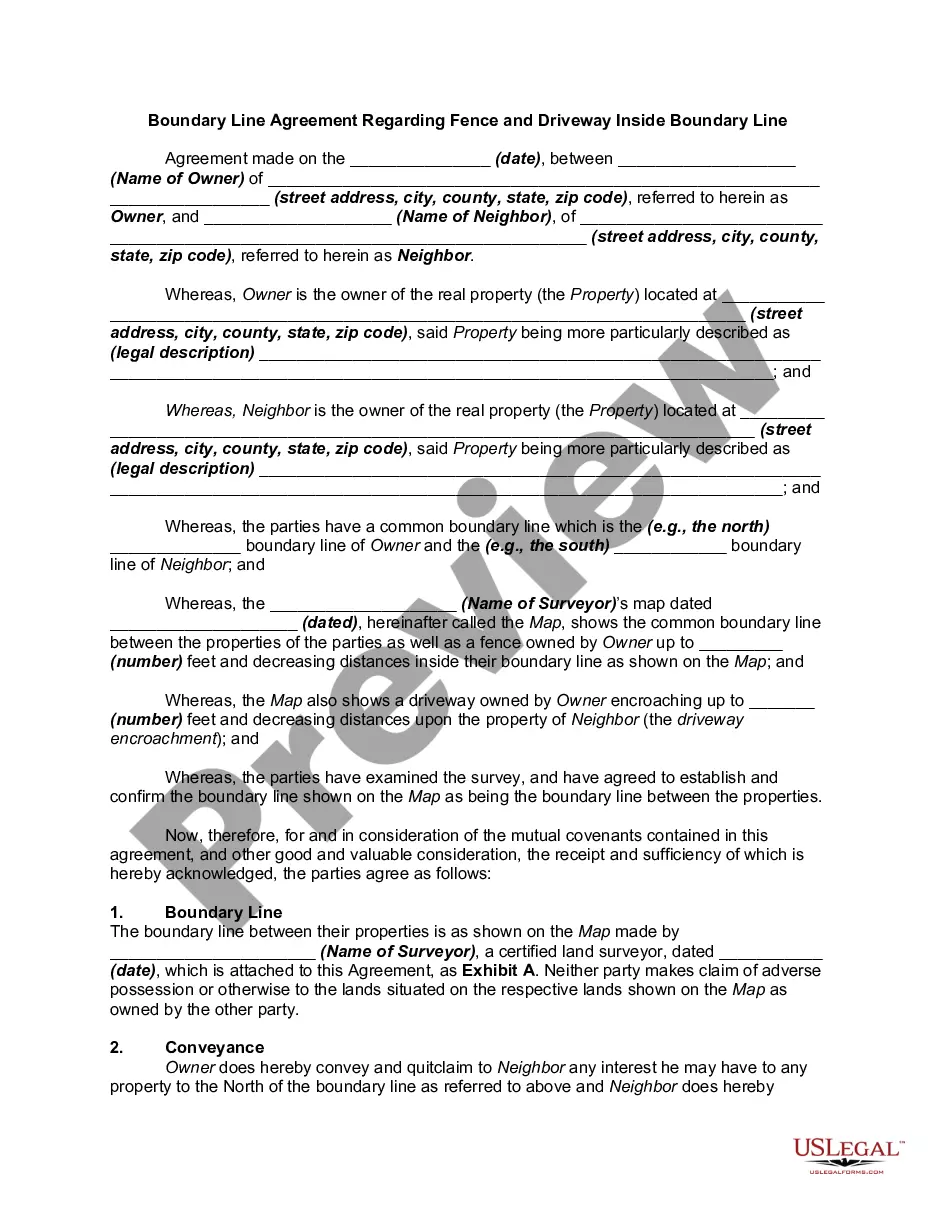
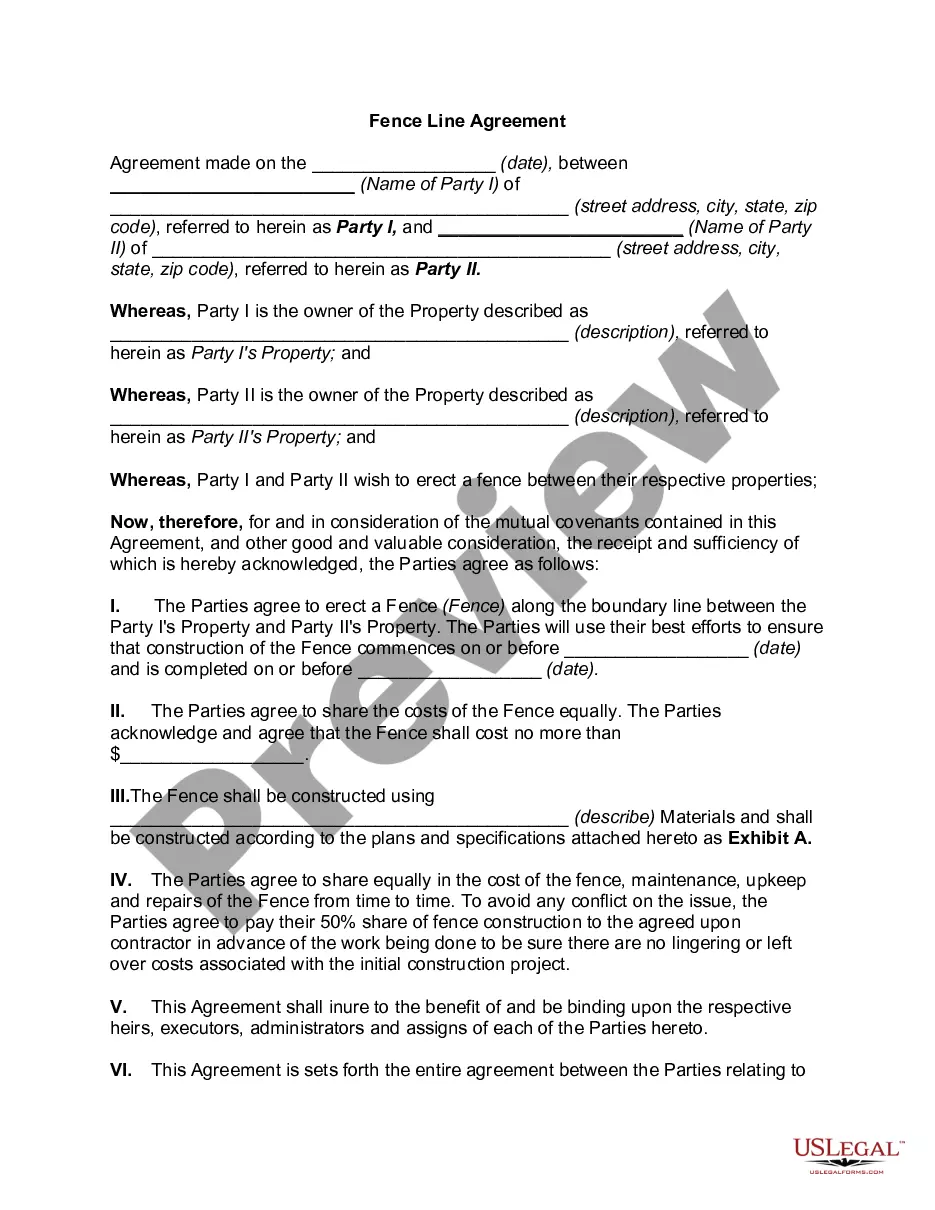
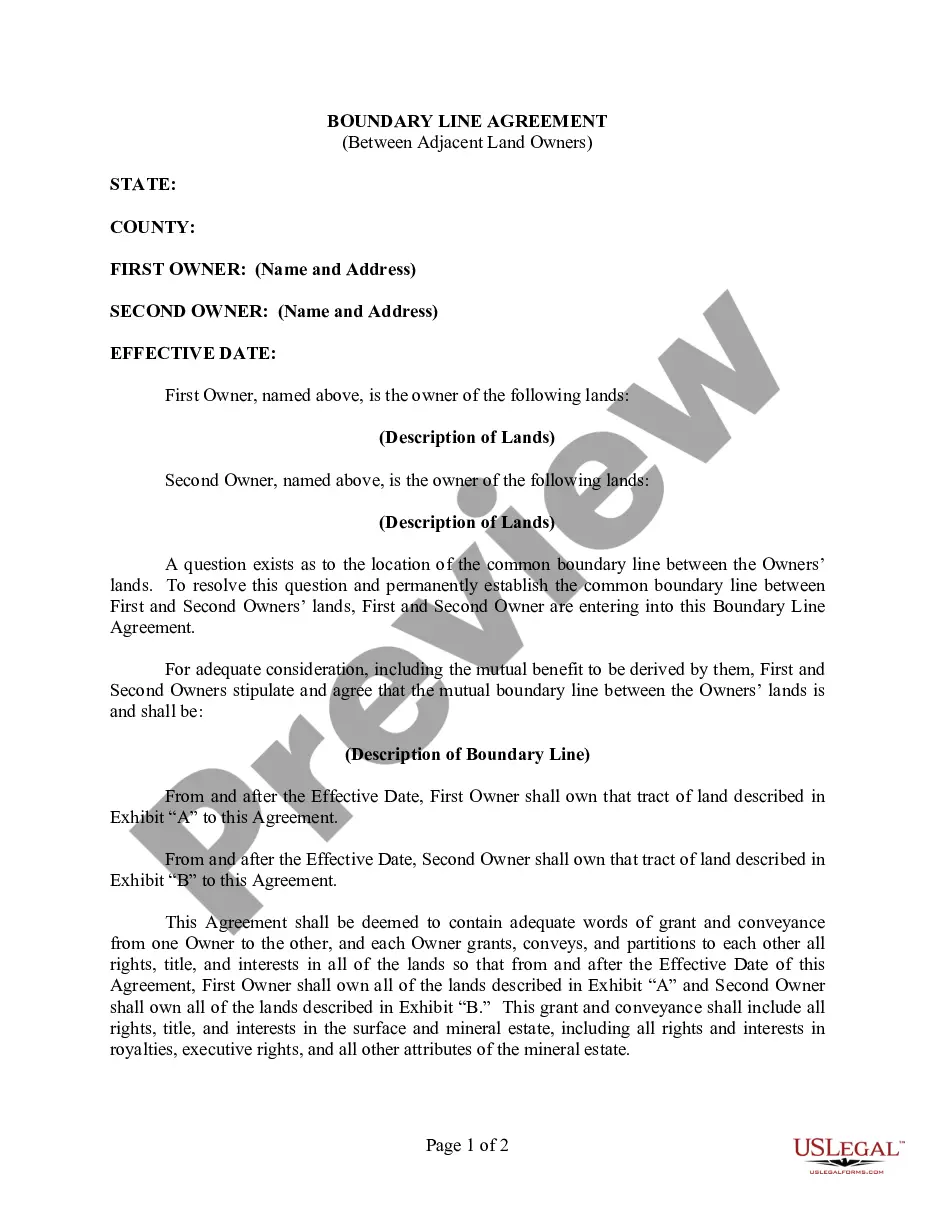
Get your form ready online
Our built-in tools help you complete, sign, share, and store your documents in one place.
Make edits, fill in missing information, and update formatting in US Legal Forms—just like you would in MS Word.
Download a copy, print it, send it by email, or mail it via USPS—whatever works best for your next step.
Sign and collect signatures with our SignNow integration. Send to multiple recipients, set reminders, and more. Go Premium to unlock E-Sign.
If this form requires notarization, complete it online through a secure video call—no need to meet a notary in person or wait for an appointment.
We protect your documents and personal data by following strict security and privacy standards.

Make edits, fill in missing information, and update formatting in US Legal Forms—just like you would in MS Word.

Download a copy, print it, send it by email, or mail it via USPS—whatever works best for your next step.

Sign and collect signatures with our SignNow integration. Send to multiple recipients, set reminders, and more. Go Premium to unlock E-Sign.

If this form requires notarization, complete it online through a secure video call—no need to meet a notary in person or wait for an appointment.

We protect your documents and personal data by following strict security and privacy standards.
Looking for another form?









Form popularity
FAQ
The Alleghenies have a northeast–southwest orientation, running for about 300 miles (480 km) from north-central Pennsylvania southward, through western Maryland and eastern West Virginia. The Alleghenies comprise the rugged western-central portion of the Appalachians.
Allegheny City was a municipality that existed in the U.S. state of Pennsylvania from 1788 until it was annexed by Pittsburgh in 1907. It was located north across the Allegheny River from downtown Pittsburgh, with its southwest border formed by the Ohio River, and is known today as the North Side.
There are 20 named mountains in Allegheny County. Indian Hill is the highest point. The most prominent mountain is Herron Hill. Explore Allegheny County with the PeakVisor 3D Map and identify its summits.
The Alleghenies have a northeast–southwest orientation, running for about 300 miles (480 km) from north-central Pennsylvania southward, through western Maryland and eastern West Virginia. The Alleghenies comprise the rugged western-central portion of the Appalachians.
Etymology. The name Allegheny probably comes from Lenape welhik hane or oolikhanna, which means 'best flowing river of the hills' or 'beautiful stream'.
The county has one Second Class City (Pittsburgh) and three Third Class Cities (Clairton, Duquesne, and McKeesport).
Allegheny County (/ˌælɪˈɡeɪni/ AL-ig-AY-nee) is a county in Pennsylvania, United States. As of the 2020 census, the population was 1,250,578, making it the state's second-most populous county, after Philadelphia County. Its county seat and most populous city is Pittsburgh, Pennsylvania's second most populous city.
Allegheny County is Pittsburgh's County Home to a major transportation asset, the Pittsburgh International Airport not only connects the region to the world, but also is where Neighborhood 91 is rising as an additive manufacturing epicenter first.
Google Maps for displaying property lines, follow these simple steps: Step 1: Open Google Maps. Step 2: Search for the Desired Location. Step 3: Switch to Satellite View. Step 4: Enable the 'Measure Distance' Tool. Step 5: Draw the Property Lines.
Once you have searched the property address, you will be presented with a standard default map. Next, tap the “+” button located at the lower right-hand corner of the screen to continue zooming in. Continue to zoom in on the property you are interested in until you spot those property lines.
