Suing An Estate Executor Without A Lawyer
Description


Get your form ready online
Our built-in tools help you complete, sign, share, and store your documents in one place.
Make edits, fill in missing information, and update formatting in US Legal Forms—just like you would in MS Word.
Download a copy, print it, send it by email, or mail it via USPS—whatever works best for your next step.
Sign and collect signatures with our SignNow integration. Send to multiple recipients, set reminders, and more. Go Premium to unlock E-Sign.
If this form requires notarization, complete it online through a secure video call—no need to meet a notary in person or wait for an appointment.
We protect your documents and personal data by following strict security and privacy standards.
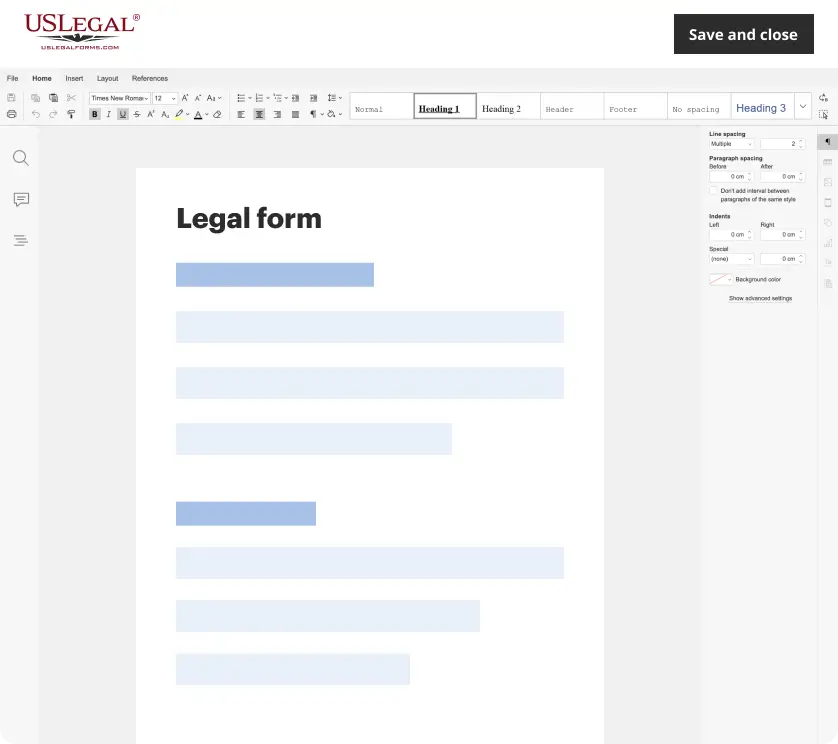
Make edits, fill in missing information, and update formatting in US Legal Forms—just like you would in MS Word.
Download a copy, print it, send it by email, or mail it via USPS—whatever works best for your next step.
Sign and collect signatures with our SignNow integration. Send to multiple recipients, set reminders, and more. Go Premium to unlock E-Sign.
If this form requires notarization, complete it online through a secure video call—no need to meet a notary in person or wait for an appointment.
We protect your documents and personal data by following strict security and privacy standards.
Looking for another form?





How to fill out Sample Letter For Claim Settlement Against Decedent's Estate?
It’s well known that you cannot transform into a legal authority in a day, nor can you swiftly master how to prepare Suing An Estate Executor Without A Lawyer without a specialized background.
Assembling legal documents is a lengthy endeavor that demands specific training and expertise.
So why not entrust the development of the Suing An Estate Executor Without A Lawyer to the professionals.
Preview it (if this option is available) and review the accompanying description to determine if Suing An Estate Executor Without A Lawyer is what you seek.
Initiate your search again if you require a different template.
- With US Legal Forms, one of the most extensive legal template databases, you can obtain anything from court documents to templates for in-office correspondence.
- We understand how crucial compliance and adherence to federal and local statutes and regulations are.
- That’s why, on our platform, all templates are location-specific and current.
- Here’s how to get started with our site and obtain the document you require in just a few minutes.
- Locate the form you need by utilizing the search bar at the top of the page.
Form popularity
FAQ
To hold an executor accountable, start by reviewing the estate's financial records and transactions. You can file a petition in probate court to request an accounting of the estate's assets and expenses. If you suspect misconduct, consider suing an estate executor without a lawyer by gathering evidence of any mismanagement or breaches of duty. Platforms like US Legal Forms provide the necessary legal documents and guidance to help you navigate this process efficiently.
To take legal action against an executor, you should first document your concerns and gather relevant evidence. Next, consider filing a petition with the court to challenge the executor's actions. You have the option of suing an estate executor without a lawyer if you feel confident in handling the case yourself. Resources available on US Legal Forms can guide you through the necessary steps and paperwork.
Beneficiaries of the estate typically hold an executor accountable for their actions. They can request an accounting of the estate's finances and challenge any decisions made by the executor that seem unjust. If beneficiaries are not satisfied with the executor's management, they may consider suing an estate executor without a lawyer to seek justice. Platforms like US Legal Forms can help you navigate this process smoothly.
Yes, an executor can be personally sued if they fail to perform their duties properly. This includes mismanaging estate assets or not following the instructions laid out in the will. If you believe that the executor has acted negligently, you can consider suing an estate executor without a lawyer. It's essential to gather evidence and understand your rights before proceeding.
California requires an executor bond, also known as a probate bond or fiduciary bond, to ensure that executors live up to their financial responsibilities. Executor pay is set based on the size of the estate. For example, the executor is entitled to 4% of the first $100,000 of the estate, then 3% of the next $100,000.
Every estate is different and can take a different length of time to administer depending on its complexity. There is a general expectation that an executor or administrator should try to complete the estate administration within a year of the death, and this is referred to as the executor's year.
The Estate Settlement Timeline: There is no specific deadline for this in California law, but it is generally best to do so within a month to prevent unnecessary delays in the probate process.
Executor Withholding inheritance Creditors in California have one year from the date of the debtor's death to file a claim against the estate. A creditor then has 90 days to file a lawsuit seeking the money if their claim is rejected.
Some Steps That Can Help Protect You As The Executor Of A Loved One's Estate Follow the Wishes of the Decedent. ... Secure Property as Soon as Possible. ... Keep a Record of Everything You Do. ... Contact a Fort Lauderdale Probate Attorney.
