Claim Against Estate File With Probate Court In Suffolk
Description


Get your form ready online
Our built-in tools help you complete, sign, share, and store your documents in one place.
Make edits, fill in missing information, and update formatting in US Legal Forms—just like you would in MS Word.
Download a copy, print it, send it by email, or mail it via USPS—whatever works best for your next step.
Sign and collect signatures with our SignNow integration. Send to multiple recipients, set reminders, and more. Go Premium to unlock E-Sign.
If this form requires notarization, complete it online through a secure video call—no need to meet a notary in person or wait for an appointment.
We protect your documents and personal data by following strict security and privacy standards.

Make edits, fill in missing information, and update formatting in US Legal Forms—just like you would in MS Word.

Download a copy, print it, send it by email, or mail it via USPS—whatever works best for your next step.

Sign and collect signatures with our SignNow integration. Send to multiple recipients, set reminders, and more. Go Premium to unlock E-Sign.

If this form requires notarization, complete it online through a secure video call—no need to meet a notary in person or wait for an appointment.

We protect your documents and personal data by following strict security and privacy standards.
Looking for another form?


Form popularity
FAQ
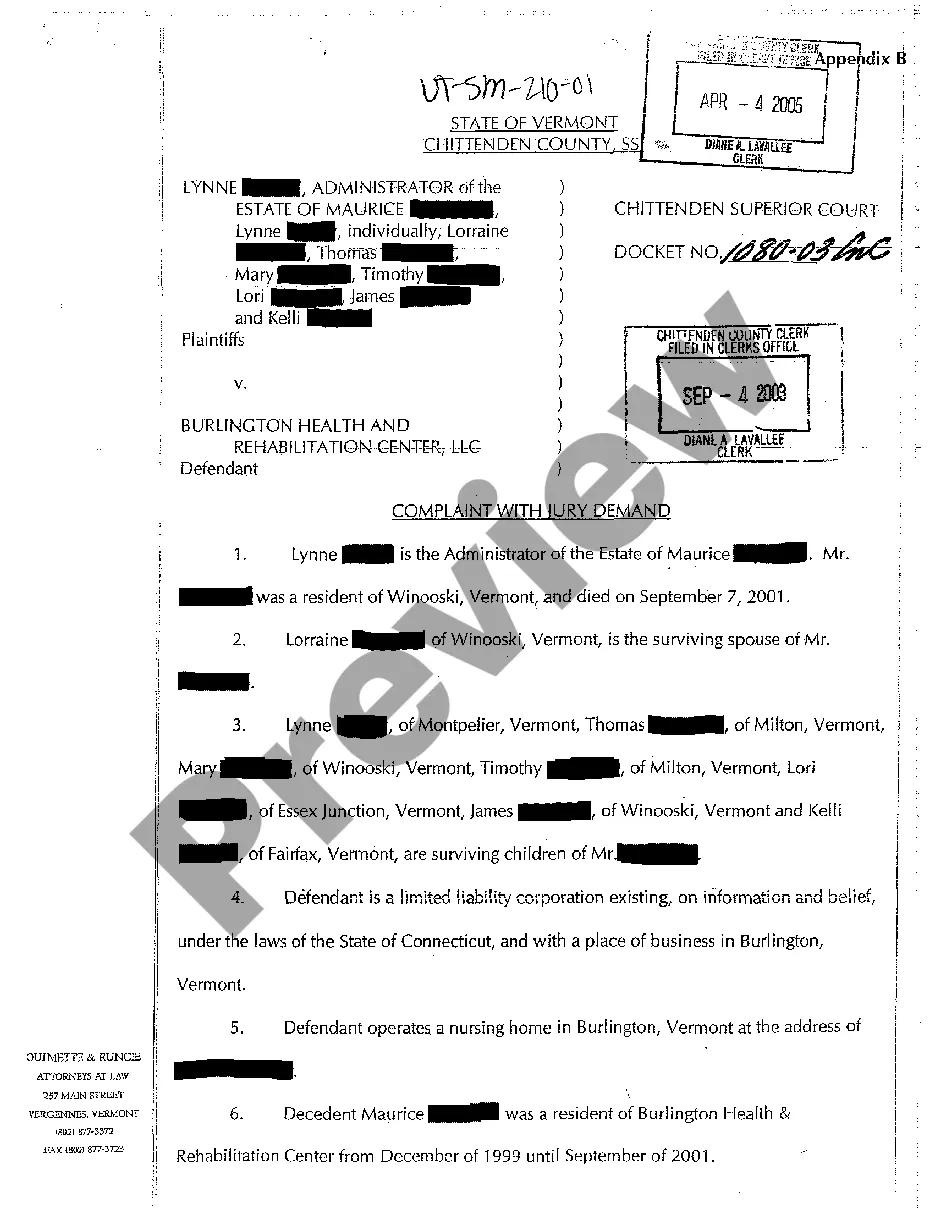
While you cannot take the deceased defendant to court, the California Probate Code 377.40 – 377.43 allows for filing a lawsuit against their estate. Under the California statute of limitations, the person filing an injury claim is considered a creditor.
Understanding the Deceased Estate 3-Year Rule The core premise of the 3-year rule is that if the deceased's estate is not claimed or administered within three years of their death, the state or governing body may step in and take control of the distribution and management of the assets.
There is no set time for an Executor to complete the estate administration process, but there is a deadline when it comes to inheritance tax and an order that must be followed when settling an estate.
Probate Court is different for everyone. No two people are the same, and no two Wills are the same. If the Estate has just a few assets and little debt, you can expect a more straightforward process. Otherwise, Probate can take anywhere from 9 months to several years.
One common method is to create a revocable trust. A revocable trust allows you to maintain control of your property during your life, and decide how the property is distributed after death, without needing to go through probate court.
Donate or sell remaining items: Items that are in good condition but not wanted by the family can be donated to charity or sold. Proceeds from sales should be added to the estate. Dispose of unsalvageable items: Any items that are damaged beyond repair or have no value should be disposed of responsibly.
Comments Section A Revocable Living Trust (which is what is appropriate for most people) is the best way to avoid probate court. It doesn't have any effect on taxes. Basically, it will make things way easier for whoever handles your affairs after you are gone (because probate court is not needed).
Some states will not require probate at all under certain circumstances, such as a small estate that has no debts and no real estate to be distributed. To further complicate the matter, some states (like North Carolina) allow their threshold to be bypassed if the whole estate is transferred to a surviving spouse.
One common method is to create a revocable trust. A revocable trust allows you to maintain control of your property during your life, and decide how the property is distributed after death, without needing to go through probate court.
A probate attorney is not required under New York law, but legal assistance can save time and effort by ensuring that paperwork is completed properly and everyone with an interest in the estate receives the required notifications.
