Claim Against Estate After Distribution Without Probate In North Carolina
Description
Get your form ready online
Our built-in tools help you complete, sign, share, and store your documents in one place.
Make edits, fill in missing information, and update formatting in US Legal Forms—just like you would in MS Word.
Download a copy, print it, send it by email, or mail it via USPS—whatever works best for your next step.
Sign and collect signatures with our SignNow integration. Send to multiple recipients, set reminders, and more. Go Premium to unlock E-Sign.
If this form requires notarization, complete it online through a secure video call—no need to meet a notary in person or wait for an appointment.
We protect your documents and personal data by following strict security and privacy standards.

Make edits, fill in missing information, and update formatting in US Legal Forms—just like you would in MS Word.

Download a copy, print it, send it by email, or mail it via USPS—whatever works best for your next step.

Sign and collect signatures with our SignNow integration. Send to multiple recipients, set reminders, and more. Go Premium to unlock E-Sign.

If this form requires notarization, complete it online through a secure video call—no need to meet a notary in person or wait for an appointment.

We protect your documents and personal data by following strict security and privacy standards.
Looking for another form?
Form popularity
FAQ
Understanding the Deceased Estate 3-Year Rule The core premise of the 3-year rule is that if the deceased's estate is not claimed or administered within three years of their death, the state or governing body may step in and take control of the distribution and management of the assets.
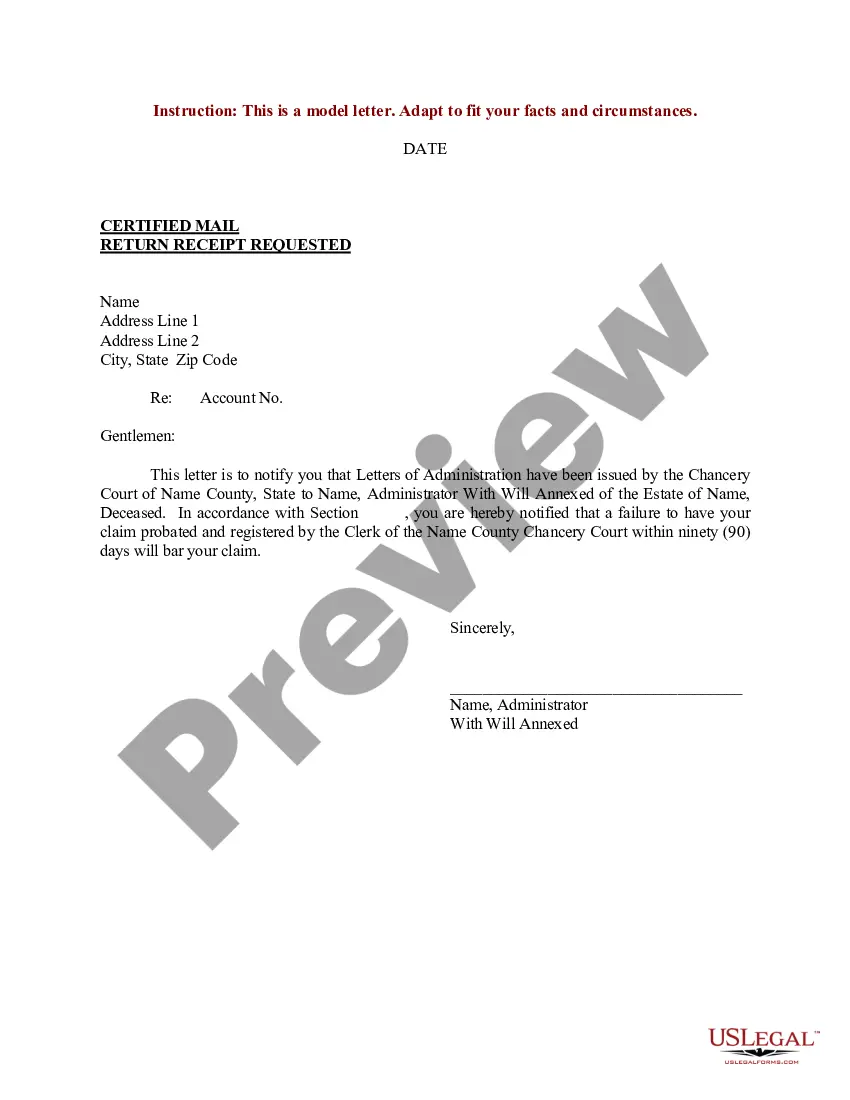
Process used by Probate Creditors The Executor is required to provide 90-days from the date of the first publication of the notice for the Estate Creditors to present their claims.
If probate isn't filed and heirs don't receive what they're entitled to, they could pursue legal action against the executor or individual responsible for the estate. This can result in costly lawsuits, fractured relationships, and significant delays in resolving the estate.
Section 28A-19-1 - Manner of presentation of claims (a) A claim against a decedent's estate must be in writing and state the amount or item claimed, or other relief sought, the basis for the claim, and the name and address of the claimant; and must be presented by one of the following methods: (1) By delivery in person ...
Do All Estates Have to Go Through Probate in North Carolina? Smaller estates with probate-qualified assets valued at less than $20,000 can avoid the formal probate proceeding.
(1) By delivery in person or by mail to the personal representative, collector or the clerk of superior court. Such claim will be deemed to have been presented from the time of such delivery.
Process used by Probate Creditors The Executor is required to provide 90-days from the date of the first publication of the notice for the Estate Creditors to present their claims.
Even with a will, probate is often required to transfer ownership of the deceased person's assets legally. However, not all wills require probate. For example, if all assets are jointly owned or have designated beneficiaries, such as life insurance policies or retirement accounts, they can often bypass probate.