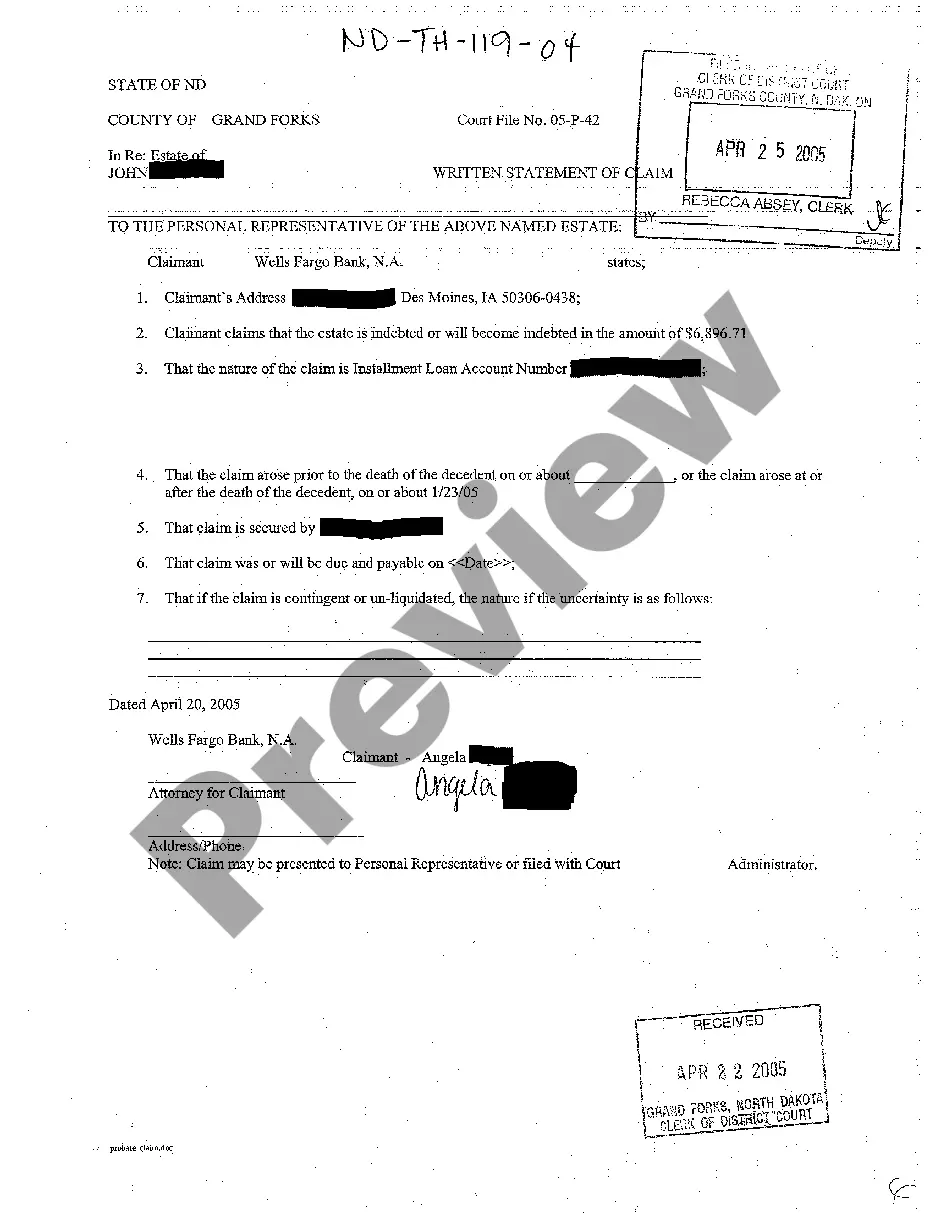
Estate Claim Form For Taxes In Minnesota
Description


Get your form ready online
Our built-in tools help you complete, sign, share, and store your documents in one place.
Make edits, fill in missing information, and update formatting in US Legal Forms—just like you would in MS Word.
Download a copy, print it, send it by email, or mail it via USPS—whatever works best for your next step.
Sign and collect signatures with our SignNow integration. Send to multiple recipients, set reminders, and more. Go Premium to unlock E-Sign.
If this form requires notarization, complete it online through a secure video call—no need to meet a notary in person or wait for an appointment.
We protect your documents and personal data by following strict security and privacy standards.

Make edits, fill in missing information, and update formatting in US Legal Forms—just like you would in MS Word.

Download a copy, print it, send it by email, or mail it via USPS—whatever works best for your next step.

Sign and collect signatures with our SignNow integration. Send to multiple recipients, set reminders, and more. Go Premium to unlock E-Sign.

If this form requires notarization, complete it online through a secure video call—no need to meet a notary in person or wait for an appointment.

We protect your documents and personal data by following strict security and privacy standards.
Looking for another form?

Form popularity
FAQ
Do You Need to File a Minnesota Estate Tax Return? If the gross estate of a Minnesota resident has a value of more than $3 million, the personal representative or executor of the estate must file a state estate tax return. (Smaller estates won't need to file a return.)
Every return the department receives is different and processing time will vary. You can follow the status of your refund by using Minnesota's Where's My Refund? system. If your return is incomplete or necessary information is not enclosed, your refund will be delayed or your return will be sent back to you.
Statute of Limitations To claim a refund from aYou must file by Individual Income Tax 3 1/2 years from the original (not extended) due date Property Tax Refund 1 year from the due date1 more row
You must file your claim for refund within 3 1/2 years of your tax return's due date or one year of the notice date on your Notice of Change or Notice of Determination, whichever is later.
There are two types of property tax refunds in Minnesota. One is income based and you may apply for this if your household income is less than $128,280; you owned and occupied a home in Minnesota; are filing a refund for 2021 or later; did not rent out your home; and did not use your home for business.
If the decedent was a resident of Minnesota at the time of death, the estate is required to file Form M706 if the federal gross estate plus federal adjusted taxable gifts made within three years of the decedent's death exceeds $3,000,000 on the date of death or if the estate is required to file a federal estate tax ...
The Minnesota estate tax exemption amount has not changed since 2020, and under current law the Minnesota estate tax exemption is scheduled to remain at $3.0 million until new legislation occurs. The Minnesota estate tax rates range between 13 and 16 percent.
The Minnesota estate tax exemption amount has not changed since 2020, and under current law the Minnesota estate tax exemption is scheduled to remain at $3.0 million until new legislation occurs. The Minnesota estate tax rates range between 13 and 16 percent.
Avoiding the tax requires changing one's permanent home (domicile) to another state or reducing the amount of Minnesota property owned. Affluent individuals may be willing to change their domiciles to avoid paying potentially multimillion-dollar state estate tax liabilities.

