Claim Against Estate File With Probate Court In Massachusetts
Description


Get your form ready online
Our built-in tools help you complete, sign, share, and store your documents in one place.
Make edits, fill in missing information, and update formatting in US Legal Forms—just like you would in MS Word.
Download a copy, print it, send it by email, or mail it via USPS—whatever works best for your next step.
Sign and collect signatures with our SignNow integration. Send to multiple recipients, set reminders, and more. Go Premium to unlock E-Sign.
If this form requires notarization, complete it online through a secure video call—no need to meet a notary in person or wait for an appointment.
We protect your documents and personal data by following strict security and privacy standards.

Make edits, fill in missing information, and update formatting in US Legal Forms—just like you would in MS Word.

Download a copy, print it, send it by email, or mail it via USPS—whatever works best for your next step.

Sign and collect signatures with our SignNow integration. Send to multiple recipients, set reminders, and more. Go Premium to unlock E-Sign.

If this form requires notarization, complete it online through a secure video call—no need to meet a notary in person or wait for an appointment.

We protect your documents and personal data by following strict security and privacy standards.
Looking for another form?

Form popularity
FAQ
In general, executors are expected to distribute assets within several months to a year, though larger or contested estates may take longer.
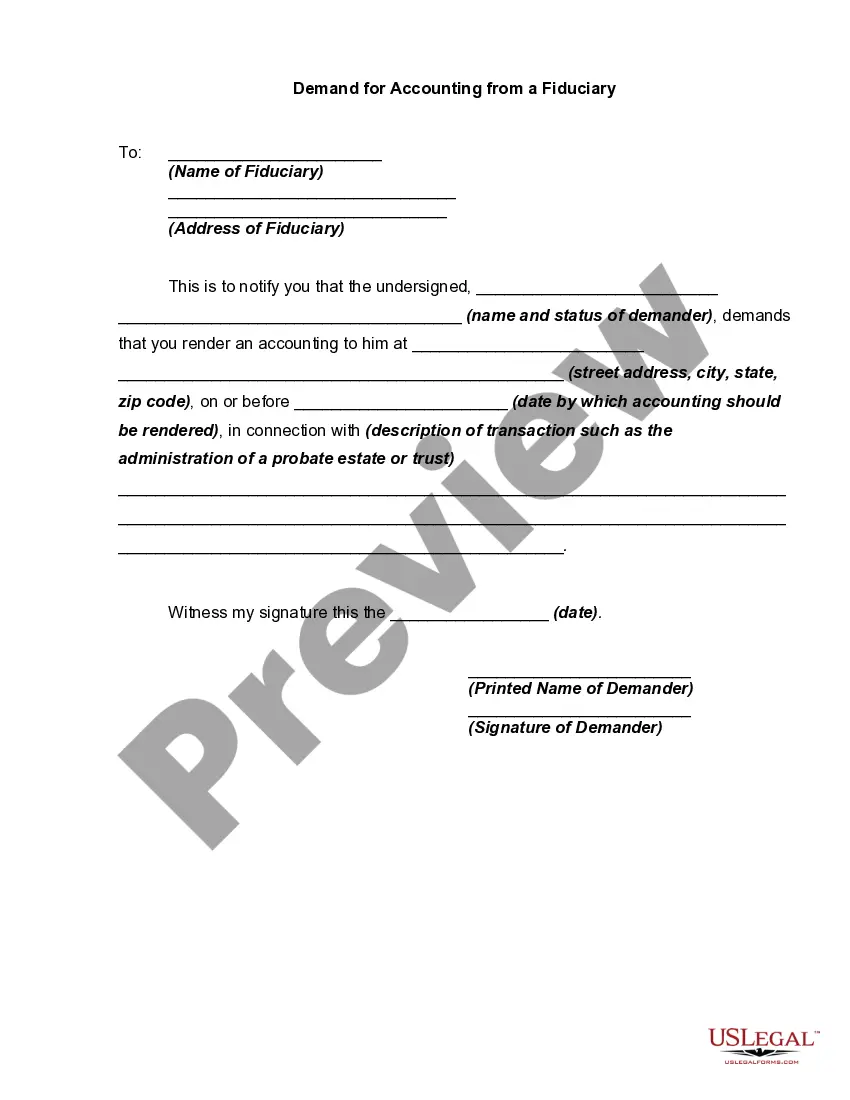
Executors are required to keep beneficiaries reasonably informed about the status of estate administration — a duty which generally includes accounting. For this reason, if an executor is doing their job, it usually won't be necessary for beneficiaries to request an estate accounting.
Under Massachusetts law (MA Gen L ch 190B § 3-803), creditors have one year from the date of the decedent's death to assert their claims against the estate. This is a shorter time frame than in many other states, which often allow creditors two or more years to make their claims.
Understanding the Deceased Estate 3-Year Rule The core premise of the 3-year rule is that if the deceased's estate is not claimed or administered within three years of their death, the state or governing body may step in and take control of the distribution and management of the assets.
In general, executors are expected to distribute assets within several months to a year, though larger or contested estates may take longer. Probate courts often set deadlines for filings, but final distribution typically occurs only after debts, taxes and administrative expenses are settled.
The Probate and Family Court of Massachusetts has jurisdiction over family matters such as divorce, paternity, child support, custody, visitation, adoption, termination of parental rights, and abuse prevention.
By waiting ten months, the executor has the chance to see whether anyone is going to raise an objection. There are six months from the date of the Grant of Probate in which to commence a claim under the Inheritance (Provision for Family and Dependants) Act 1975. Then a further four months in which to serve the claim.
In most cases, the court appoints a person called a personal representative to collect, manage, and transfer estate property to the devisees or heirs. If the decedent left a will, the court decides if the decedent's will is valid.

