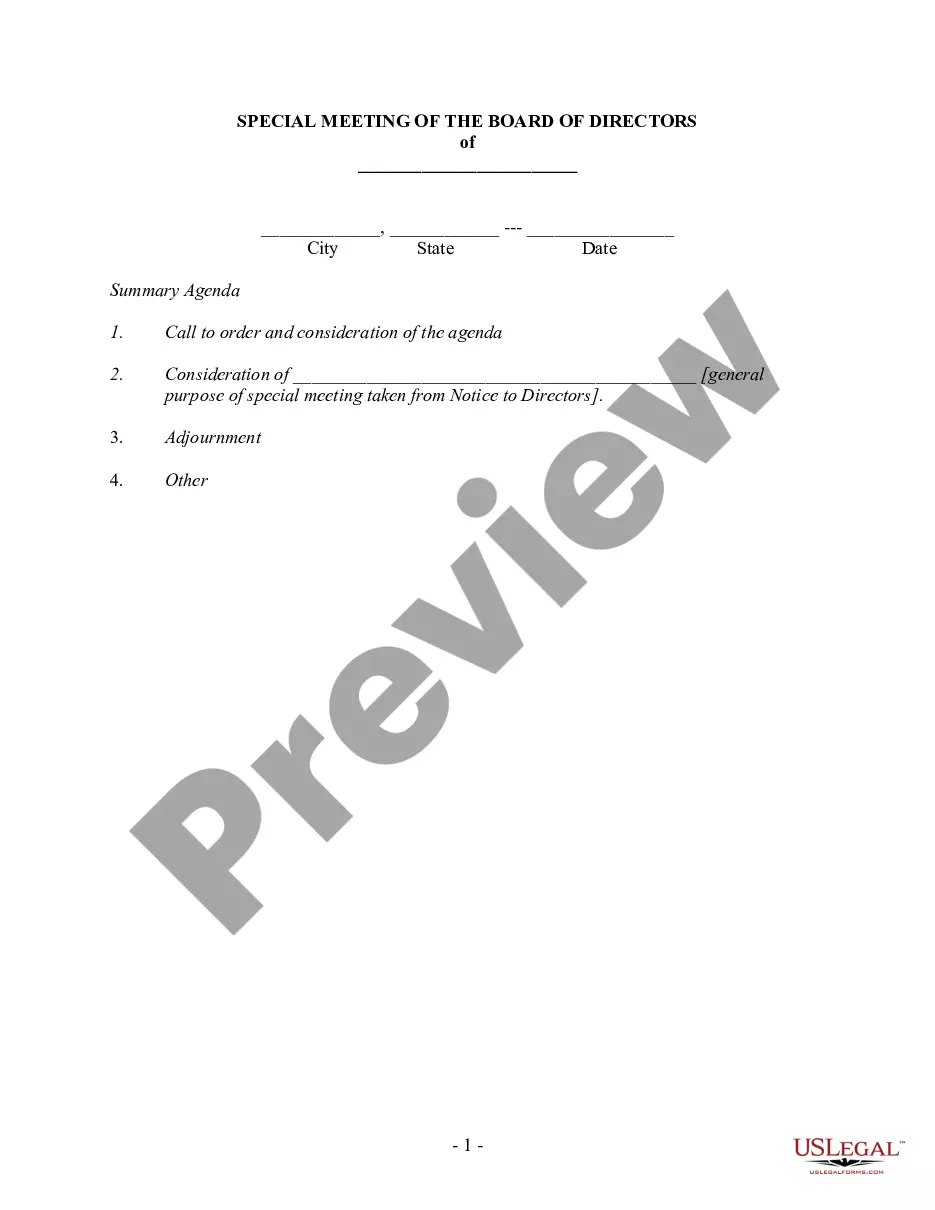
Estate Against Fortune In Fairfax
Description


Get your form ready online
Our built-in tools help you complete, sign, share, and store your documents in one place.
Make edits, fill in missing information, and update formatting in US Legal Forms—just like you would in MS Word.
Download a copy, print it, send it by email, or mail it via USPS—whatever works best for your next step.
Sign and collect signatures with our SignNow integration. Send to multiple recipients, set reminders, and more. Go Premium to unlock E-Sign.
If this form requires notarization, complete it online through a secure video call—no need to meet a notary in person or wait for an appointment.
We protect your documents and personal data by following strict security and privacy standards.

Make edits, fill in missing information, and update formatting in US Legal Forms—just like you would in MS Word.

Download a copy, print it, send it by email, or mail it via USPS—whatever works best for your next step.

Sign and collect signatures with our SignNow integration. Send to multiple recipients, set reminders, and more. Go Premium to unlock E-Sign.

If this form requires notarization, complete it online through a secure video call—no need to meet a notary in person or wait for an appointment.

We protect your documents and personal data by following strict security and privacy standards.
Looking for another form?






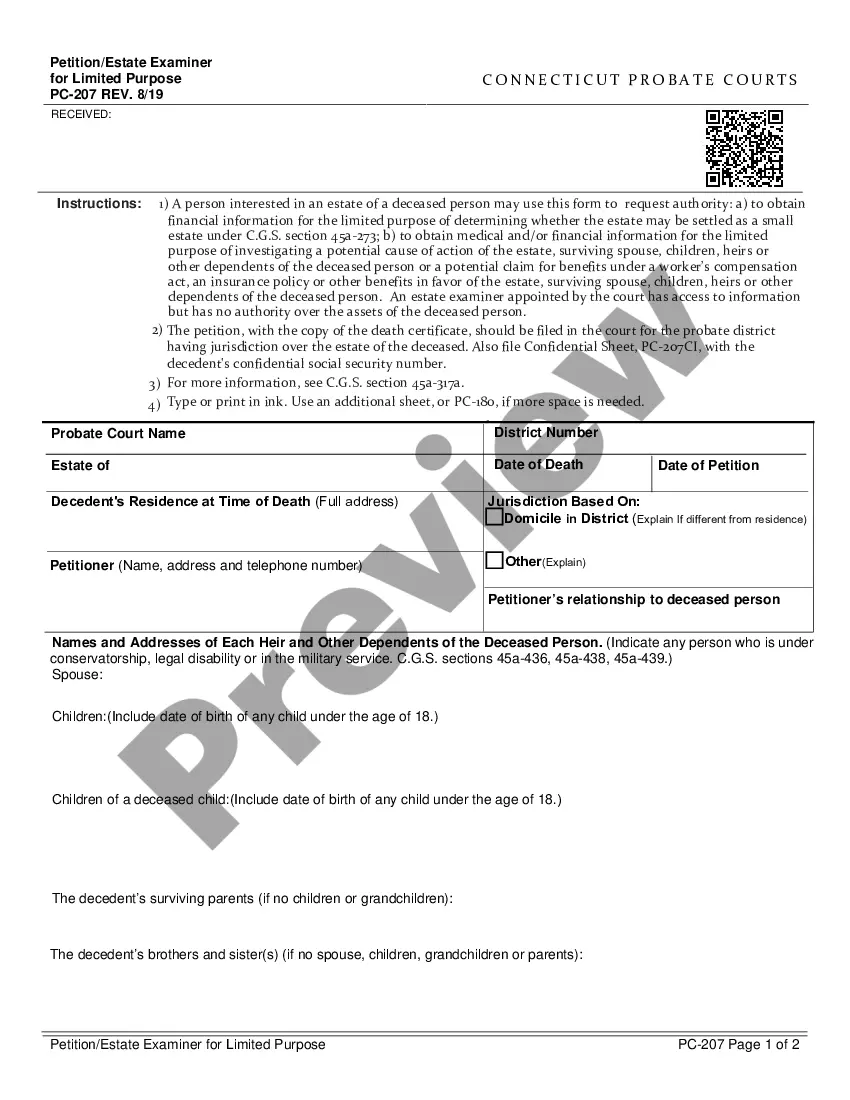



Form popularity
FAQ
The list of heirs is given under oath on a form provided by the Clerk of Court. The heirs identified on the list are the heirs of the decedent as provided under Virginia law for a person who dies without a will. The form requires the name, address, relationship to the decedent, and age of each heir.
If a transaction is in the best interest of the beneficiaries and the estate and is in line with the decedent's wishes and state law, the executor can sell a property without all beneficiaries approving. The executor has the power to choose the probate lawyer and the real estate broker.
An affidavit of heirship is used to transfer personal property and/or real property written by a disinterested third party who can testify to the relationship of the surviving spouse(s) and/or heir(s).
In Virginia, an estate will need to be probated when a person dies with property valued at more than $50,000. So, to avoid probate, you must either have a very small estate or take steps to ensure that your assets transfer automatically to beneficiaries.
Who Gets What in Virginia? If You Die With:Here's What Happens: children but no spouse children inherit everything spouse but no descendants spouse inherits everything spouse and descendants, all of whom are descendants of that spouse spouse inherits everything3 more rows
If there has been no qualification of a personal representative within 30 days following the decedent's death, a list of heirs, made under oath in ance with the form provided to each clerk or a computer-generated facsimile thereof, may be filed by any heir at law of a decedent who died intestate.
The probate of the will can usually wait until a week or so after the funeral. It is recommended that the initial steps in the estate process start within 30 days after death. If any questions exist, call your attorney or your local Circuit Court Clerk's Office.
What is the procedure to probate an estate with a Will? A. The executor named in the Will must schedule an appointment with the Probate Division to probate the Will and qualify as executor. The named executor should be a Virginia resident; however, statutes allows out-of-state residents to qualify.
Settling an estate can take anywhere from 18 months to 2 years or longer.
Surrogate's Court Procedure Act § 707 states that a nominated executor is ineligible to serve it if they are: (a) an infant; (b) an incompetent or incapacitated person as determined by the Court; (c) a non-citizen or non-permanent resident of the United States; (d) a felon; and (e) one who does not possess the ...