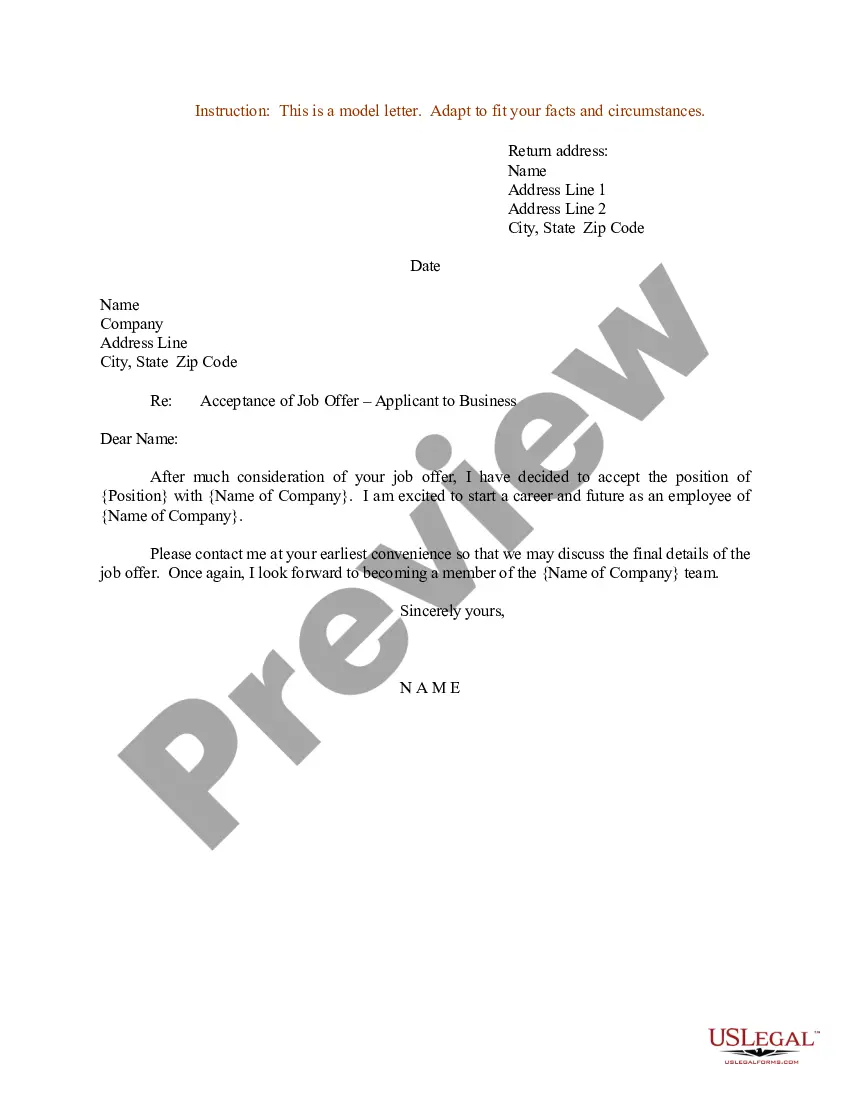
Sample Claim Statement With Job Application In Arizona
Description


Get your form ready online
Our built-in tools help you complete, sign, share, and store your documents in one place.
Make edits, fill in missing information, and update formatting in US Legal Forms—just like you would in MS Word.
Download a copy, print it, send it by email, or mail it via USPS—whatever works best for your next step.
Sign and collect signatures with our SignNow integration. Send to multiple recipients, set reminders, and more. Go Premium to unlock E-Sign.
If this form requires notarization, complete it online through a secure video call—no need to meet a notary in person or wait for an appointment.
We protect your documents and personal data by following strict security and privacy standards.

Make edits, fill in missing information, and update formatting in US Legal Forms—just like you would in MS Word.

Download a copy, print it, send it by email, or mail it via USPS—whatever works best for your next step.

Sign and collect signatures with our SignNow integration. Send to multiple recipients, set reminders, and more. Go Premium to unlock E-Sign.

If this form requires notarization, complete it online through a secure video call—no need to meet a notary in person or wait for an appointment.

We protect your documents and personal data by following strict security and privacy standards.
Looking for another form?









Form popularity
FAQ
You may reactivate your claim online. Note: the online system that you used to initially apply for UI benefits is also used to reopen your claim, provided that you have a benefit year that has not yet expired.
Collecting Unemployment After Quitting You won't be eligible for unemployment benefits if you quit your job voluntarily and without good cause. In general, good cause means that you had a compelling reason that left you no other choice than to leave.
There are two main types of separation reason categories: voluntary resignations and discharges. Both present unique challenges and have specific requirements at the unemployment level, including burden of proof. In a voluntary resignation, the burden of proof falls to the claimant.
Here are a few examples of good personal statements "I am a recent graduate of XYZ University, and I am looking for an opportunity to use my skills and knowledge in a real-world setting. I believe that my background in makes me the perfect candidate for this job."
Whenever writing a CV or resume, use the following personal statement. I am an industrious, motivated, and highly productive employee. over recent years, I have developed a diverse set of skills and qualities. which I believe will add value. to your team in this role.
Put the most important information at the beginning of your personal statement (e.g. why you're applying for the role and what makes you suitable) Mention any skills and experience you have that are relevant to the job. Finish off with a summary of your professional goals.
I demonstrated my interpersonal skills when I employed tact and diplomacy, explained complex information clearly, developed rapport with colleagues and customers and defused tensions during stock shortages, as part of a team of 4 supporting over 200 customers a day.
What should I include in my personal statement? Think of a personal statement like a job application cover letter. It should outline your motivation to study, your previous education and employment history, and how this course can assist your career aspirations or progression.
Describe what you bring, the skills and experience acquired. The statement should include examples of real key achievements, what you have done, what you have delivered and core learnings. Use active, positive language, rather than lots of passive statements.
"I am an experienced with more than X years of experience in the YYY industry. I am looking for a new challenge, and I believe that this job is perfect for me. I am confident that I have the skills and knowledge needed to excel in this position."