Listing Agreement Commercial With Realtor In Wake
Description

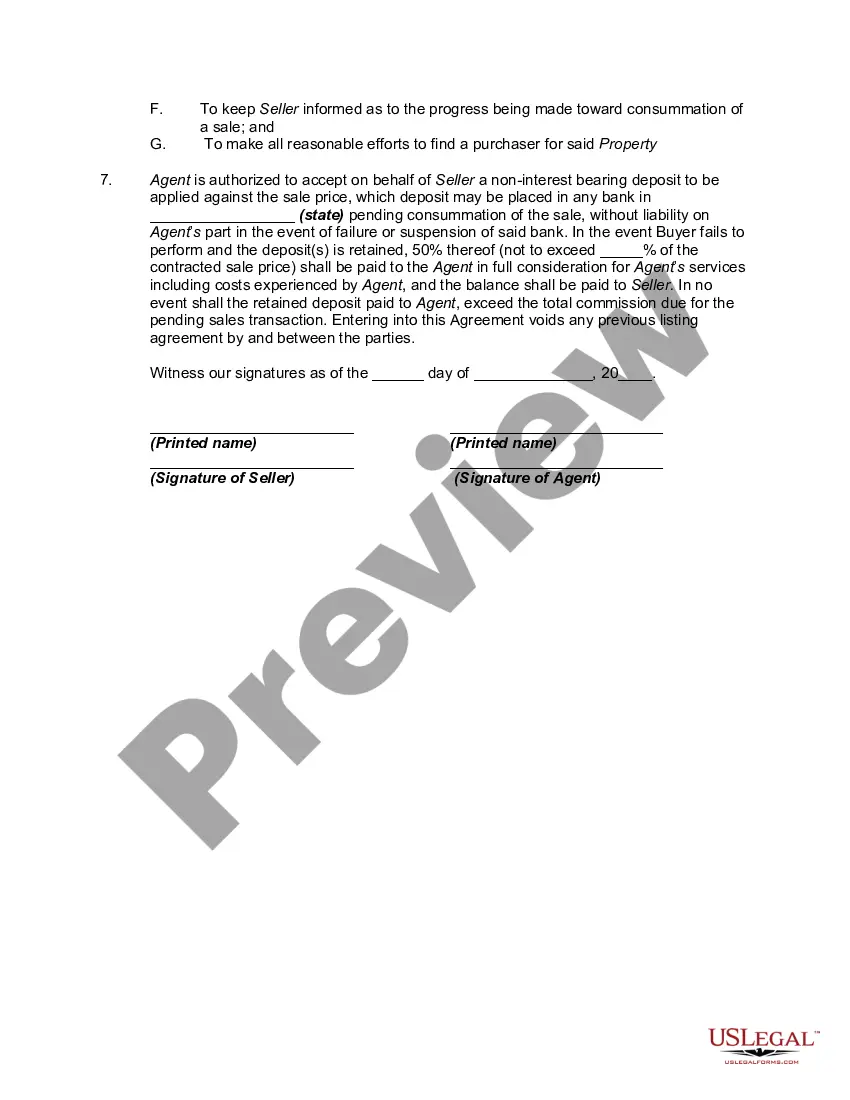

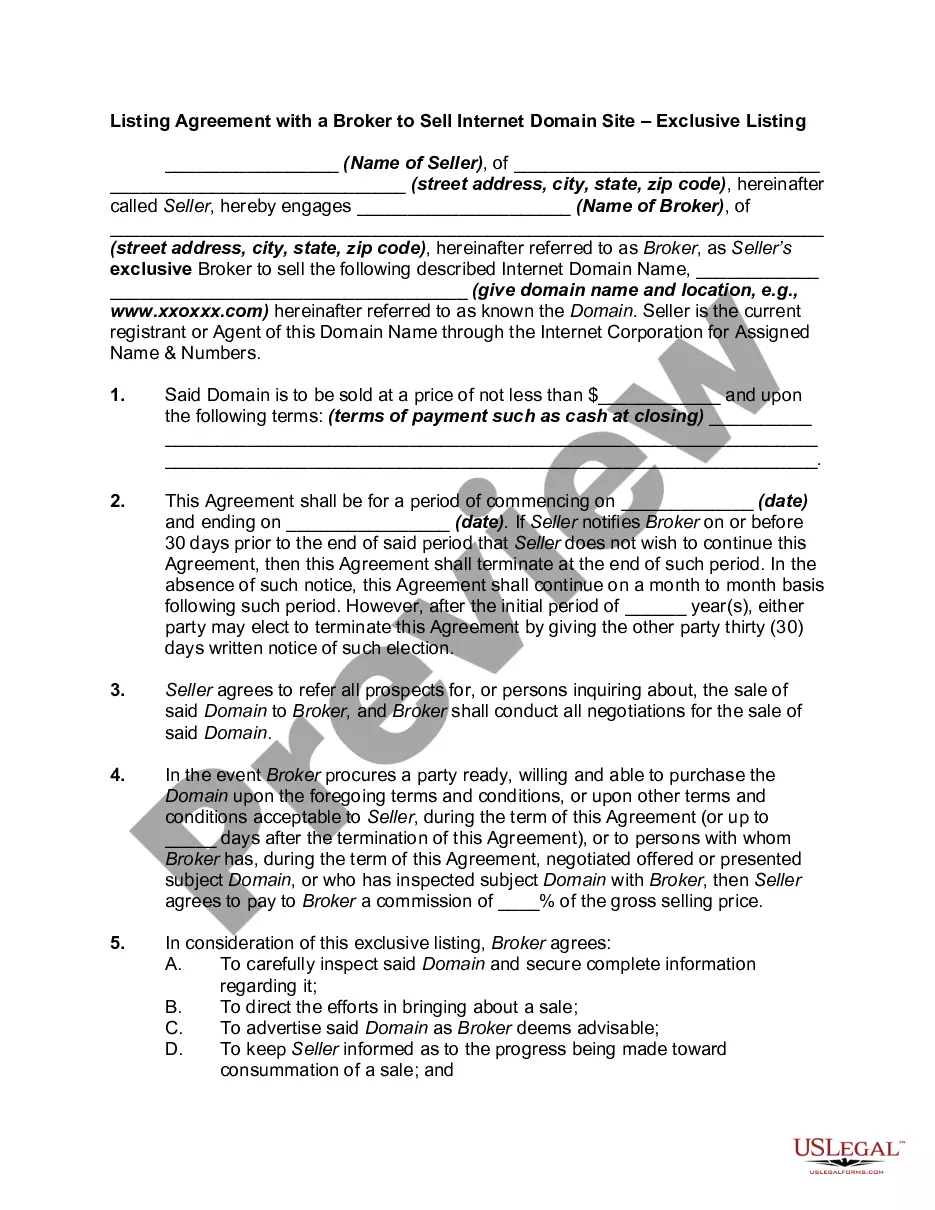
Get your form ready online
Our built-in tools help you complete, sign, share, and store your documents in one place.
Make edits, fill in missing information, and update formatting in US Legal Forms—just like you would in MS Word.
Download a copy, print it, send it by email, or mail it via USPS—whatever works best for your next step.
Sign and collect signatures with our SignNow integration. Send to multiple recipients, set reminders, and more. Go Premium to unlock E-Sign.
If this form requires notarization, complete it online through a secure video call—no need to meet a notary in person or wait for an appointment.
We protect your documents and personal data by following strict security and privacy standards.

Make edits, fill in missing information, and update formatting in US Legal Forms—just like you would in MS Word.

Download a copy, print it, send it by email, or mail it via USPS—whatever works best for your next step.

Sign and collect signatures with our SignNow integration. Send to multiple recipients, set reminders, and more. Go Premium to unlock E-Sign.

If this form requires notarization, complete it online through a secure video call—no need to meet a notary in person or wait for an appointment.

We protect your documents and personal data by following strict security and privacy standards.
Looking for another form?






Form popularity
FAQ
The letter of intent should include the following six things: A Statement Declaring Your Interest in Leasing the Space. A Description of Your Company. An Outline of On-Site Employees, Equipment, and Machinery. Your Business Hours. An Overview of Your Current Space. Contact Details.
A listing agreement is a contract between a property owner and a real estate broker that authorizes the broker to represent the seller and find a buyer for the property. The three types of real estate listing agreements are open listing, exclusive agency listing, and exclusive right-to-sell listing.
The exclusive right to sell listing agreement is the most common type of agreement in real estate. Under this arrangement, the broker is given exclusive rights to market the property for a set period.
Components of a LOI Opening Paragraph: Your summary statement. Statement of Need: The "why" of the project. ( ... Project Activity: The "what" and "how" of the project. ( ... Outcomes (1–2 paragraphs; before or after the Project Activity) ... Credentials (1–2 paragraphs) ... Budget (1–2 paragraphs) ... Closing (1 paragraph) ... Signature.
A letter of intent (LOI), expresses the University's intention to submit a proposal in response to a particular program announcement or request for proposal (RFP). They can either be required as a pre-condition for invitation to submit a full proposal, or not required but encouraged.
An LOI stands for Letter of Intent. In commercial real estate, a Letter of Intent is a preliminary agreement that is negotiated between a tenant and landlord or buyer and seller. The LOI or Letter of Intent states the primary economics and deal points with proposed terms.
An exclusive listing is a type of real estate listing agreement in which a single broker is appointed as the seller's sole agent. In an exclusive agency listing, the seller retains the right to sell the property with no obligation to the broker.
A listing agreement is a contract that allows a real estate broker to perform specific marketing and selling tasks for a property. It does not transfer title to the broker and establishes the broker as an independent contractor. The correct answer to the question is A: It allows a broker to complete a specific task.
Single agents must deal honestly and fairly, account for all funds, and have full disclosure in the transaction. A transaction broker is there to help put the real estate transaction together, but technically do not represent the buyer or the seller. They may (or may not) have a person's best interests in mind.
