Listing Agreement Real Estate With Agent In Virginia
Description



Form popularity
FAQ
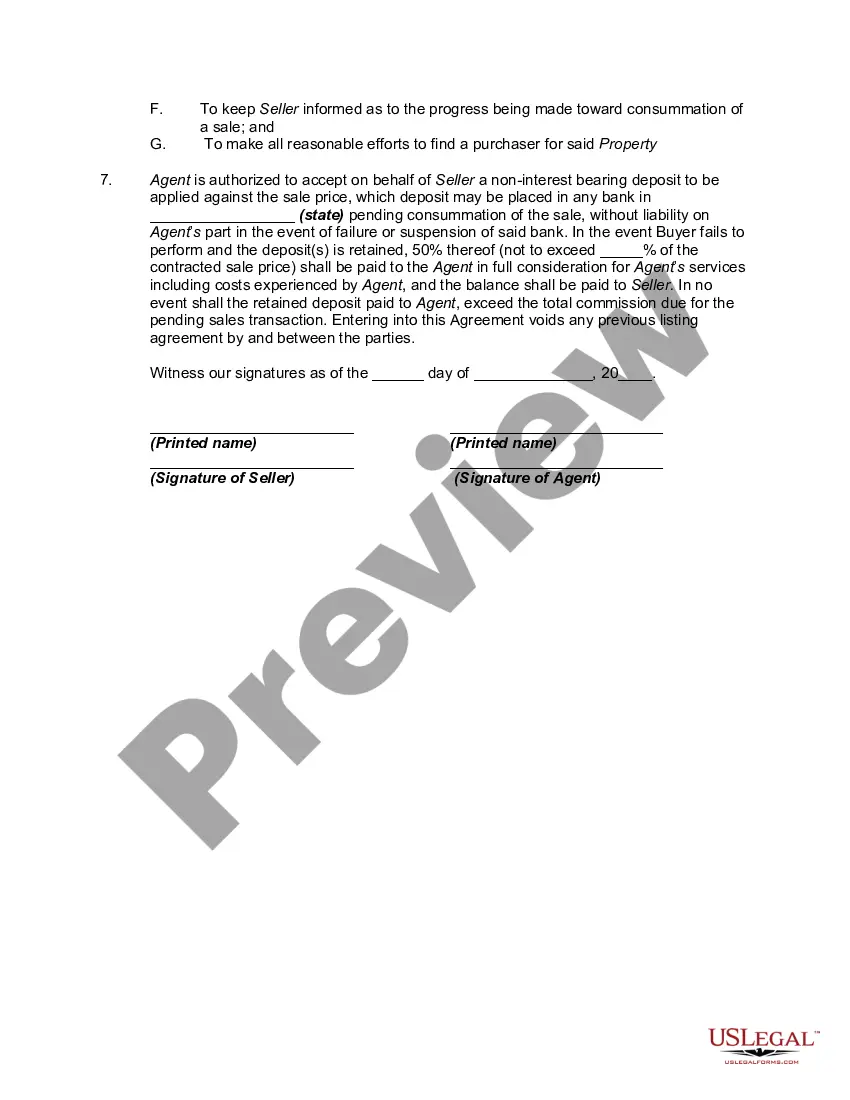
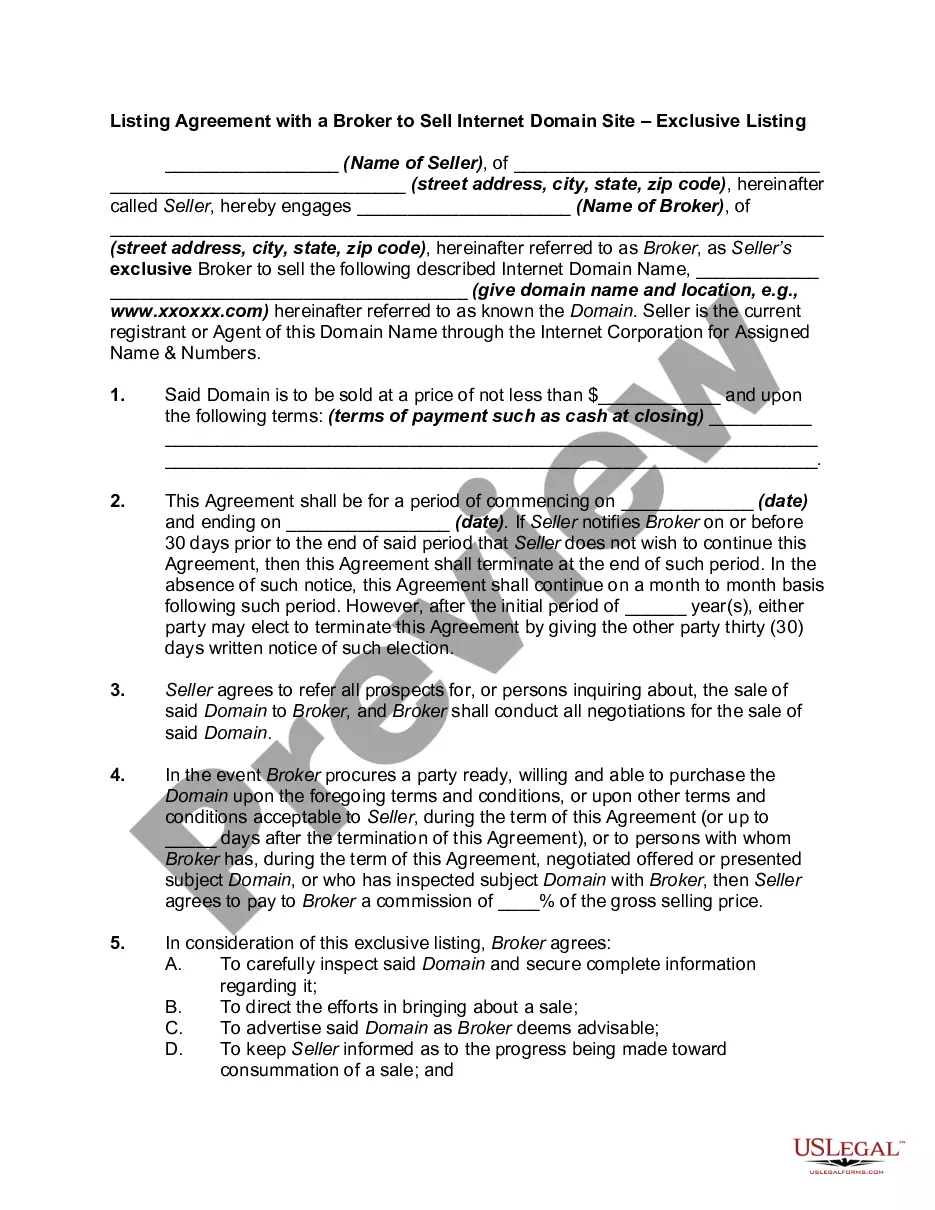
The exclusive right to sell listing agreement is the most common type of agreement in real estate. Under this arrangement, the broker is given exclusive rights to market the property for a set period.
The Code of Virginia requires a written brokerage agreement when a brokerage relationship, as defined in § 54.1-2130, is created. When a customer becomes a client is based upon the party's intent.
Exclusive Right to Sell Listing As the most commonly used listing agreement, the Exclusive Right to Sell Listing's name pretty much says it all. With an Exclusive Right to Sell Listing Agreement, the real estate agent or broker has total control over the transaction.
Section 7(f) of the Virginia REALTORS® Exclusive Authorization to Sell allows the property owner to authorize or prohibit the display of the property on the Internet. If authorized, it also permits the property owner to limit the display of property reviews and automated estimates of market value on the Internet.
Listing agreements vary. Each type has its own advantages and disadvantages: Exclusive Right-to-Sell Listing: The most common type. It grants the broker the exclusive right to sell your home, regardless of who finds the buyer.
Most Common Disclosures in Real Estate Natural Hazards Disclosure. First on the list is the natural hazards disclosure. Market Conditions Advisory (MCA) Market Conditions Advisory, also known as MCA, covers items more financial in nature. State Transfer Disclosure. Local Transfer Disclosure. Megan's Law Disclosures.
An exclusive right to sell listing is the most widely-used listing agreement. Under this agreement, the broker has the exclusive right to market the property for a specified period of time.
Dual Agency in MD, VA & DC Dual agency is legal in MD, VA, & DC, but there are important distinctions in how it is defined. In Maryland, a single agent is prohibited from representing both the buyer and seller in the transaction.
A licensee may not act as a dual agent or dual representative in a residential real estate transaction unless he has first obtained the written consent of all parties to the transaction given after written disclosure of the consequences of such dual agency or dual representation.
