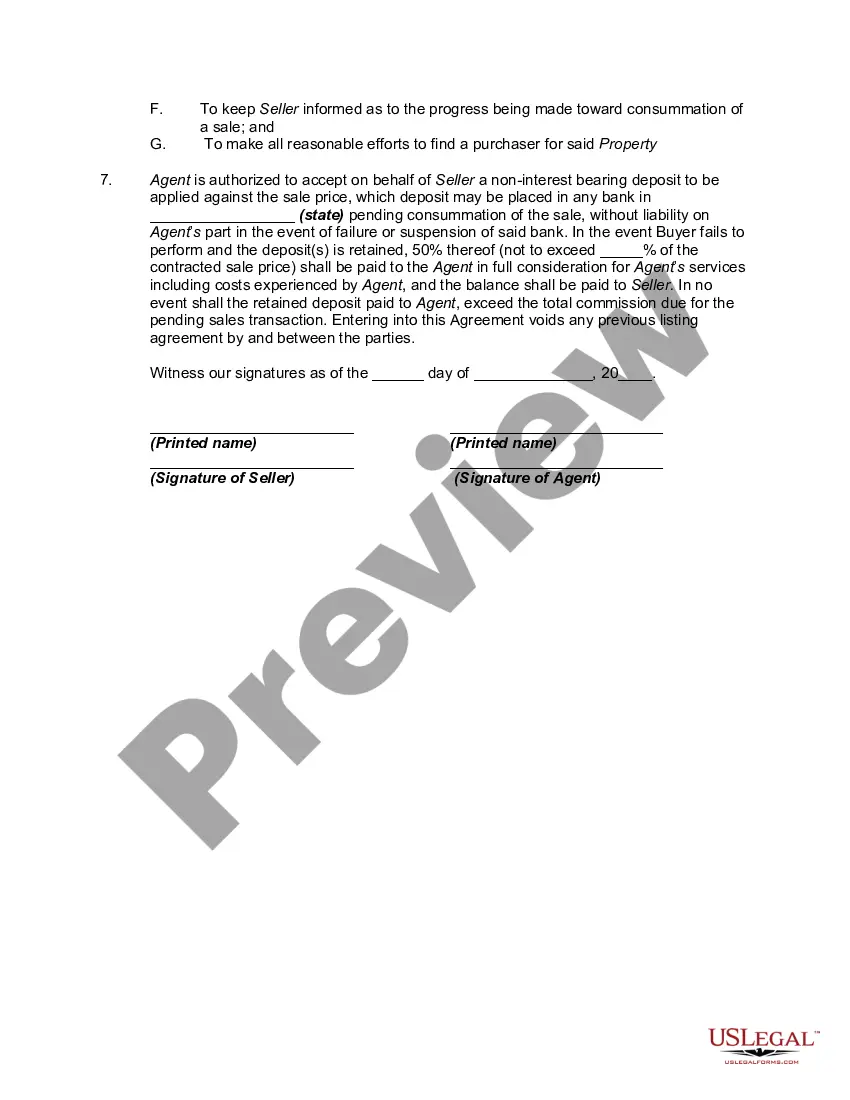
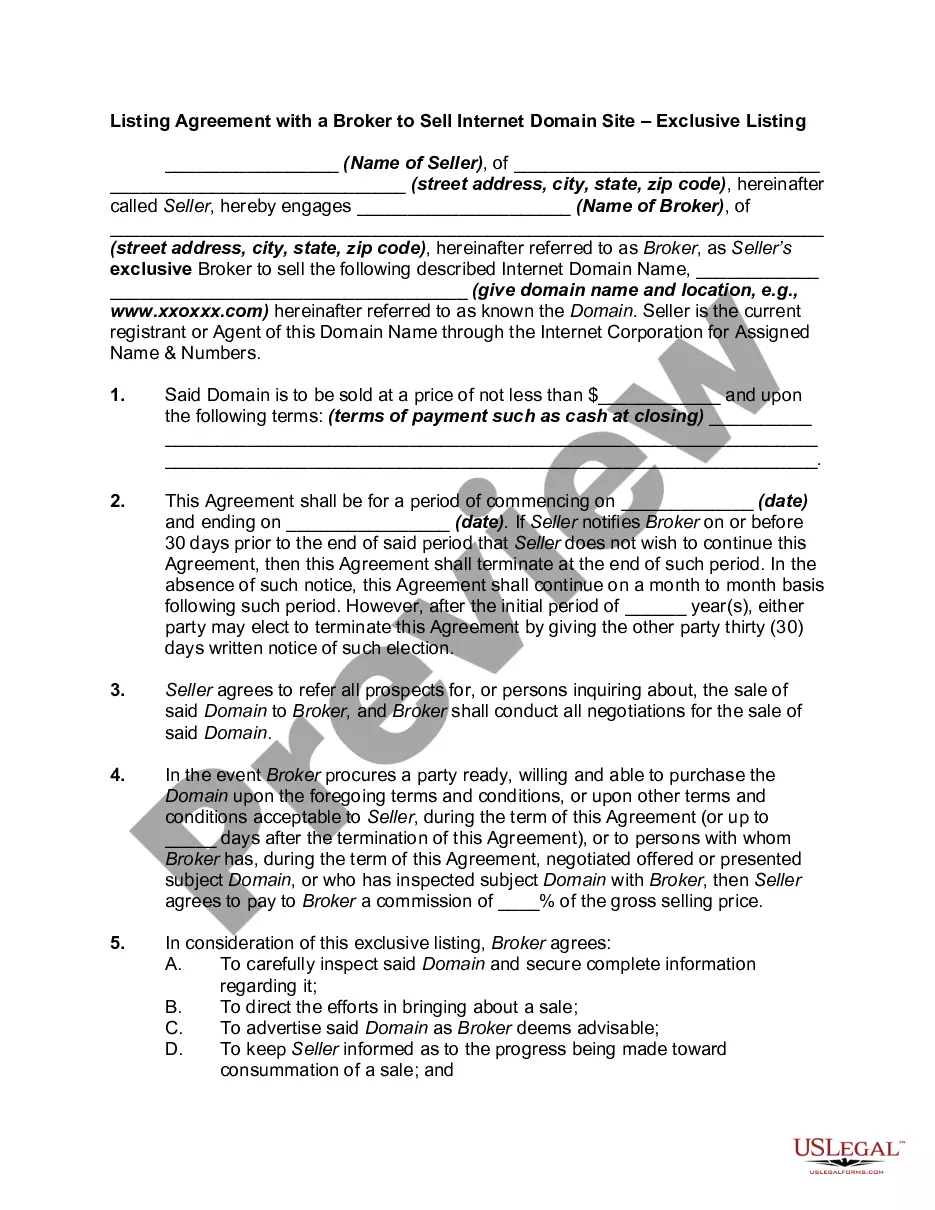
Listing Agreement Commercial With Broker Patrick In Orange
Description


Get your form ready online
Our built-in tools help you complete, sign, share, and store your documents in one place.
Make edits, fill in missing information, and update formatting in US Legal Forms—just like you would in MS Word.
Download a copy, print it, send it by email, or mail it via USPS—whatever works best for your next step.
Sign and collect signatures with our SignNow integration. Send to multiple recipients, set reminders, and more. Go Premium to unlock E-Sign.
If this form requires notarization, complete it online through a secure video call—no need to meet a notary in person or wait for an appointment.
We protect your documents and personal data by following strict security and privacy standards.

Make edits, fill in missing information, and update formatting in US Legal Forms—just like you would in MS Word.

Download a copy, print it, send it by email, or mail it via USPS—whatever works best for your next step.

Sign and collect signatures with our SignNow integration. Send to multiple recipients, set reminders, and more. Go Premium to unlock E-Sign.

If this form requires notarization, complete it online through a secure video call—no need to meet a notary in person or wait for an appointment.

We protect your documents and personal data by following strict security and privacy standards.
Looking for another form?

Form popularity
FAQ
Open listing: Definition An open listing enables multiple real estate agents to try to sell your home. This setup gives the seller the ability to work with multiple agents at once. This differs from an exclusive listing, in which the seller works exclusively with one listing agent to find a buyer.
An exclusive listing usually describes a duration in which the agent is going to be given the exclusive rights to sell the home. In most cases it is three months, but the agreement can be modified, depending on the market and interest in the home.
A listing agreement is a contract between a property owner and a real estate broker that authorizes the broker to represent the seller and find a buyer for the property. The three types of real estate listing agreements are open listing, exclusive agency listing, and exclusive right-to-sell listing.
An open listing enables multiple real estate agents to try to sell your home. This setup gives the seller the ability to work with multiple agents at once. This differs from an exclusive listing, in which the seller works exclusively with one listing agent to find a buyer.
Listing agreements vary. Each type has its own advantages and disadvantages: Exclusive Right-to-Sell Listing: The most common type. It grants the broker the exclusive right to sell your home, regardless of who finds the buyer.
Be honest with him. Tell him you don't feel it's working out and want to terminate the agreement. Most agents will agree if you're not happy. If he refuses, contact his broker. Don't sign with another agent until this is resolved. Burning bridges is better than working with someone you're not comfortable with.
A valid reason for terminating a buyer representation agreement includes the death of the broker, which makes it impossible for them to fulfill their obligations. While mutual agreement to adjust terms can also lead to termination, there are specific conditions under which these agreements can be dissolved.
The buyer or seller can request a termination. It's up to the broker whether to agree to terminate the agreement or not.
FSBO contracts in Florida should include the following: Contract Title. Details of Seller and Buyer: Full names, marital status and contact information. Contract Date: The date of execution. Property Details. Payment terms. Real Estate Taxes: Detail who pays real estate taxes and how.