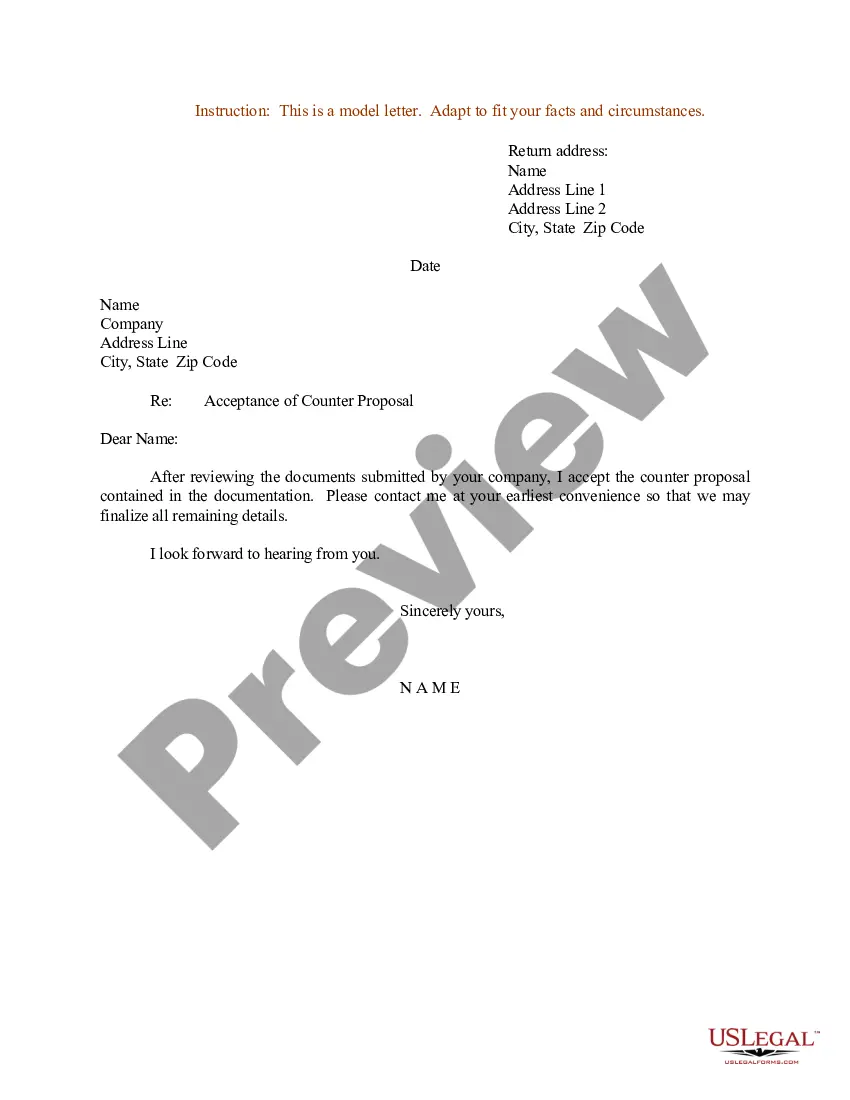
Listing Agreement Example In Los Angeles
Description


Get your form ready online
Our built-in tools help you complete, sign, share, and store your documents in one place.
Make edits, fill in missing information, and update formatting in US Legal Forms—just like you would in MS Word.
Download a copy, print it, send it by email, or mail it via USPS—whatever works best for your next step.
Sign and collect signatures with our SignNow integration. Send to multiple recipients, set reminders, and more. Go Premium to unlock E-Sign.
If this form requires notarization, complete it online through a secure video call—no need to meet a notary in person or wait for an appointment.
We protect your documents and personal data by following strict security and privacy standards.

Make edits, fill in missing information, and update formatting in US Legal Forms—just like you would in MS Word.

Download a copy, print it, send it by email, or mail it via USPS—whatever works best for your next step.

Sign and collect signatures with our SignNow integration. Send to multiple recipients, set reminders, and more. Go Premium to unlock E-Sign.

If this form requires notarization, complete it online through a secure video call—no need to meet a notary in person or wait for an appointment.

We protect your documents and personal data by following strict security and privacy standards.
Looking for another form?





Form popularity
FAQ
A listing agreement is an example of an agency relationship that is created by express agency. In this context, express agency arises when the principal explicitly states their intention to create an agency relationship with the agent through a written or verbal agreement.
An agreement is made when two parties agree to something. So, for example, a mother might make an agreement with her son not to kiss him in public because, after kindergarten, well, that's just not cool. If people's opinions are in , or match one another, then they are in agreement.
A listing is a catalog or list or items. You might be in the habit of checking TV listings every night, to see what's on the next day. You might make a listing of every cupcake and brownie that's donated to your school bake sale, or consult a listing of the available puppies at your local animal shelter.
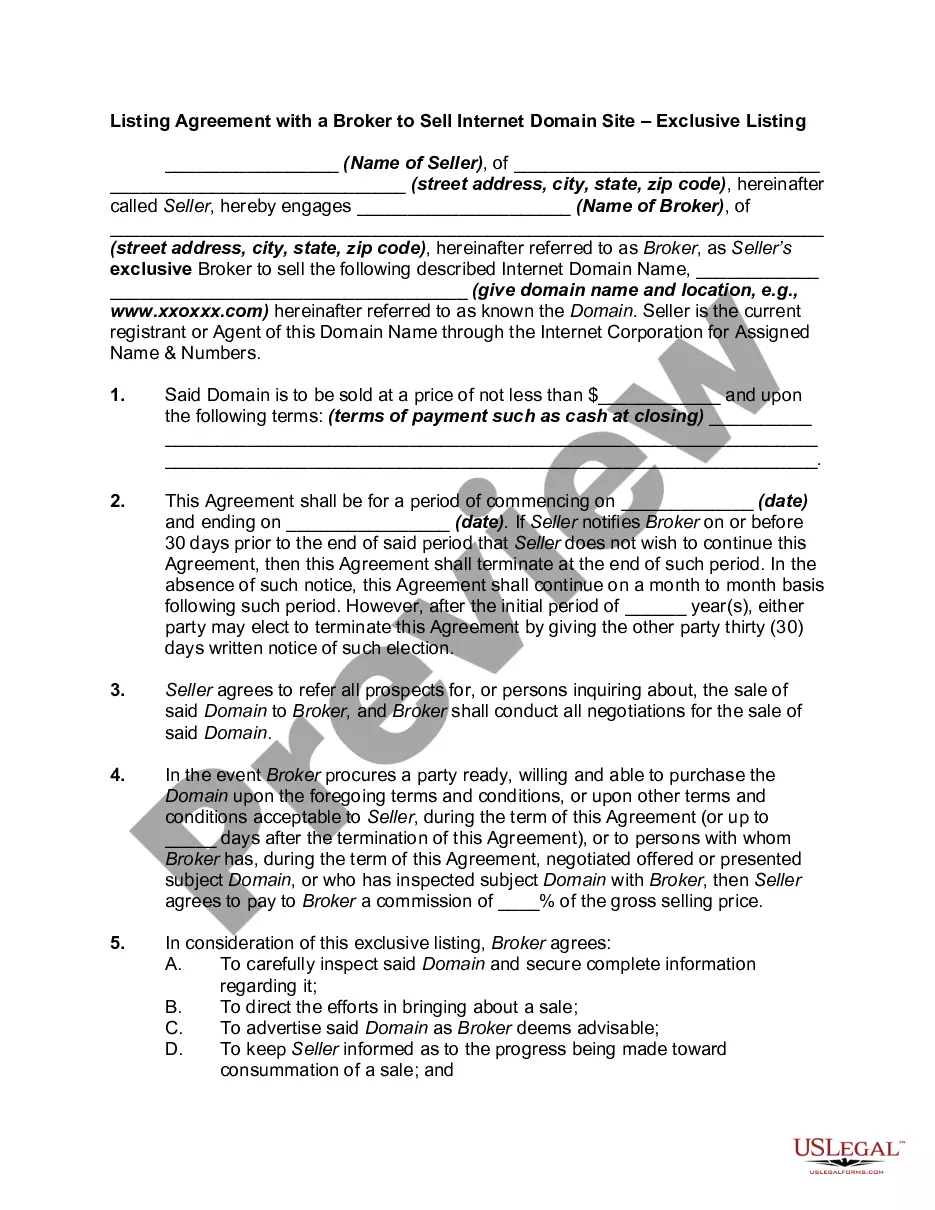
The exclusive right to sell listing agreement is the most common type of agreement in real estate. Under this arrangement, the broker is given exclusive rights to market the property for a set period.
A listing agreement is between the parties that own a property and the agents or brokers who will find a buyer for it. Typically, a real estate listing agreement involves the property owner and a real estate agent. The property owner, or seller, grants the agent the right to market and sell the property.
A listing agreement is “a legally binding contract that creates an agency relationship authorizing a broker to serve as the agent for a principal in a real estate transaction.” In other words, a listing agreement is an employment contract between a client and a broker that spells out what the broker is responsible for ...
A real estate listing agreement – also known as a seller's agent agreement – is a contract between a property owner and a real estate broker. It permits the broker to sell the home on the seller's terms, locating an appropriate buyer. The property owner pays the brokerage a commission for acting as the listing agent.
The California Department of Real Estate (CDRE) requires individuals to complete the following 6 steps to receive a salesperson license. Complete 135 Hours of Approved Pre-License Education. Pass the Course Final Exam. Pass a Criminal Background Check. Pass the California Salesperson License Exam.
Exclusive Right to Sell Listing With this contract type, the agent is given exclusive rights to market the home, post it on the MLS, and receive the selling commission. Because this contract favors the agent, it's no surprise that most realtors prefer this type of agreement.
The most desirable form of listing agreement for an agent is the Exclusive Right to Sell, as it guarantees a commission regardless of who sells the property. This agreement provides financial security and protection for the agent.