Agreement Broker Real Estate Format In Kings
Description


Get your form ready online
Our built-in tools help you complete, sign, share, and store your documents in one place.
Make edits, fill in missing information, and update formatting in US Legal Forms—just like you would in MS Word.
Download a copy, print it, send it by email, or mail it via USPS—whatever works best for your next step.
Sign and collect signatures with our SignNow integration. Send to multiple recipients, set reminders, and more. Go Premium to unlock E-Sign.
If this form requires notarization, complete it online through a secure video call—no need to meet a notary in person or wait for an appointment.
We protect your documents and personal data by following strict security and privacy standards.

Make edits, fill in missing information, and update formatting in US Legal Forms—just like you would in MS Word.

Download a copy, print it, send it by email, or mail it via USPS—whatever works best for your next step.

Sign and collect signatures with our SignNow integration. Send to multiple recipients, set reminders, and more. Go Premium to unlock E-Sign.

If this form requires notarization, complete it online through a secure video call—no need to meet a notary in person or wait for an appointment.

We protect your documents and personal data by following strict security and privacy standards.
Looking for another form?






Form popularity
FAQ
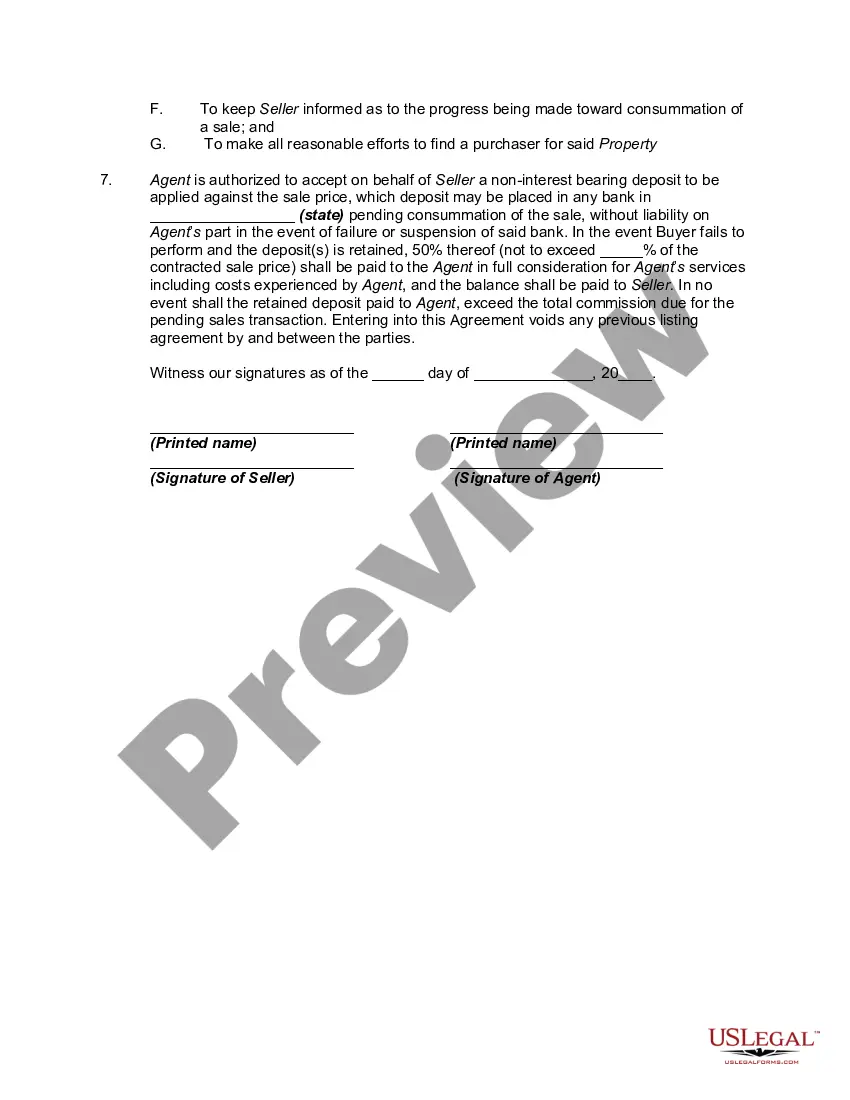
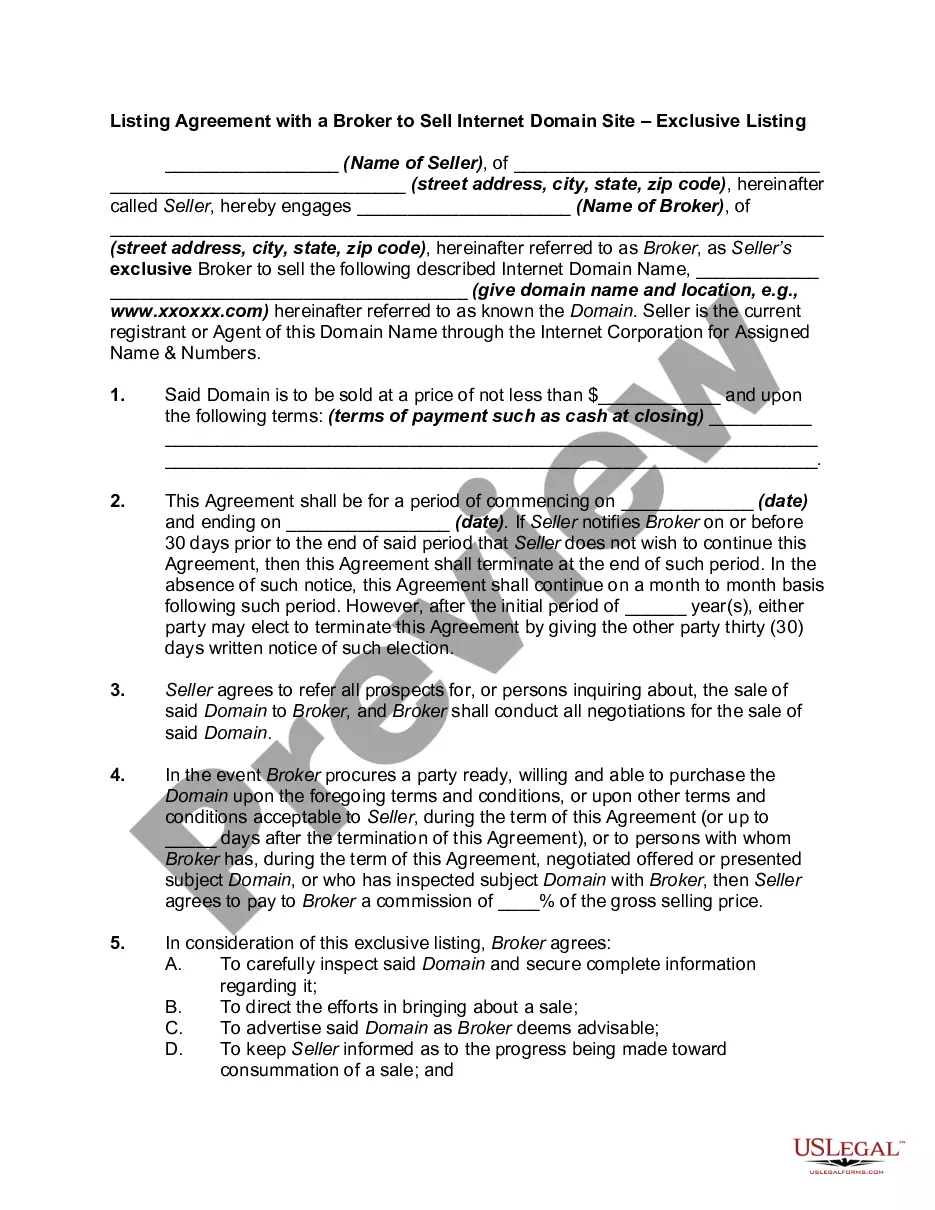
These documents are typically formed between large entities like a government body and a broker and use a flat, percentage, or split commission model. Agents or brokers may use this agreement to ensure the commission split is fair between all parties or to receive a financial kickback from a large or lengthy project.
Explaining A Real Estate Brokerage Agreement It's a legal document between the broker and the buyer. It explains the broker's role in the purchasing and selling of the property. The role of both parties, their duties, legal limitations, and obligations are included.
A seller representation agreement, also known as a listing agreement, is an agreement between a seller of real estate and a brokerage firm that provides detailed information on the property being sold. It forms the foundation of negotiations between the seller and the buyer through an agent.
For example, let's say the split between the broker and listing agent is 50%. That means the agent and broker each get a $5,000 share of the $10,000 commission. From that $5,000, an agent would be responsible for paying federal and state taxes, which could amount to 30% or more, leaving them with a net of $3,500.
An exclusive right to sell listing is the most widely-used listing agreement. Under this agreement, the broker has the exclusive right to market the property for a specified period of time.
Brokerage agreements typically include specific terms about the broker's role, commission structure, duration, and conditions for termination. Federal and state laws regulate these agreements, especially concerning licensing and prohibited activities in industries like insurance and real estate.
The buyer or seller can request a termination. It's up to the broker whether to agree to terminate the agreement or not.
A Buyer Broker agreement, (also known as a buyer agency agreement or a buyer representation agreement) is a contract that establishes an agency relationship between the agent and the buyer. This creates a binding relationship for both the agent and the client.
A broker is a person or entity that arranges transactions between a buyer and a seller. This may be done for a commission when the deal is executed.
Buyer-Broker Agreement: A legally binding contract that ensures your real estate agent is fully committed to representing your best interests. Transparency & Protection: The agreement outlines responsibilities, clarifies expectations, compensation, and ensures your agent works in your best interest.
