Lease Without License In Illinois
Description

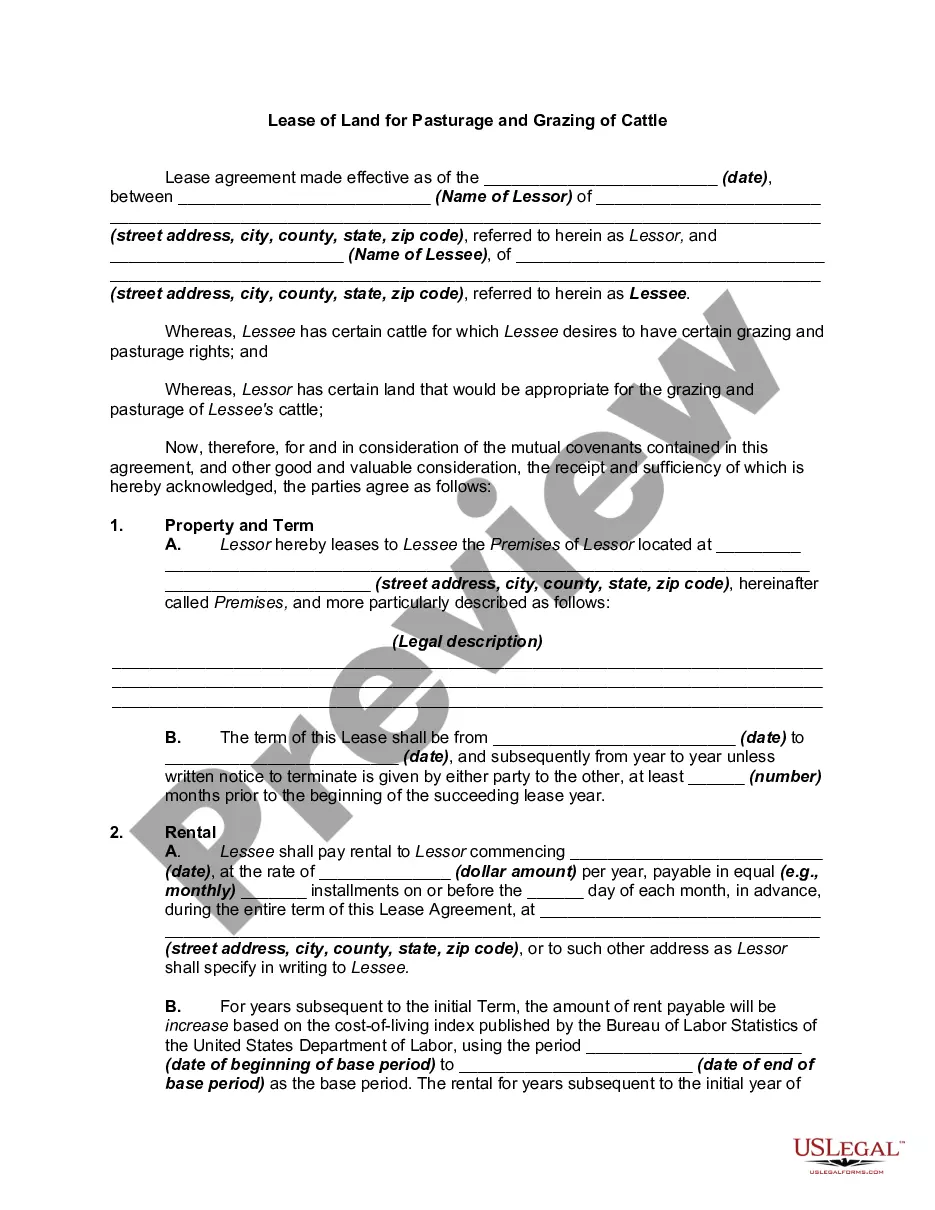
Get your form ready online
Our built-in tools help you complete, sign, share, and store your documents in one place.
Make edits, fill in missing information, and update formatting in US Legal Forms—just like you would in MS Word.
Download a copy, print it, send it by email, or mail it via USPS—whatever works best for your next step.
Sign and collect signatures with our SignNow integration. Send to multiple recipients, set reminders, and more. Go Premium to unlock E-Sign.
If this form requires notarization, complete it online through a secure video call—no need to meet a notary in person or wait for an appointment.
We protect your documents and personal data by following strict security and privacy standards.

Make edits, fill in missing information, and update formatting in US Legal Forms—just like you would in MS Word.

Download a copy, print it, send it by email, or mail it via USPS—whatever works best for your next step.

Sign and collect signatures with our SignNow integration. Send to multiple recipients, set reminders, and more. Go Premium to unlock E-Sign.

If this form requires notarization, complete it online through a secure video call—no need to meet a notary in person or wait for an appointment.

We protect your documents and personal data by following strict security and privacy standards.
Looking for another form?










Form popularity
FAQ
Exemptions from the License Requirement In other words, some individuals and entities who engage in the “practice of real estate” in Illinois do not need to obtain a real estate license from IDFPR. Included in the exemptions are owners of real estate and the employees of the owners of real estate.
While Illinois does not have a state-wide rental license requirement, certain counties do.
A Leasing Agent must have a Real Estate Broker or Managing Broker sponsor them as a licensee before engaging in any residential leasing activities. This 15- hour training course contains information on The License Act of 2000, Fair Housing/Owner Tenant Relationships, and Agency/Contracts.
An unlicensed property manager in Illinois may perform tasks that do not involve the leasing, selling, or buying of property, such as maintenance coordination and tenant relations. However, they cannot partake in activities requiring a real estate license, such as listing and negotiating.
Anyone who assists landlords by showing rental properties, discussing lease terms, and completing lease agreements must hold a Residential Leasing Agent License in Illinois. This license is specifically for those who focus solely on rental activities and do not engage in buying or selling properties.
Under Illinois law, 625 ILCS 5/6-101, you may face a maximum penalty of 180 days in jail and a $1,500.00 fine for driving without a valid license if the offense is charged as a Class B misdemeanor. Class A misdemeanors carry a maximum 12 months jail sentence and $2,500.00 fine.
4th 744, 758-759.) A key characteristic that distinguishes a lease from a license is that a lease grants a right to exclusive possession of property against all others, including the landowner, whereas a license does not.
To become a landlord in Illinois, there are no specific requirements or certifications needed. However, it is important to familiarize yourself with the state's landlord-tenant laws and regulations.