Agreement Satisfaction With Judgment In Wake
Description
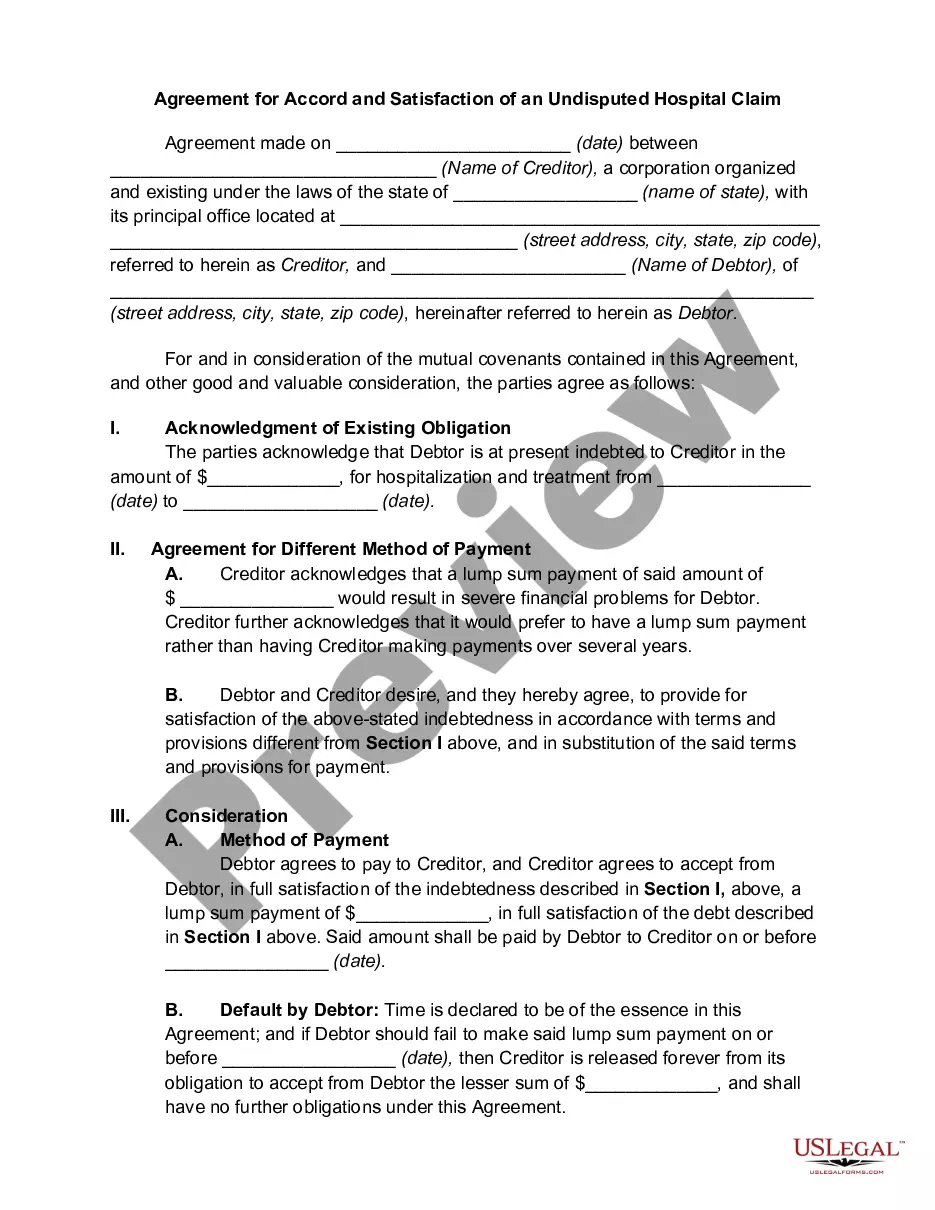

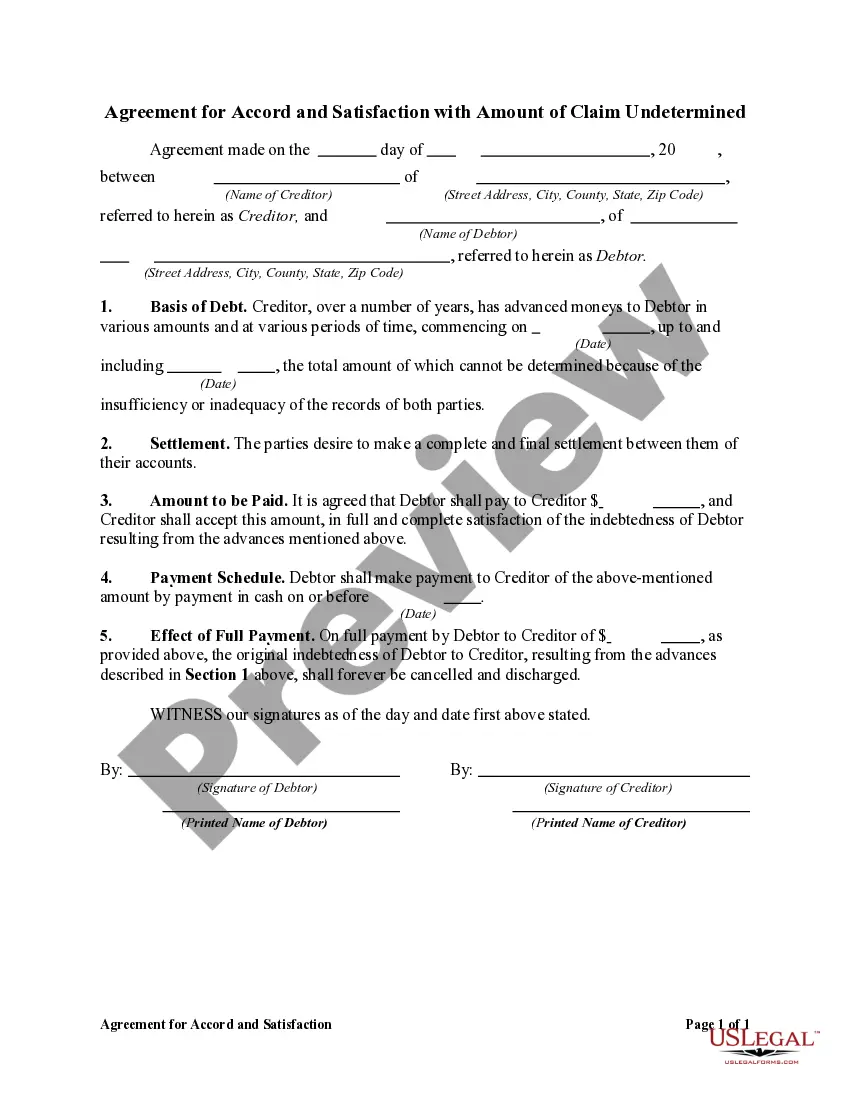
Get your form ready online
Our built-in tools help you complete, sign, share, and store your documents in one place.
Make edits, fill in missing information, and update formatting in US Legal Forms—just like you would in MS Word.
Download a copy, print it, send it by email, or mail it via USPS—whatever works best for your next step.
Sign and collect signatures with our SignNow integration. Send to multiple recipients, set reminders, and more. Go Premium to unlock E-Sign.
If this form requires notarization, complete it online through a secure video call—no need to meet a notary in person or wait for an appointment.
We protect your documents and personal data by following strict security and privacy standards.

Make edits, fill in missing information, and update formatting in US Legal Forms—just like you would in MS Word.

Download a copy, print it, send it by email, or mail it via USPS—whatever works best for your next step.

Sign and collect signatures with our SignNow integration. Send to multiple recipients, set reminders, and more. Go Premium to unlock E-Sign.

If this form requires notarization, complete it online through a secure video call—no need to meet a notary in person or wait for an appointment.

We protect your documents and personal data by following strict security and privacy standards.
Looking for another form?








Form popularity
FAQ
Judgments in New Jersey remain in effect for 20 years and may be renewed for an additional 20 years by filing a motion in the Superior Court, Law Division, Civil Part and/or in the Special Civil Part if the Special Civil Part case was assigned a DJ or J docket number.
After a default judgment has been entered in the court record, the Office of the Special Civil Part will mail you a postcard that shows the date and amount of the judgment entered by the court against the defendant.
In order to have a Judge Vacate a Final Judgment, you must show “Excusable Neglect” for not coming to Court sooner, and you must also show a “Meritorious Defense.” One of the most common reasons the court will grant a motion to vacate final judgment is that you were never served with the Complaint.
A judgment can be fully satisfied by paying the judgment creditor (the person who has the judgment against you) in full and receiving from the creditor a Warrant of Satisfaction.
If that judgment is obtained, the defendant may receive a “Notice of Right to Designate Exemptions,” which begins the process of attempting to collect the judgment against you. You may be able to fight a default judgement if you move quickly.
Interested members of the public can conduct judgement lien searches in North Carolina by querying the Clerk of Court office of any county where a debtor owns property. Queries can be made in person at the courthouse. Alternatively, inquirers can contact clerks by phone.
NORTH CAROLINA A judgment is a lien on real property for ten years from the entry date. N.C. Gen. Stat.
– On motion and upon such terms as are just, the court may relieve a party or his legal representative from a final judgment, order, or proceeding for the following reasons: (1) Mistake, inadvertence, surprise, or excusable neglect; (2) Newly discovered evidence which by due diligence could not have been discovered in ...
NORTH CAROLINA A judgment is a lien on real property for ten years from the entry date. N.C. Gen. Stat.
LEGAL FOUNDATION: SATISFACTION OF JUDGMENT IN PHILIPPINE LAW Upon judgment, once the defendant pays the amount adjudged, this effectively satisfies the monetary obligation in favor of the plaintiff.
