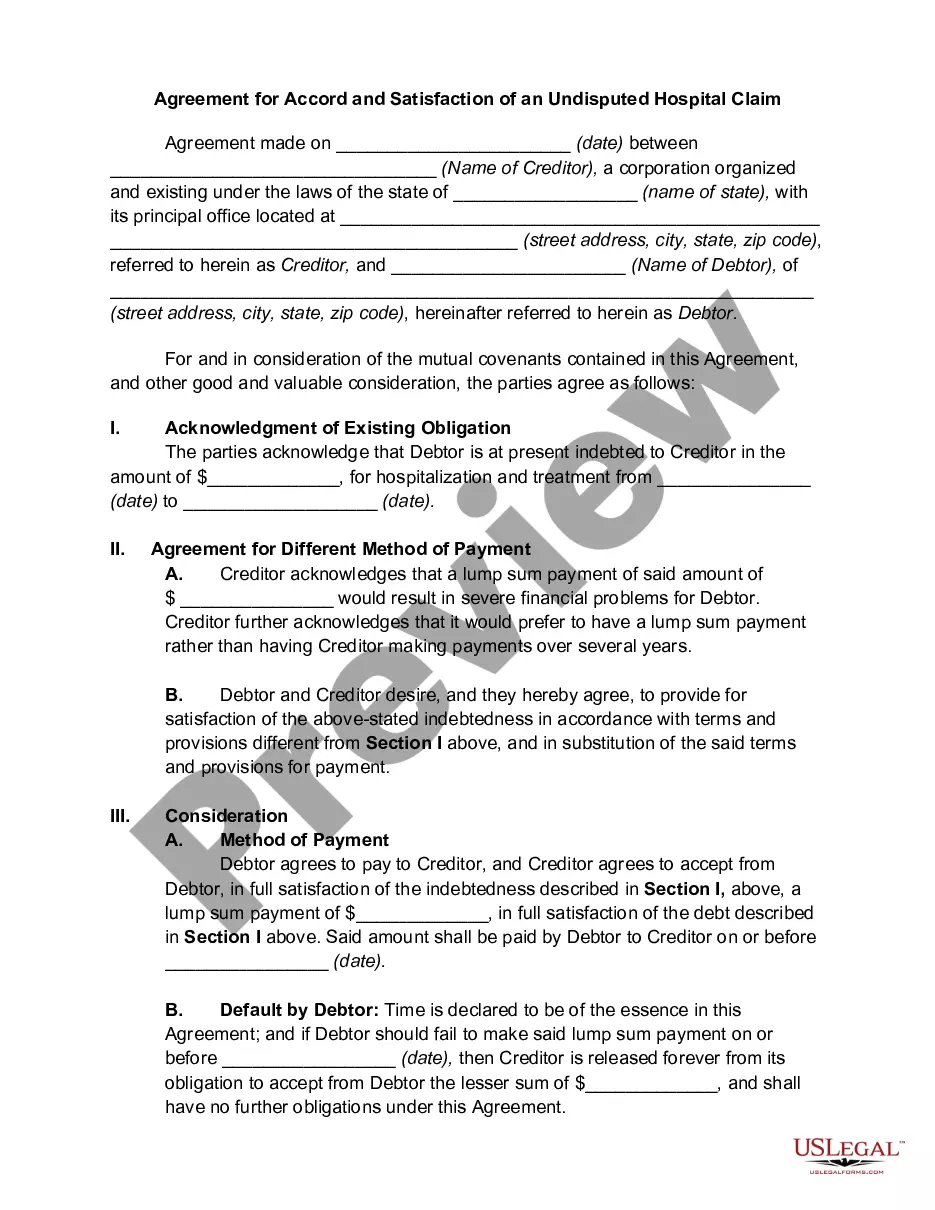
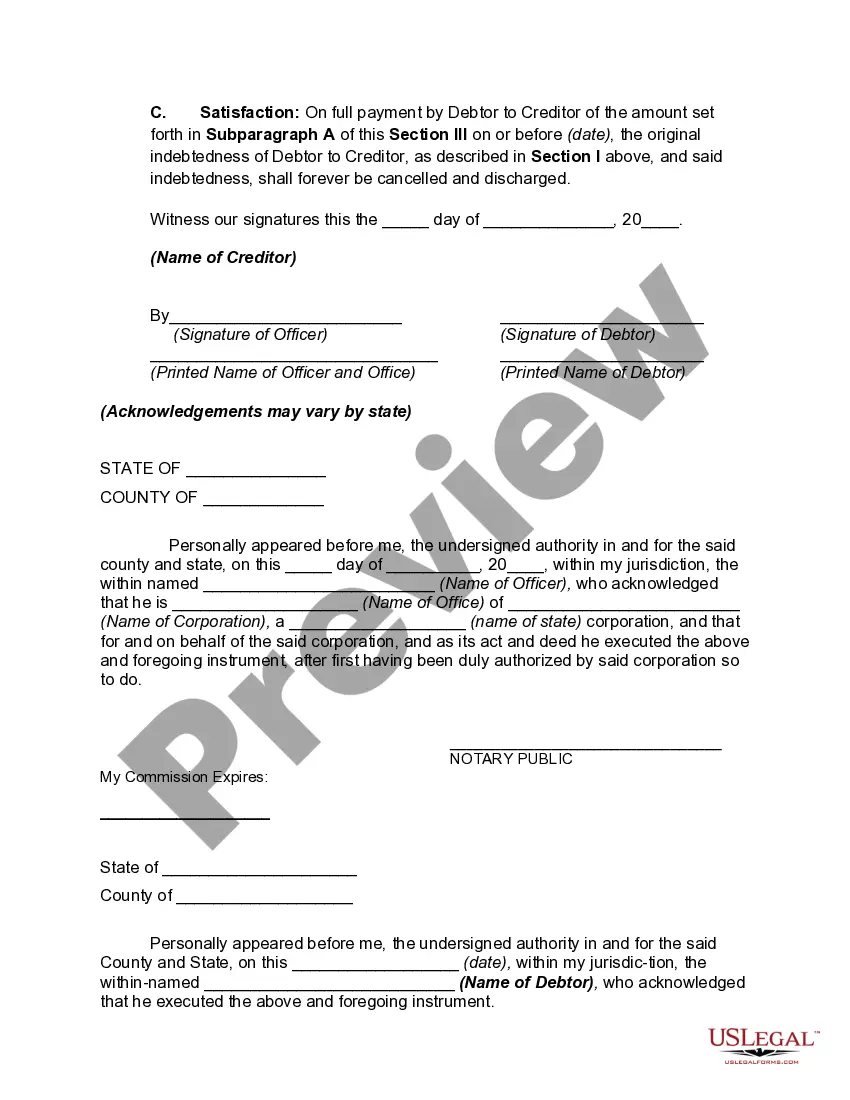
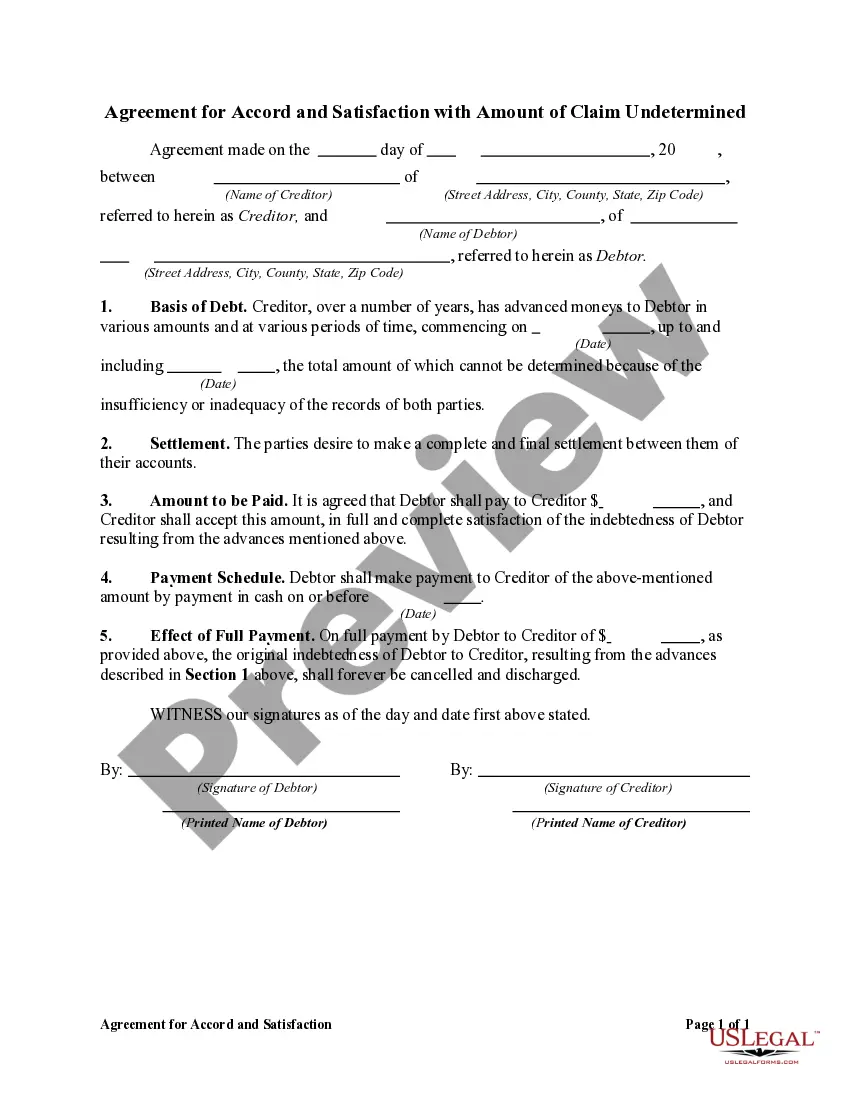
Satisfaction Agreement Form In Nevada
Description

Get your form ready online
Our built-in tools help you complete, sign, share, and store your documents in one place.
Make edits, fill in missing information, and update formatting in US Legal Forms—just like you would in MS Word.
Download a copy, print it, send it by email, or mail it via USPS—whatever works best for your next step.
Sign and collect signatures with our SignNow integration. Send to multiple recipients, set reminders, and more. Go Premium to unlock E-Sign.
If this form requires notarization, complete it online through a secure video call—no need to meet a notary in person or wait for an appointment.
We protect your documents and personal data by following strict security and privacy standards.

Make edits, fill in missing information, and update formatting in US Legal Forms—just like you would in MS Word.

Download a copy, print it, send it by email, or mail it via USPS—whatever works best for your next step.

Sign and collect signatures with our SignNow integration. Send to multiple recipients, set reminders, and more. Go Premium to unlock E-Sign.

If this form requires notarization, complete it online through a secure video call—no need to meet a notary in person or wait for an appointment.

We protect your documents and personal data by following strict security and privacy standards.
Looking for another form?



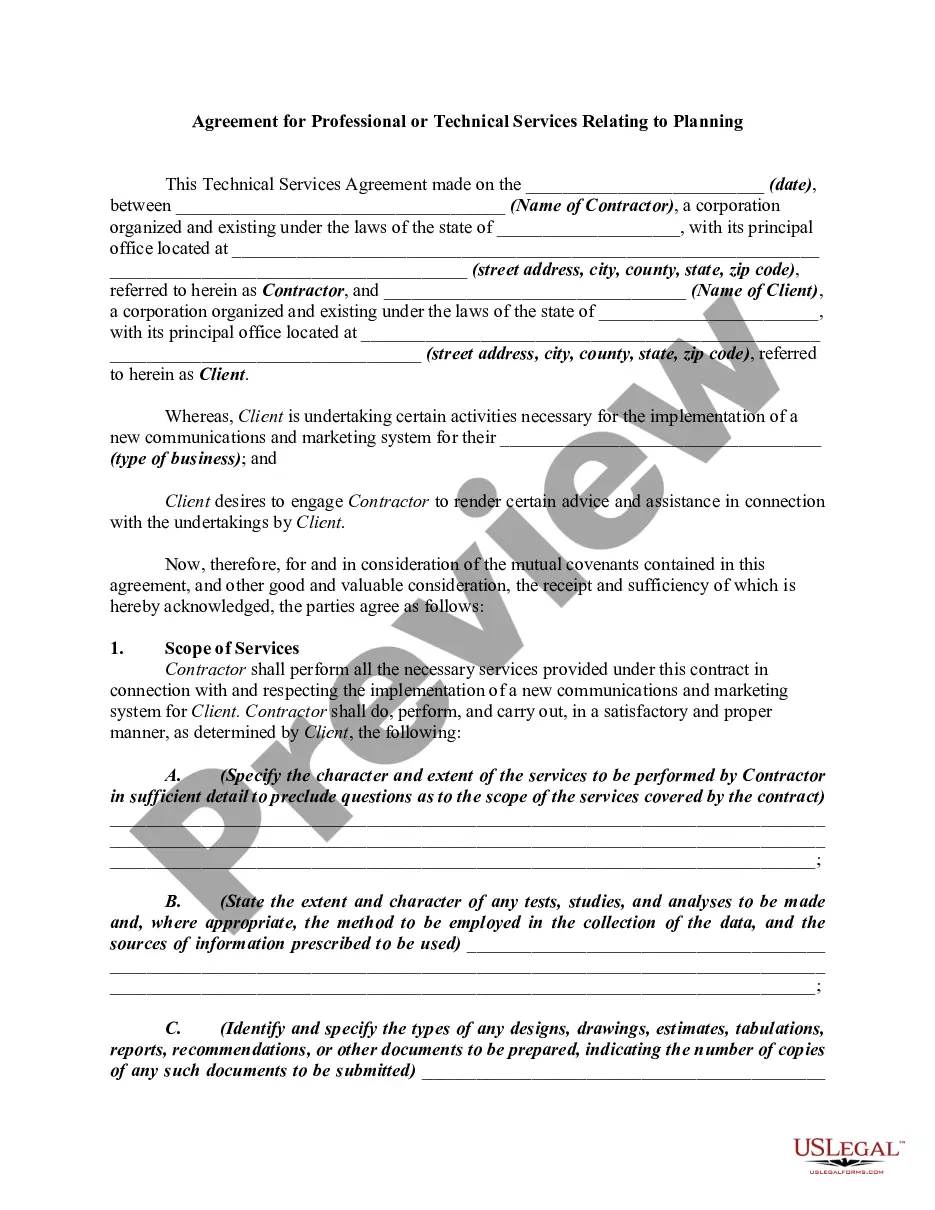
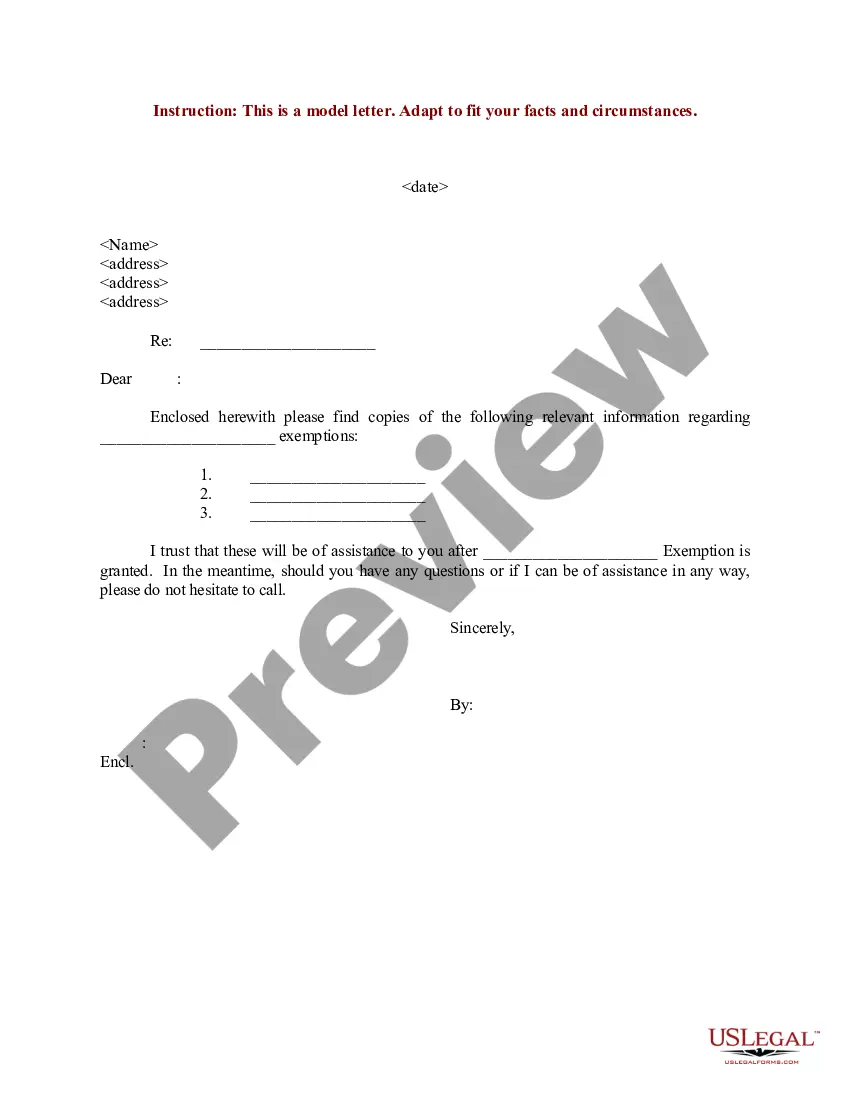



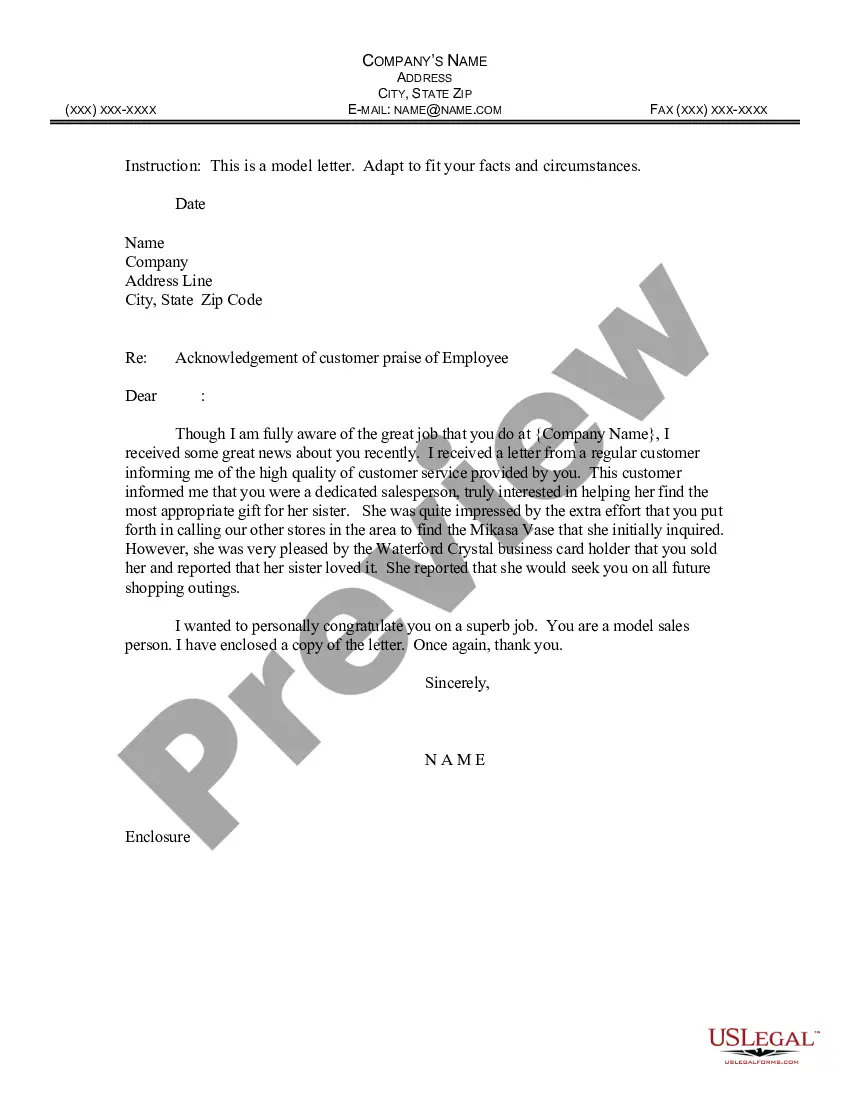
Form popularity
FAQ
In Nevada, a judgment will expire within six years from the date it is entered. NRS 17.214 provides the process to renew a judgment. To renew a judgment the judgment creditor must file a Declaration for Renewal of Judgment with the Clerk of the Court where the judgment was entered.
(d)Proof of Service. Unless a defendant voluntarily appears or waives or admits service, a plaintiff must file proof of service with the court stating the date, place, and manner of service no later than the time permitted for the defendant to respond to the summons.
What Property Is Exempt In Nevada? Homestead. Typically the largest and most important exemption you might use in your bankruptcy is the homestead exemption. Personal Property. Motor Vehicle. Retirement Accounts. Wages. Tools Of The Trade. The “Wild-card” Exemption.
Nevada's Civil Statutes of Limitations at a Glance Personal injuryTwo years §11.190(4)(e) Libel/slander/defamation Two years §11.190(4)(c) Fraud Three years §11.190(3)(d) Personal property damage Three years §11.190(3)(c)9 more rows
Critical Statutory Time Limits in Nevada: Personal Injury: Typically, a person has two years from the date of injury to file a claim. Property Damage: Claims related to property damage generally have a three-year statute of limitations. Fraud: Fraud claims have a three-year limit from when the fraud is discovered.
Small Claims is a special court where civil lawsuits for $10,000 or less are decided (NRS 73.010). Small Claims allows individuals to sue for monetary damages and parties generally represent themselves without an attorney.
To file a claim against the State of Nevada, a claim form must be completed and submitted to the Office of the Attorney General per the instructions on the claim form. Please see the link below to access the claim form.
