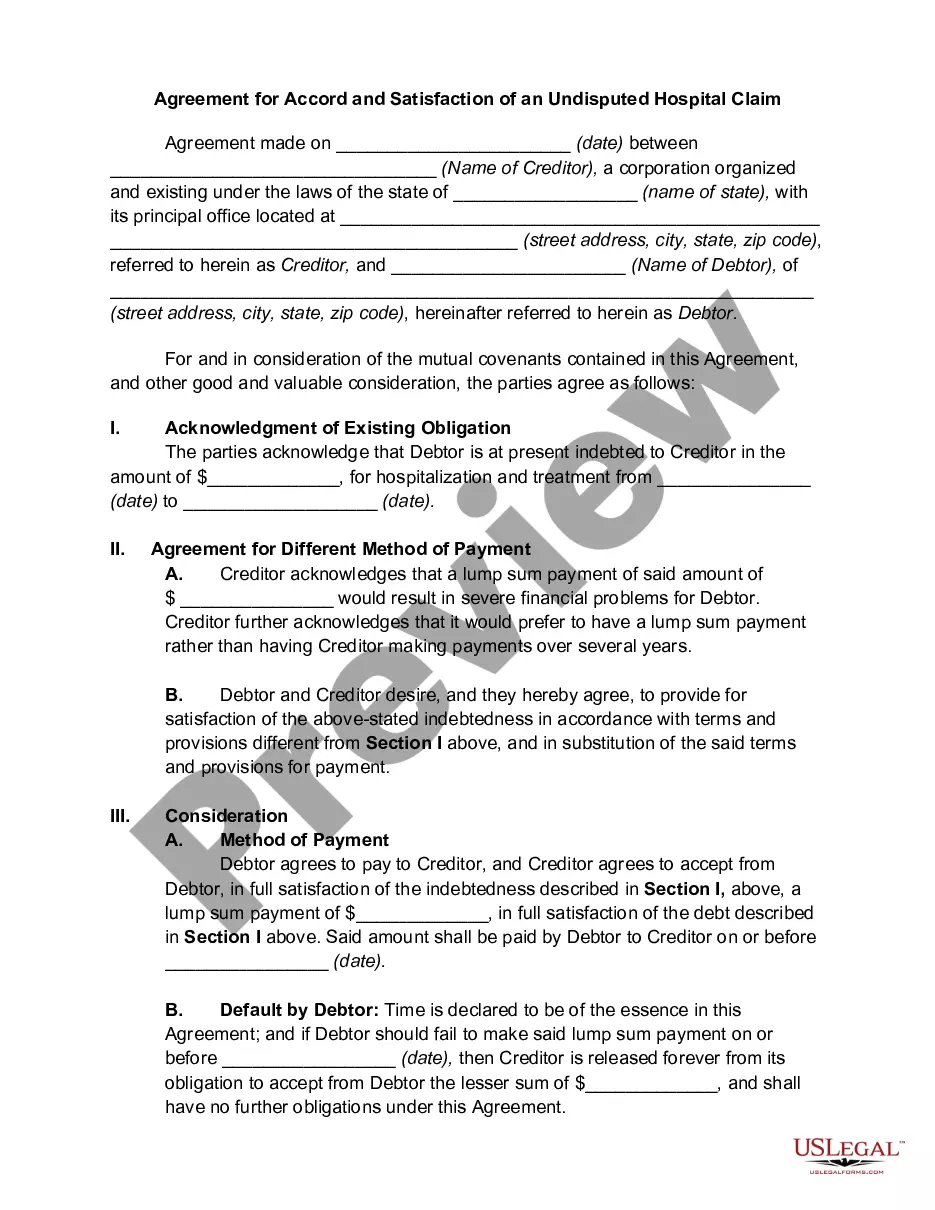
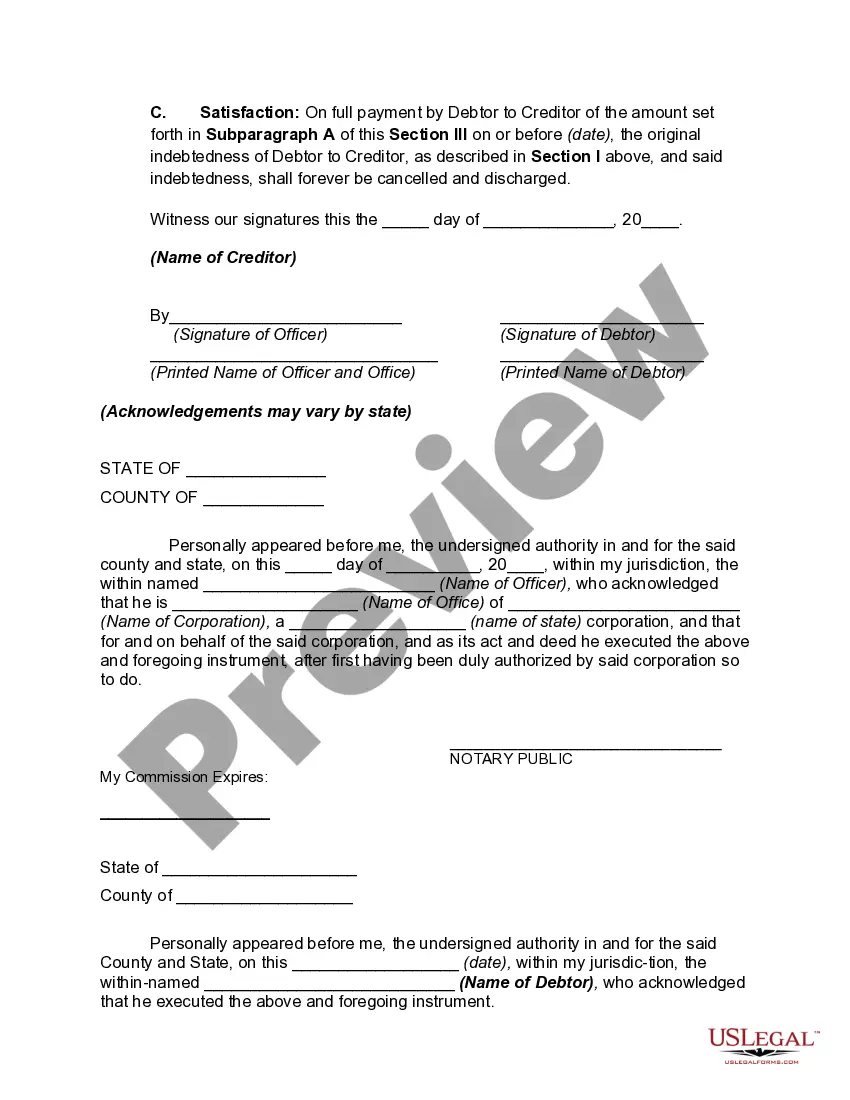
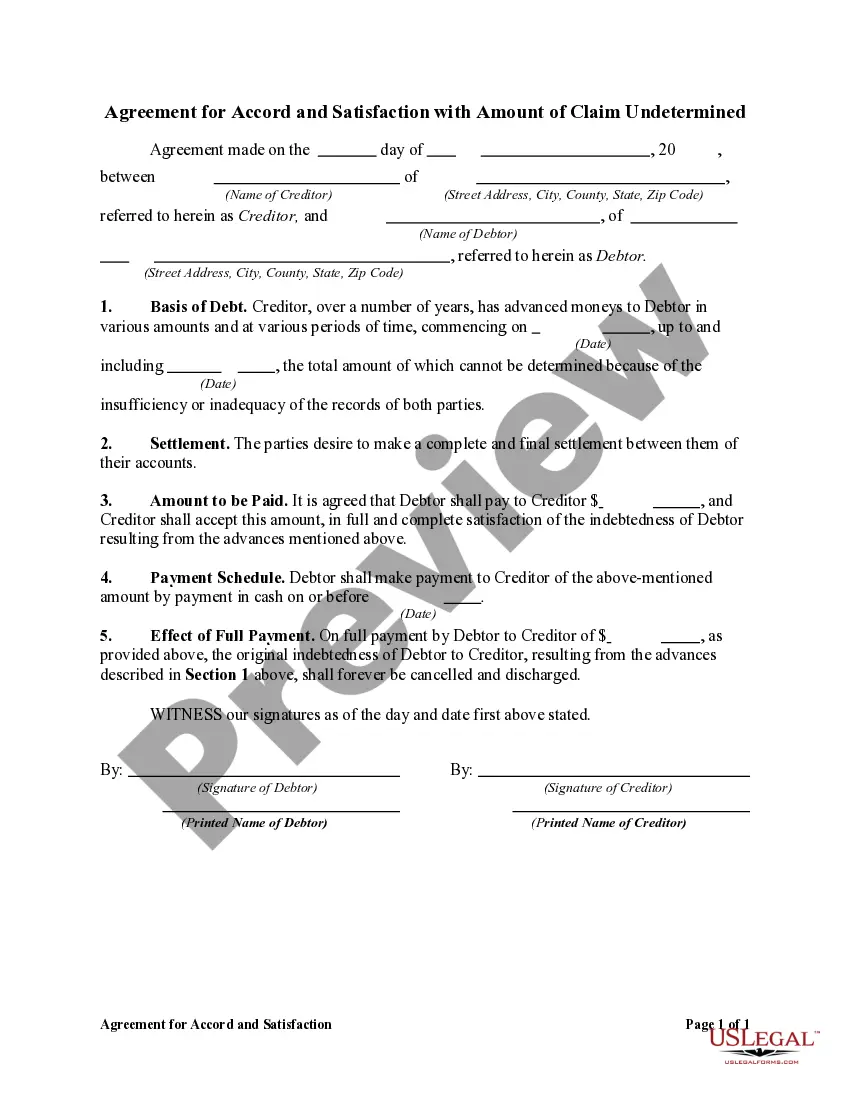
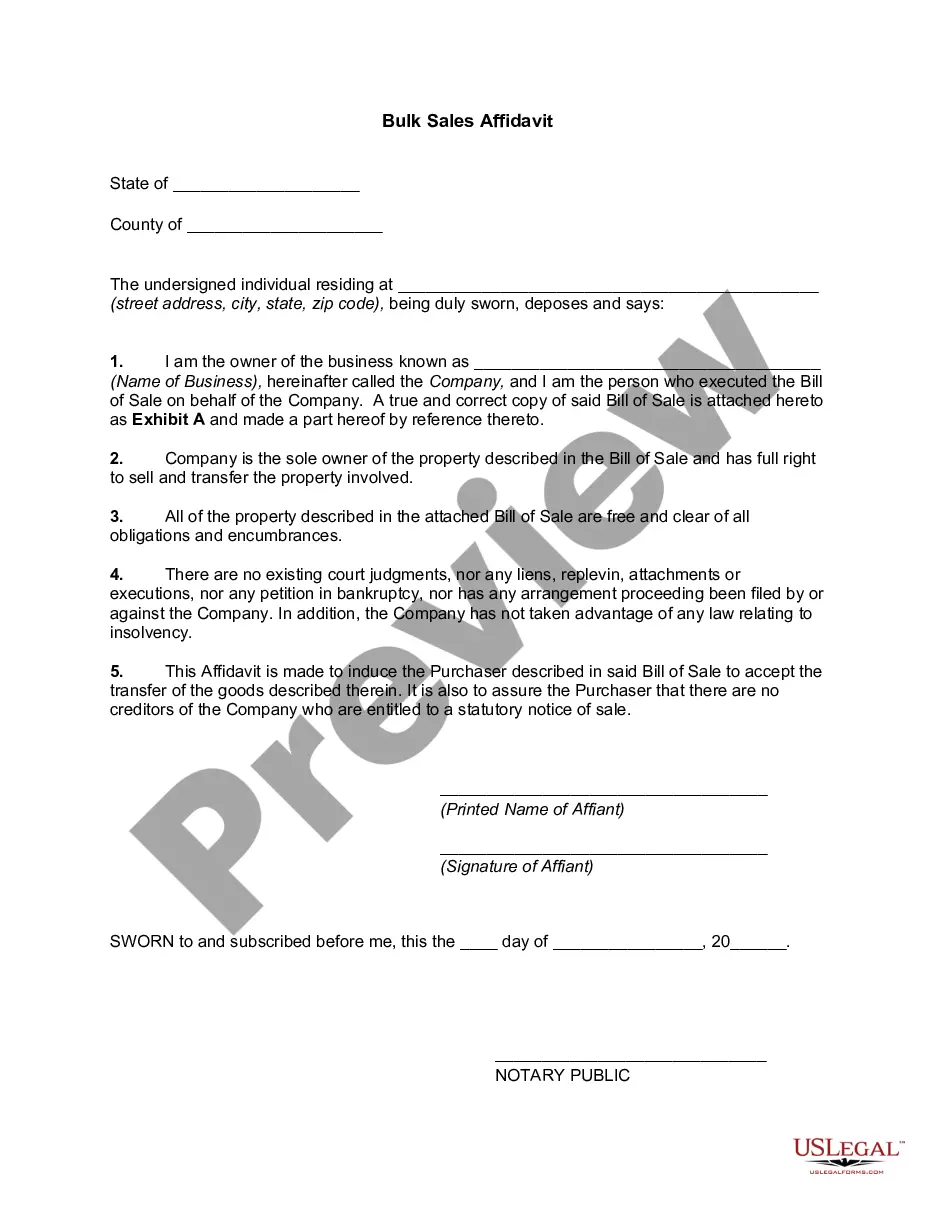
Agreement Satisfaction With Judgment In Massachusetts
Description


Get your form ready online
Our built-in tools help you complete, sign, share, and store your documents in one place.
Make edits, fill in missing information, and update formatting in US Legal Forms—just like you would in MS Word.
Download a copy, print it, send it by email, or mail it via USPS—whatever works best for your next step.
Sign and collect signatures with our SignNow integration. Send to multiple recipients, set reminders, and more. Go Premium to unlock E-Sign.
If this form requires notarization, complete it online through a secure video call—no need to meet a notary in person or wait for an appointment.
We protect your documents and personal data by following strict security and privacy standards.

Make edits, fill in missing information, and update formatting in US Legal Forms—just like you would in MS Word.

Download a copy, print it, send it by email, or mail it via USPS—whatever works best for your next step.

Sign and collect signatures with our SignNow integration. Send to multiple recipients, set reminders, and more. Go Premium to unlock E-Sign.

If this form requires notarization, complete it online through a secure video call—no need to meet a notary in person or wait for an appointment.

We protect your documents and personal data by following strict security and privacy standards.
Looking for another form?






Form popularity
FAQ
Statutes of Limitations for Each State (In Number of Years) StateWritten contractsOpen-ended accounts (including credit cards) Massachusetts 6 6 Michigan 6 6 Minnesota 6 6 Mississippi 3 347 more rows
(1973) Rule 12 prescribes the basic timetable for responsive pleading and the basic mechanism for raising defenses based solely on the pleadings. Rule 56 (Summary Judgments) interrelates with the remedies afforded by Rule 12, especially Rule 12(b)(6) and Rule 12(c).
A lien which results from a judgment shall terminate not later than twenty years from the date it was created.
Rule 59 - New Trials: Amendment of Judgments (a) Grounds. A new trial may be granted to all or any of the parties and on all or part of the issues for any of the reasons for which rehearings have heretofore been granted in suits in equity in the courts of the Commonwealth.
Rule 56 - Summary Judgment (a)Motions for Summary Judgment. A party may move for summary judgment subsequent to the commencement of any proceeding under these rules except in actions for divorce or in actions for custody or visitation or for criminal contempt.
Rule 60(b) gives the court “the power to 'relieve a party . . . from a final judgment, order, or proceeding' for certain reasons, including '(1) mistake, inadvertence, surprise, or excusable neglect' and '(6) any other reason that justifies relief.
Clerical mistakes in judgments, orders or other parts of the record and errors therein arising from oversight or omission may be corrected by the court at any time of its own initiative or on the motion of any party and after such notice, if any, as the court orders.
The "Rule of 60" is a guideline often used in retirement plans, where an employee becomes eligible for a pension or early retirement benefits once their age combined with years of service equals 60. This rule aims to reward long-serving employees by allowing them to retire earlier with full or partial benefits.
Mail the Plaintiff a copy of the Answer within 20 days of receiving the Complaint. Find the Plaintiff's address on the Summons. If Plaintiff's attorney's address is on the Summons, send the copy to them.
Receiving a Default Judgment means you lose, and the creditor or Plaintiff wins by default because you didn't show up or respond. Before you give up hope, you can still appeal the Default Judgement by filing a Motion to Set Aside Judgment and an Order.
