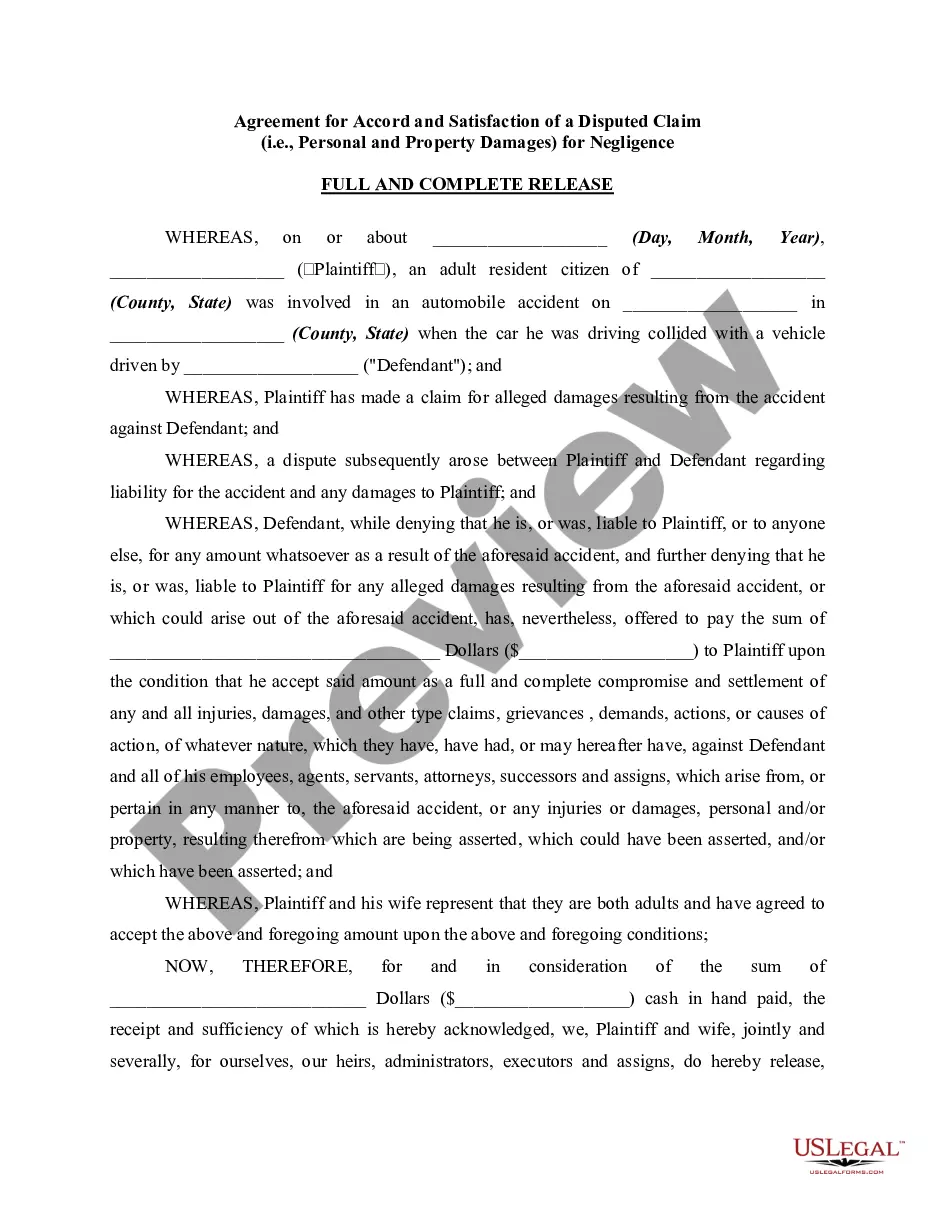
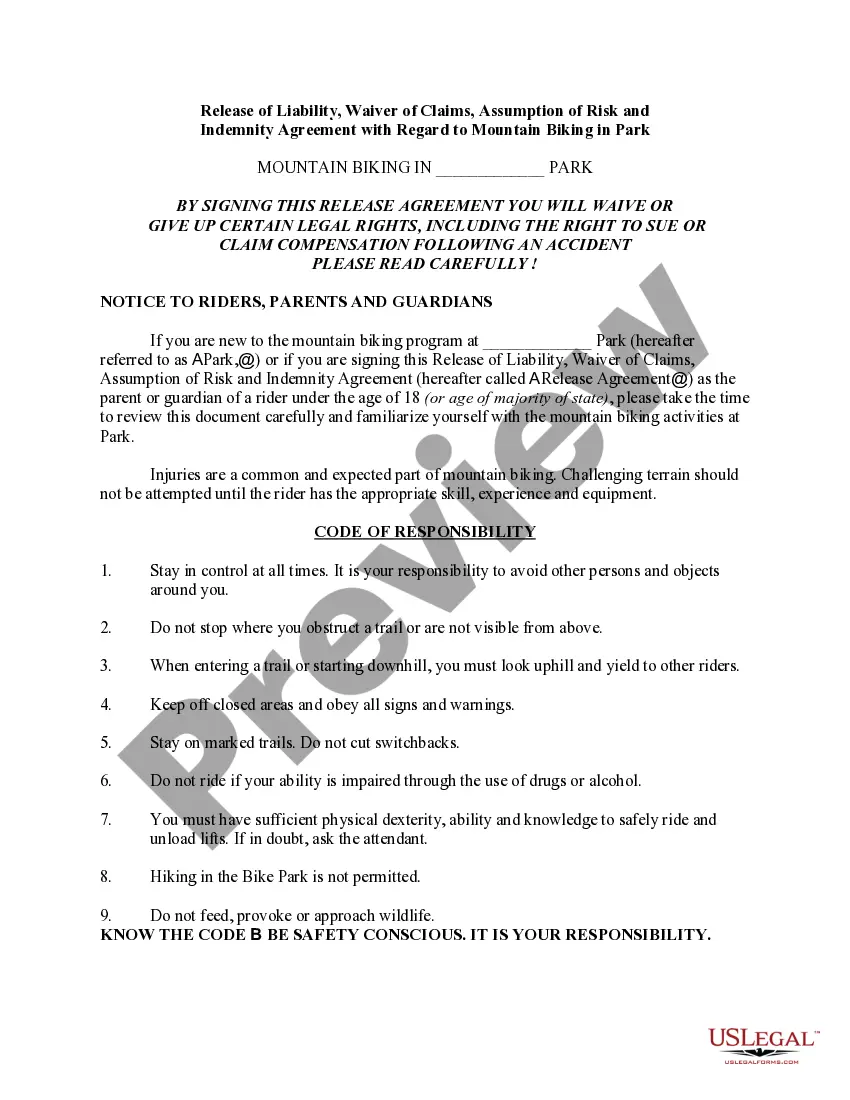
The parties may agree to a different performance. This is called an accord. When the accord is performed, this is called an accord and satisfaction. The original obligation is discharged. In order for there to be an accord and satisfaction, there must be a bona fide dispute; an agreement to settle the dispute; and the performance of the agreement. An example would be settlement of a lawsuit for breach of contract. The parties might settle for less than the amount called for under the contract.
Denied Claim Agreement For Primary Eob In Pima
State:
Multi-State
County:
Pima
Control #:
US-00435BG
Format:
Word;
Rich Text
101 downloads
Description
Get your form ready online
Our built-in tools help you complete, sign, share, and store your documents in one place.
Built-in online Word editor
Make edits, fill in missing information, and update formatting in US Legal Forms—just like you would in MS Word.
Export easily
Download a copy, print it, send it by email, or mail it via USPS—whatever works best for your next step.
E-sign your document
Sign and collect signatures with our SignNow integration. Send to multiple recipients, set reminders, and more. Go Premium to unlock E-Sign.
Notarize online 24/7
If this form requires notarization, complete it online through a secure video call—no need to meet a notary in person or wait for an appointment.
Store your document securely
We protect your documents and personal data by following strict security and privacy standards.

Make edits, fill in missing information, and update formatting in US Legal Forms—just like you would in MS Word.

Download a copy, print it, send it by email, or mail it via USPS—whatever works best for your next step.

Sign and collect signatures with our SignNow integration. Send to multiple recipients, set reminders, and more. Go Premium to unlock E-Sign.

If this form requires notarization, complete it online through a secure video call—no need to meet a notary in person or wait for an appointment.

We protect your documents and personal data by following strict security and privacy standards.
Looking for another form?









Form popularity
FAQ
Let's start by tackling the difference between rejections and denials. A claim rejection occurs before the claim is processed and most often results from incorrect data. Conversely, a claim denial applies to a claim that has been processed and found to be unpayable.
You may be able to appeal to your insurance company multiple times based on the evidence you provide. If the outcome is not satisfactory, you can consider contacting a public adjuster to advocate on your behalf or file a complaint with your state's insurance department to act as an intermediary for the dispute.
Claim Denials are claims that have been received and processed by the insurance carrier and have been deemed unpayable for a variety of reasons. These claim denials typically contain an error that was flagged after processing.
Denial code 273 is when the healthcare provider exceeded the coverage or program guidelines, resulting in the claim being denied.
Denial code 177 is indicative of the patient not meeting the necessary eligibility requirements. This means that the patient does not fulfill the criteria set by the insurance company or the healthcare provider to receive the specific healthcare service or treatment. As a result, the claim for reimbursement is denied.
Preventable denials are hard denials that are caused by the actions of the medical practice such as late submission of claims or incorrect codes. Clinical denials are hard denials that are based on things such as medical necessity or level of care. Administrative denials are soft denials that can be appealed.
Claim Denials are claims that have been received and processed by the insurance carrier and have been deemed unpayable for a variety of reasons. These claim denials typically contain an error that was flagged after processing.
If your claim has been denied or your benefits were terminated, and you do not agree with the decision, you have three options: Appeal the decision. File a lawsuit. Negotiate a Settlement.
At its essence, the CO 29 Denial Code indicates that the submission of a claim has exceeded the stipulated timeframe set by the insurance company. The error message typically reads: "The time limit for filing has expired."
