Libel And Slander On Social Media In Massachusetts
Description

Get your form ready online
Our built-in tools help you complete, sign, share, and store your documents in one place.
Make edits, fill in missing information, and update formatting in US Legal Forms—just like you would in MS Word.
Download a copy, print it, send it by email, or mail it via USPS—whatever works best for your next step.
Sign and collect signatures with our SignNow integration. Send to multiple recipients, set reminders, and more. Go Premium to unlock E-Sign.
If this form requires notarization, complete it online through a secure video call—no need to meet a notary in person or wait for an appointment.
We protect your documents and personal data by following strict security and privacy standards.

Make edits, fill in missing information, and update formatting in US Legal Forms—just like you would in MS Word.

Download a copy, print it, send it by email, or mail it via USPS—whatever works best for your next step.

Sign and collect signatures with our SignNow integration. Send to multiple recipients, set reminders, and more. Go Premium to unlock E-Sign.

If this form requires notarization, complete it online through a secure video call—no need to meet a notary in person or wait for an appointment.

We protect your documents and personal data by following strict security and privacy standards.
Looking for another form?





Form popularity
FAQ
Social Media Defamation: The Power of Instant Sharing Individuals can share content, opinions, and allegations swiftly, reaching vast audiences. This speed amplifies the potential harm to a person's reputation, making social media a powerful tool for both positive and negative influence.
Massachusetts laws MGL c. 260, § 4 Statute of limitations. Actions for slander or libel "shall be commenced only within three years next after the cause of action accrues."
Libel generally refers to defamatory statements that are published or broadcast (more permanent) while slander refers to verbal defamatory statements (more fleeting).
The dramatic rise in social media use has resulted in an increased risk of online defamation. Defamation happens when someone makes a false statement about you—verbally or in writing—that damages your reputation. Verbal defamation is called "slander." Written defamation is called "libel." (Learn more about Libel vs.
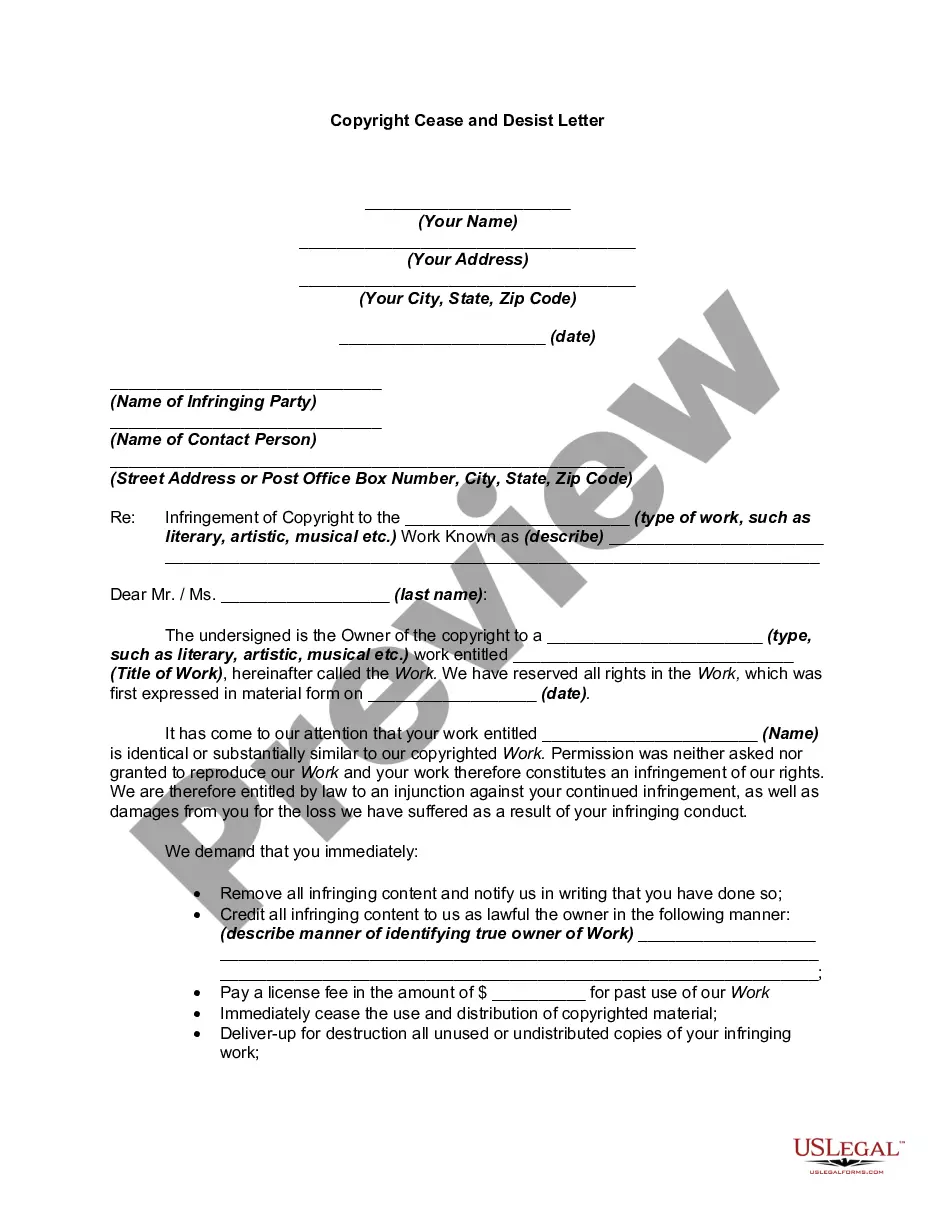
If you're confident that you are indeed dealing with an instance of online defamation, there are several steps you can take to remedy the situation. Do Nothing. Collect Evidence. Get a Lawyer. Send a Cease and Desist Letter. Publish Your Own Statement. Sue for Defamation.
Written defamation is called "libel," and spoken defamation is considered "slander," and they both fall under "defamation." In the US, defamation is not usually a crime. Instead, it is a "tort" or civil wrong. Under the law, a person who has been defamed can seek damages from the perpetrator.
In California, you must prove five elements to establish a defamation claim: An intentional publication of a statement of fact; That is false; That is unprivileged; That has a natural tendency to injure or causes “special damage;” and, The defendant's fault in publishing the statement amounted to at least negligence.
Massachusetts on Defamation: “A plaintiff alleging libel must ordinarily establish five elements: (1) that the defendant published a written statement; (2) of and concerning the plaintiff; that was both (3) defamatory, and (4) false; and (5) either caused economic loss, or is actionable without proof of economic loss.”
In an action of slander or libel, if the defendant alleges that the words spoken or published were true, such allegation, although not supported by the evidence, shall not of itself be proof of the malice alleged in the complaint, nor shall statements of the defendant differing in import from those alleged be ...

