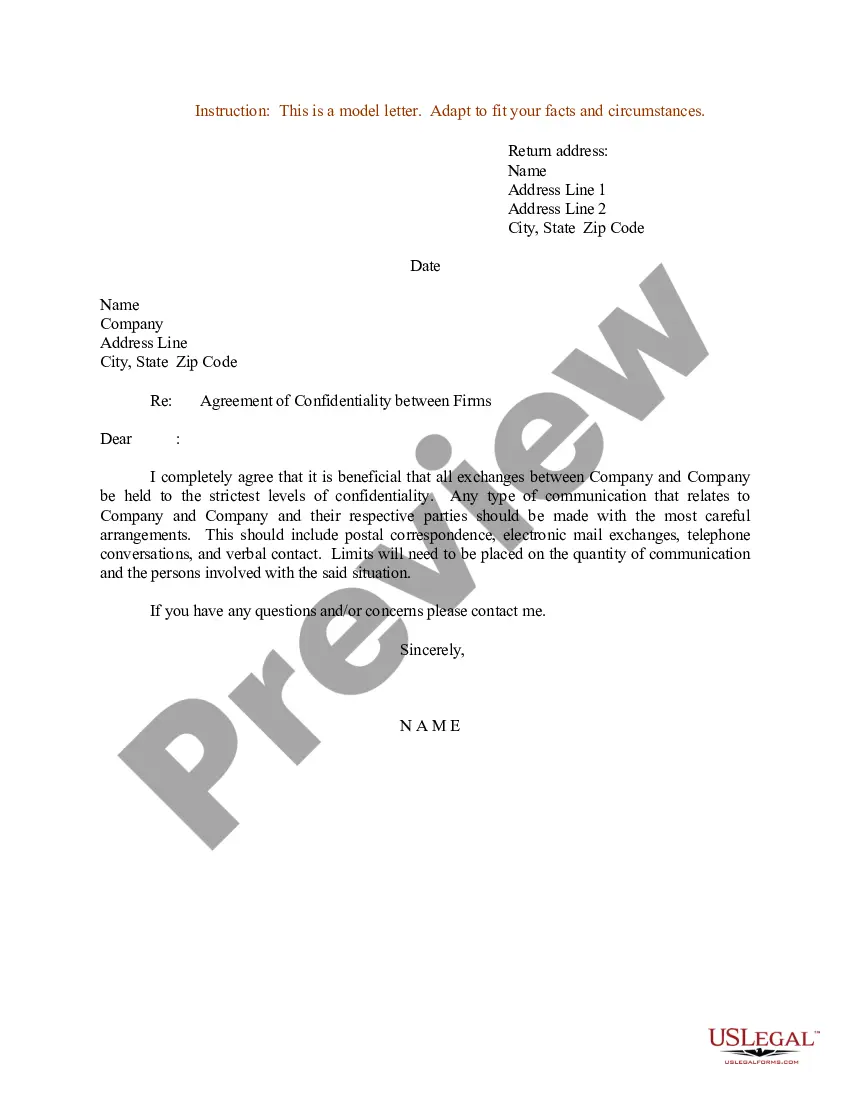
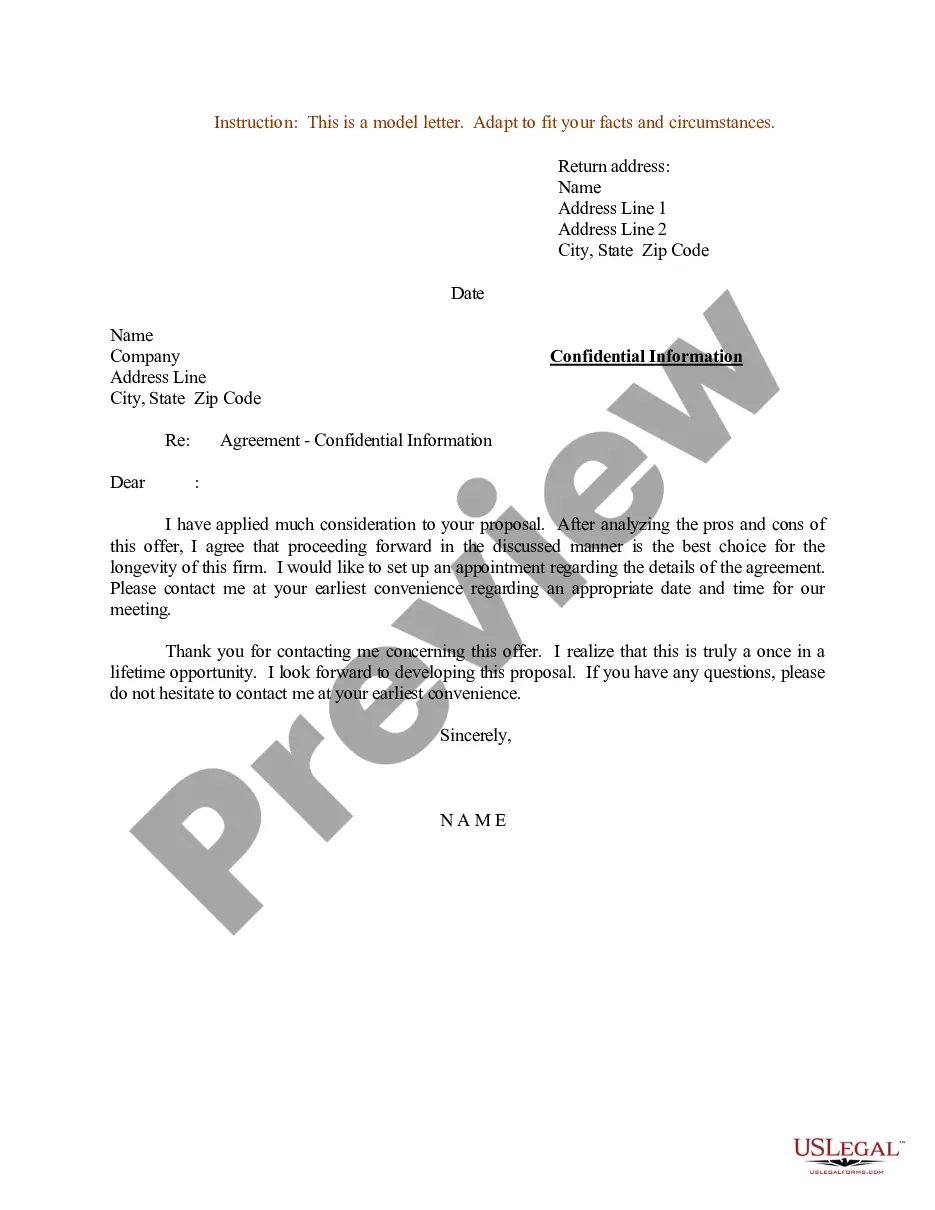
Agreement Confidentiality Between For Nonprofit Board Members In Minnesota
Description

Get your form ready online
Our built-in tools help you complete, sign, share, and store your documents in one place.
Make edits, fill in missing information, and update formatting in US Legal Forms—just like you would in MS Word.
Download a copy, print it, send it by email, or mail it via USPS—whatever works best for your next step.
Sign and collect signatures with our SignNow integration. Send to multiple recipients, set reminders, and more. Go Premium to unlock E-Sign.
If this form requires notarization, complete it online through a secure video call—no need to meet a notary in person or wait for an appointment.
We protect your documents and personal data by following strict security and privacy standards.

Make edits, fill in missing information, and update formatting in US Legal Forms—just like you would in MS Word.

Download a copy, print it, send it by email, or mail it via USPS—whatever works best for your next step.

Sign and collect signatures with our SignNow integration. Send to multiple recipients, set reminders, and more. Go Premium to unlock E-Sign.

If this form requires notarization, complete it online through a secure video call—no need to meet a notary in person or wait for an appointment.

We protect your documents and personal data by following strict security and privacy standards.
Looking for another form?
Form popularity
FAQ
Client confidentiality is a fundamental rule among institutions and individuals stating that they must not share a client's information with a third party without the consent of the client or a legal reason. Normally, access to a client's data is only between the workplace and the customer or client.
A confidentiality policy provides guidelines on how employees should handle and protect sensitive company information. It defines what is considered confidential, offers clear do's and don'ts, and outlines consequences for breaches, ensuring data protection and compliance.
This Nondisclosure Agreement (the "Agreement") is entered into by and between _______________ with its principal offices at _______________ ("Disclosing Party") and _______________, located at _______________ ("Receiving Party") for the purpose of preventing the unauthorized disclosure of Confidential Information as ...
Duty of Confidentiality Board members must keep confidential information confidential. The authority to release information is held by the board as a whole, not by individual directors. Once the information is released, it cannot be taken back.
It is the policy of Name of Nonprofit that board members and employees of Name of Nonprofit will not disclose confidential information belonging to, or obtained through their affiliation with Name of Nonprofit to any person, including their relatives, friends, and business and professional associates, unless ...
Honesty, integrity, transparency, confidentiality, and equity are each examples of values that are typically expressed in a charitable nonprofit's code of ethics - but there may be other values that are very important to your nonprofit - and you may wish to spell those out so that the donating public, prospective ...
Businesses and organisations, especially nonprofits and grantmaking organisations, often have sensitive information that should not be shared with the public. A non-disclosure agreement (NDA) effectively protects this sensitive information by binding parties to confidentiality.
The Charities Division of the Office of the Minnesota Attorney General handles many issues regarding nonprofit organizations.
After your board (and, where applicable, voting members) have approved the dissolution, you must file two notices of intent to dissolve: one with the Minnesota Secretary of State and one with the Minnesota Office of the Attorney General.
Under Minnesota law, a conflict of interest arises when a nonprofit enters into a contract or transaction with a director, a director's family member, or another organization in which the director has a material financial interest. In limited circumstances, these types of transactions may be acceptable.